Quick answer
Elks live in Grasslands, open forests, and mountain meadows. Within that range they pick microhabitats that supply cover, food (Herbivore — grasses, forbs, bark, and browse), water, and breeding sites — and they disappear where those features are lost.
Key takeaway
Elks live in Grasslands, open forests, and mountain meadows. Within that range they pick microhabitats that supply cover, food (Herbivore — grasses, forbs, bark, and browse), water, and breeding sites — and they disappear where those features are lost.
Elk native habitat
Elks (Cervus canadensis) are tied to Grasslands, open forests, and mountain meadows. Look for sites that match their diet (Herbivore — grasses, forbs, bark, and browse) and movement style; seasonal rains or prey shifts can expand or shrink local occupancy.
Microhabitats elks prefer
Cover for resting, access to food, and safe breeding sites decide day-to-day use. Edge habitats can help adaptable populations but fail specialists that need continuous wild land.
How people change Elk range
Farms, suburbs, and roads create opportunity for some individuals and lethal risk for others. Fragmentation without corridors isolates elk groups and raises local extinction risk.
Conservation geography for elks
Status in our guides: <strong>Least Concern</strong>. Protecting linked habitat often beats a single fenced reserve. Watch from a distance and never feed wild elks.
Migration and herd life
Many elk populations migrate seasonally between high summer range and lower winter range, sometimes crossing busy roads and development corridors. Cows, calves, and yearlings form herds for much of the year, while mature bulls are often solitary outside the breeding season.
Antlers and growth
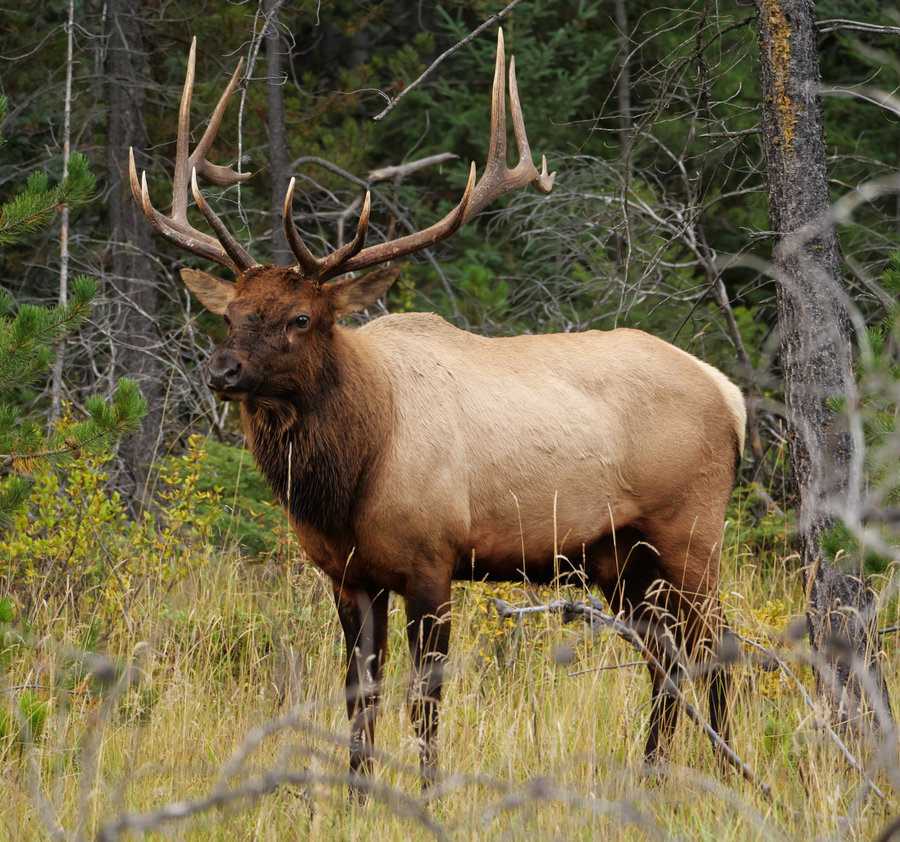
Only males grow antlers, which begin as velvet-covered bone in spring, harden by autumn, and are shed after the rut. Antler size reflects age, nutrition, and genetics. Elk antlers are among the fastest-growing bone structures in the animal kingdom.
Sources
Elk FAQs
Where do elks live?
Elks live in Grasslands, open forests, and mountain meadows. Within that range they pick microhabitats that supply cover, food (Herbivore — grasses, forbs, bark, and browse), water, and breeding sites — and they disappear where those features are lost.
What is the scientific name of the elk?
Cervus canadensis — used in research and conservation listings for elks.
What do elks eat?
Elks eat grasses, forbs, bark, and browse, with seasonal and regional variation in Grasslands, open forests, and mountain meadows.
What is the conservation status of elks?
Listed in our guides as Least Concern. Check the IUCN Red List and national assessments for the latest formal category.
Who this page is for.This page is native range and habitat, not a sighting hotline.