Quick answer
Golden Eagles can injure people in specific contexts — usually when surprised, cornered, defending young, or habituated to food. Risk scales with size (about 4.5 kg), weapons, and human behaviour, not with how “scary” the species looks online.
Key takeaway
Golden Eagles can injure people in specific contexts — usually when surprised, cornered, defending young, or habituated to food. Risk scales with size (about 4.5 kg), weapons, and human behaviour, not with how “scary” the species looks online.
Realistic risk from golden eagles
Most wild golden eagles avoid people. Serious incidents are uncommon relative to encounter rates, but consequences can be severe when animals are cornered or food-conditioned.
When Golden Eagle encounters turn dangerous
Surprise meetings, food rewards, injured animals, and mothers with young raise danger. Approaching for photos is a frequent human factor in Mountains, open hills, and tundra.
Golden Eagle capability
Consider bite, claws, horns, venom, constriction, or mass (about 4.5 kg). Even shy species can injure if handled. Status (Least Concern) does not equal temperament.
Safety around golden eagles
Keep distance, store food securely, leash pets, and follow park rules. Never feed wildlife. Seek medical care for puncture wounds and follow local public-health advice.
Physical characteristics and behaviour
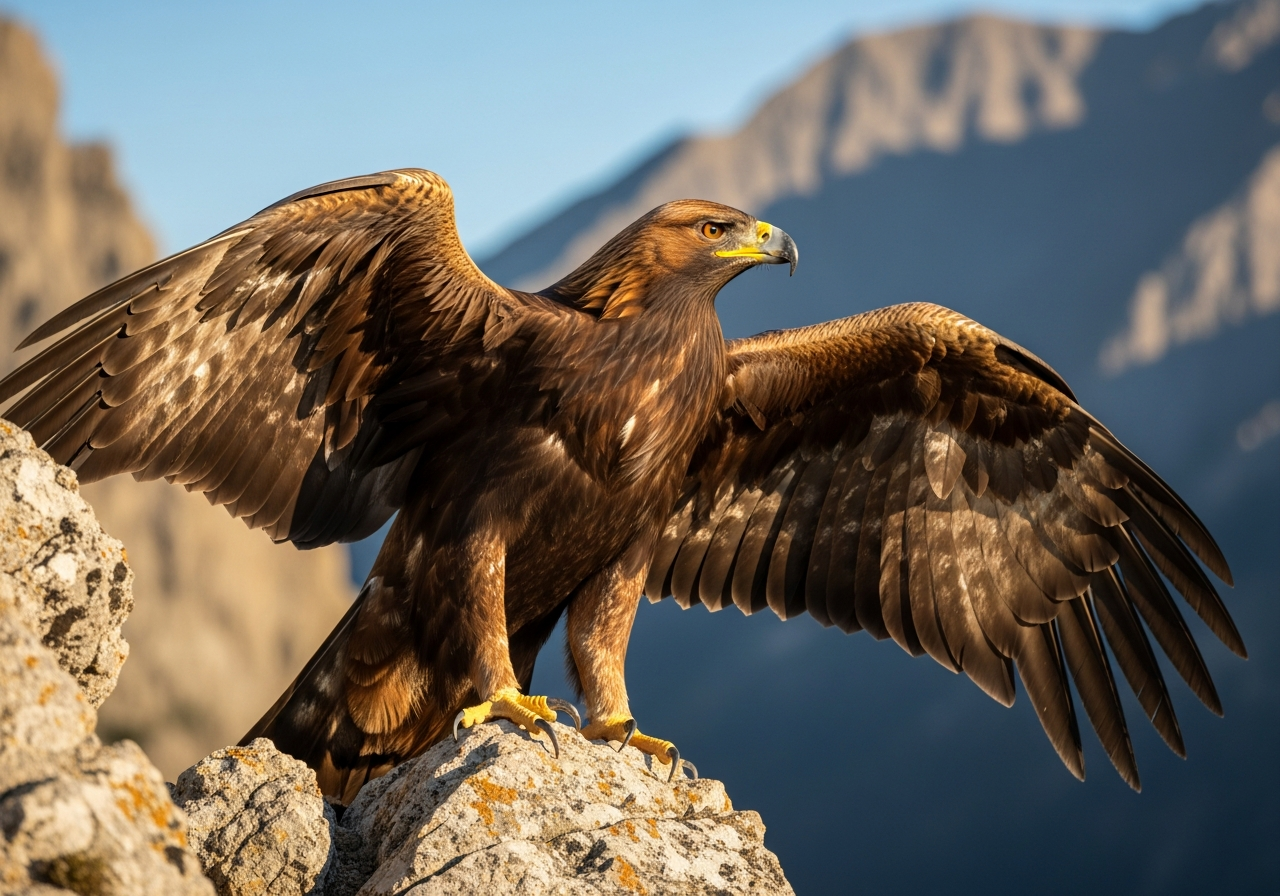
Adult golden eagles typically measure about 0.9 m in length and weigh roughly 4.5 kg (10 lb). They can sprint at Over 240 km/h (150 mph) in a dive when hunting or escaping predators. Golden Eagles are known for one of the largest and fastest birds of prey — social structure, daily activity, and seasonal movements all reflect pressures in their native environment.
Diet and ecological role
Golden Eagles feed primarily on other animals (hares, marmots, birds, carrion). Foraging strategy depends on season, local prey or plant abundance, and competition with other species. As birds, they play a measurable role in their ecosystem — controlling prey numbers, dispersing seeds, or shaping habitat through feeding and movement patterns that other wildlife depends on.
Sources
Golden Eagle FAQs
Are golden eagles dangerous?
Golden Eagles can injure people in specific contexts — usually when surprised, cornered, defending young, or habituated to food. Risk scales with size (about 4.5 kg), weapons, and human behaviour, not with how “scary” the species looks online.
What is the scientific name of the golden eagle?
Aquila chrysaetos — used in research and conservation listings for golden eagles.
What do golden eagles eat?
Golden Eagles eat hares, marmots, birds and carrion, with seasonal and regional variation in Mountains, open hills, and tundra.
Where do golden eagles live?
They are associated with Mountains, open hills, and tundra. Local presence depends on food, cover, and human land use.
What is the conservation status of golden eagles?
Listed in our guides as Least Concern. Check the IUCN Red List and national assessments for the latest formal category.