Quick answer
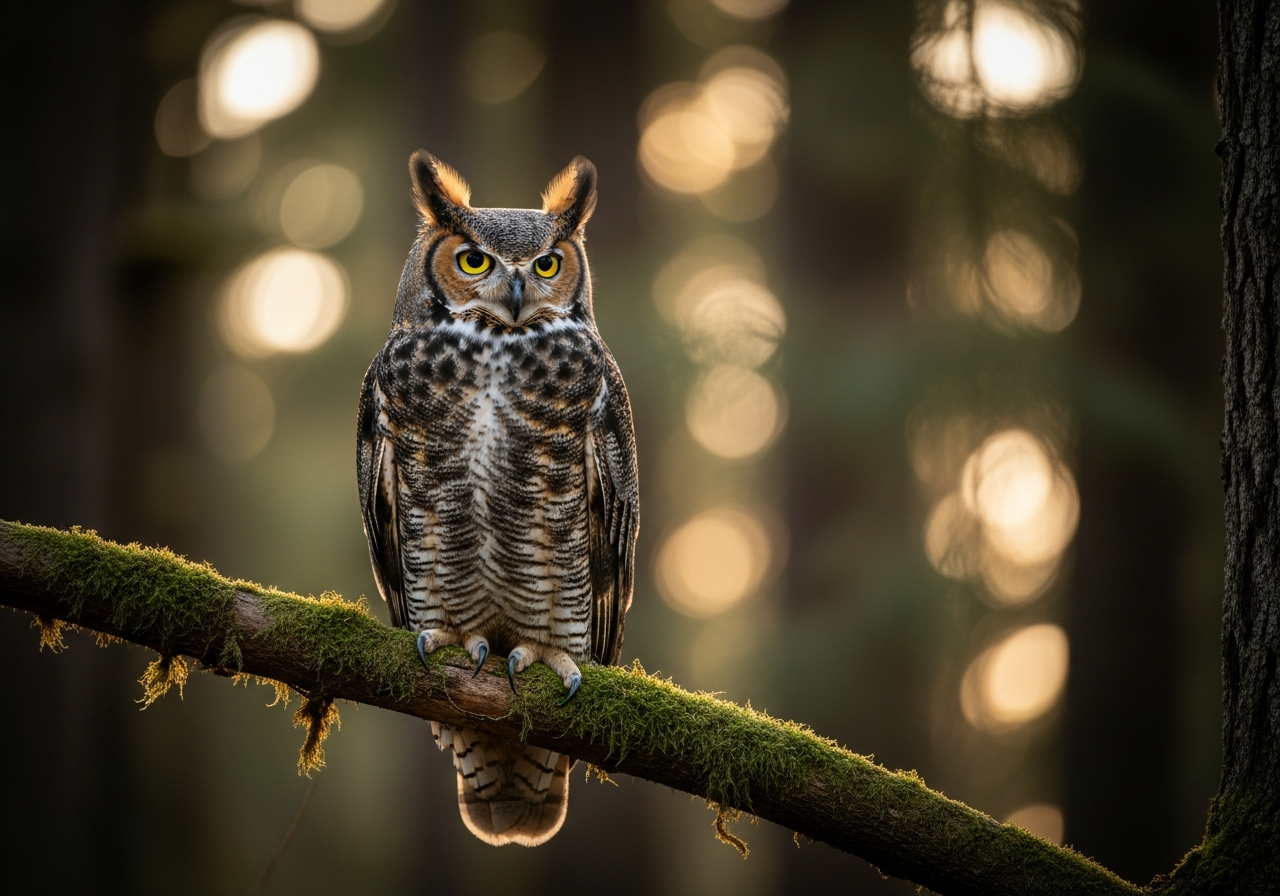
The great horned owl is a large, powerful owl found throughout the Americas, named for the tufts of feathers on its head that look like horns or ears. A fierce nocturnal predator with crushing talons, it hunts a wide range of prey, even skunks and other raptors. Known for its deep hooting call, it usually lives 10 to 15 years in the wild.
Key takeaway
The great horned owl is a large, powerful owl found throughout the Americas, named for the tufts of feathers on its head that look like horns or ears. A fierce nocturnal predator with crushing talons, it hunts a wide range of prey, even skunks and other raptors. Known for its deep hooting call, it usually lives 10 to 15 years in the wild.
Great Horned Owl overview
Great Horned Owl (Bubo virginianus) is a bird listed here as Least Concern. Typical weight about 1.4 kg; lifespan around 10–15 years in the wild.
Great Horned Owl ecology
Diet: Carnivore (mammals, birds, reptiles). Habitat: Forests, deserts, wetlands, and cities. Movement and social systems reflect those pressures across the native range.
Great Horned Owls and people
Learn before you travel or keep related pets. Wild great horned owls are not toys; captive care needs species-specific husbandry.
Status and further reading
Conservation label in our guides: Least Concern. See the full Great Horned Owl profile for taxonomy, FAQs, and related topic guides on this site.
A formidable night hunter
The great horned owl is one of the most powerful birds of prey in the Americas, with a grip strong enough to crush the spine of its prey. It hunts at night using exceptional hearing and large, light-gathering eyes, gliding silently on soft-edged feathers that muffle the sound of its wings so prey never hears it coming.
Diet and fearless appetite
Few predators have such a varied diet. Great horned owls take rabbits, rodents, and other mammals, as well as birds up to the size of geese and other owls and hawks. They are one of the only animals that regularly hunt skunks, apparently untroubled by the spray, and they will also eat reptiles, amphibians, and large insects.
Sources
Great Horned Owl FAQs
What are key facts about great horned owls?
The great horned owl is a large, powerful owl found throughout the Americas, named for the tufts of feathers on its head that look like horns or ears. A fierce nocturnal predator with crushing talons, it hunts a wide range of prey, even skunks and other raptors. Known for its deep hooting call, it usually lives 10 to 15 years in the wild.
What is the scientific name of the great horned owl?
Bubo virginianus — used in research and conservation listings for great horned owls.
What do great horned owls eat?
Great Horned Owls eat mammals, birds and reptiles, with seasonal and regional variation in Forests, deserts, wetlands, and cities.
Where do great horned owls live?
They are associated with Forests, deserts, wetlands, and cities. Local presence depends on food, cover, and human land use.
What is the conservation status of great horned owls?
Listed in our guides as Least Concern. Check the IUCN Red List and national assessments for the latest formal category.