Image sourcing: see credits & licences
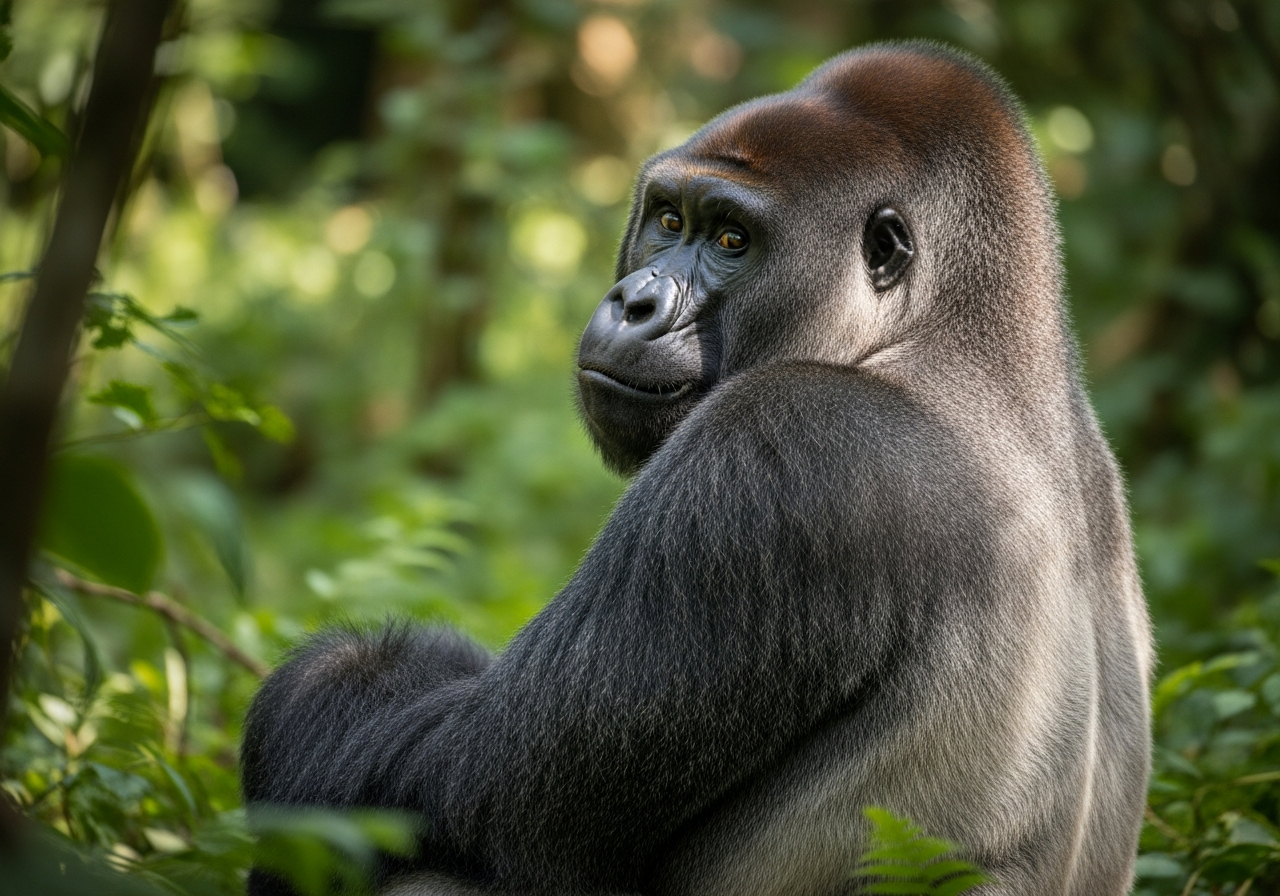
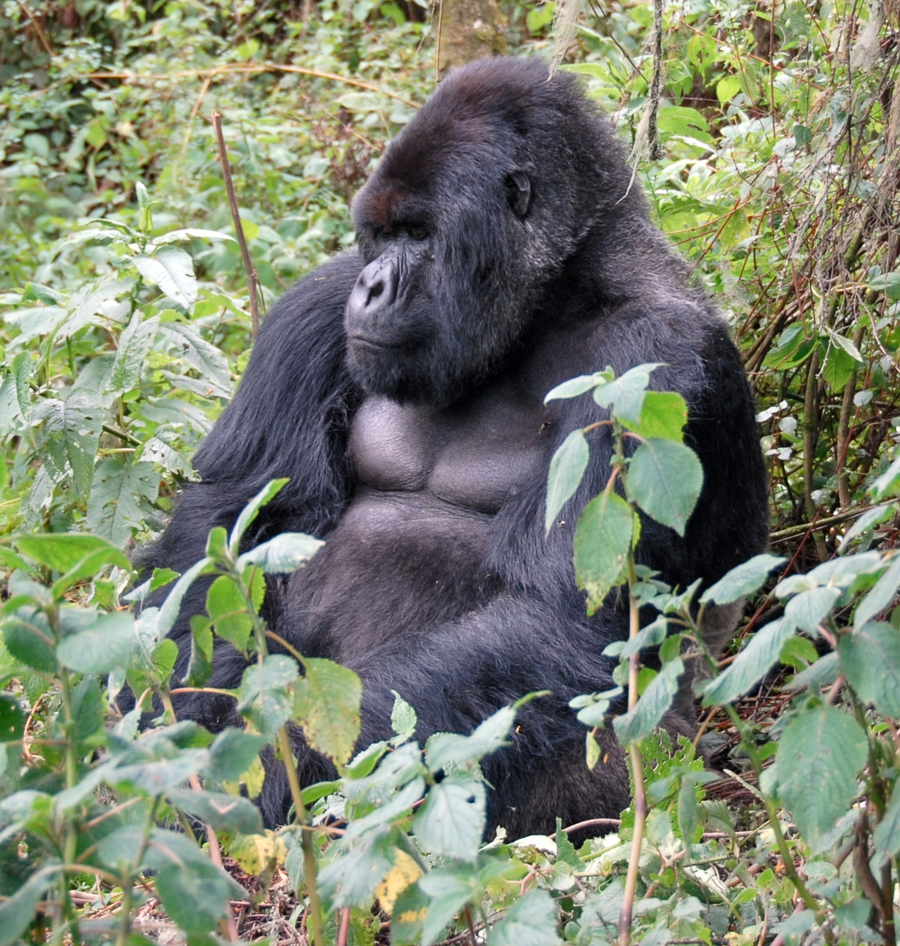
The mountain gorilla (Gorilla beringei beringei) is a mammal of the great ape family, Hominidae, in the order Primates.
Quick answer
The mountain gorilla is a subspecies of eastern gorilla living in the cloud forests of the Virunga volcanoes and Bwindi Impenetrable Forest, with fewer than 1,100 individuals remaining. Adult silverback males weigh 140–220 kg (310–485 lb), live in stable family groups, and are listed Endangered despite decades of conservation success.
Top questions about the Mountain Gorilla
Also available in Español (Gorila de montaña)
Mountain Gorilla facts at a glance
- Weight 180 kg
- Length 1.7 m
- Top speed 32 km/h
- Lifespan 40 years
| Scientific name | Gorilla beringei beringei |
|---|---|
| Diet | Herbivore — leaves, shoots, stems, fruit, and bark |
| Habitat | Montane and bamboo cloud forests at 2,200–4,300 m elevation |
| Lifespan | 35–40 years in the wild |
| Weight | Males 140–220 kg; females 70–100 kg |
| Top speed | Knuckle-walking; powerful but not built for sprinting |
| Conservation status | Endangered (IUCN) |
| Kingdom | Animalia |
|---|---|
| Phylum | Chordata |
| Class | Mammalia |
| Order | Primates |
| Family | Hominidae |
| Genus | Gorilla |
Where it lives
The mountain gorilla (Gorilla beringei beringei) is native to Montane cloud forests of the Virunga volcanoes (Rwanda, Uganda, DRC) and Bwindi Impenetrable Forest in southwestern Uganda — fewer than 1,100 individuals in two isolated populations. — recorded across Africa in this guide’s range summary.
For occurrence records, see GBIF species search and sources below.
How big is a mountain gorilla?
An adult mountain gorilla measures 1.7 m long — about 98% of the height of an average adult person (1.73 m) — and weighs around 180 kg, about 2.6× an average adult’s body weight (70 kg).
Length vs an average adult’s height (to scale)
What is a group of mountain gorillas called?
Group name (collective noun)
A group of Mountain Gorillas is called a troop.
Baby name
A baby Mountain Gorilla is called an infant.
Explore more animal collective nouns and baby animal names .
Silverback society
Each group centres on a dominant silverback male who leads, protects, and mediates disputes among females and younger males. Groups typically contain 5–30 individuals with strong bonds — grooming, play, and vocalisations maintain cohesion in dense forest where visibility is limited.
High-altitude foraging
Mountain gorillas spend much of the day eating bulky vegetation — wild celery, bamboo shoots, thistles, and nettles — requiring hours of continuous feeding to meet energy needs at cold elevations. They rarely drink standing water, obtaining moisture from plants.
Conservation turnaround
Famously studied by Dian Fossey, mountain gorillas fell to roughly 250 individuals in the 1980s from poaching, habitat loss, and war. Intensive anti-poaching patrols, veterinary care, and ecotourism revenue helped numbers recover past 1,000 — one of conservation's rare success stories.
Ongoing threats
Listed Endangered, mountain gorillas remain confined to two small forest blocks straddling Rwanda, Uganda, and the Democratic Republic of Congo. Political instability, snares set for antelope, disease transmission from humans, and climate-driven habitat shifts still pose risks.
Dig deeper into the Mountain Gorilla
- Are Mountain Gorillas Endangered?
Mountain gorillas are IUCN Endangered, not Critically Endangered. Numbers passed 1,000 but stay conservation-dependent in Virunga and Bwindi.
- How Long Do Mountain Gorillas Live?
Wild mountain gorillas often live about 35–40 years; snares and human viruses cut the average. Endangered in Virunga and Bwindi.
- Mountain Gorilla: Key Facts
The mountain gorilla is a subspecies of eastern gorilla living in the cloud forests of the Virunga volcanoes and Bwindi Impenetrable Forest, with fewer…
- What Do Mountain Gorillas Eat?
Mountain gorillas are folivores in Virunga and Bwindi — leaves, pith and bamboo, not a western-gorilla fruit menu. Never feed them.
- Where Do Mountain Gorillas Live?
Mountain gorillas live only in Virunga and Bwindi highland forest. Endangered subspecies; ~1,000-plus is planning, not a weekly headcount.
Explore the Mountain Gorilla
Close relatives
- Gorilla Same genus
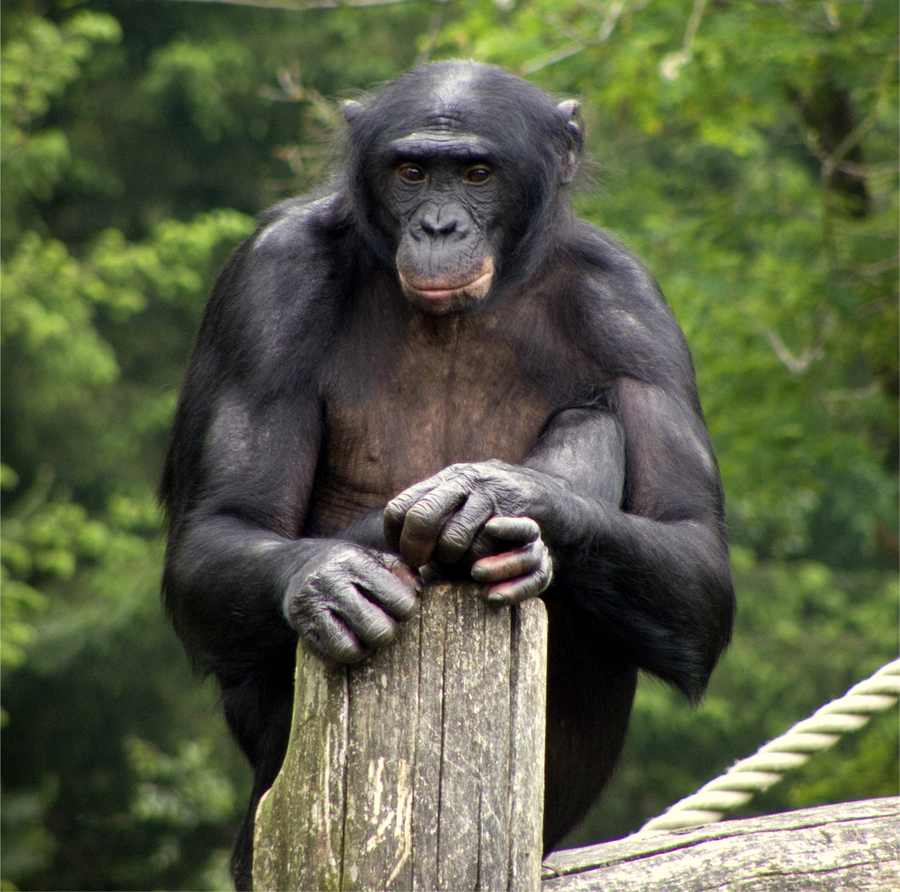
- Bonobo Same family
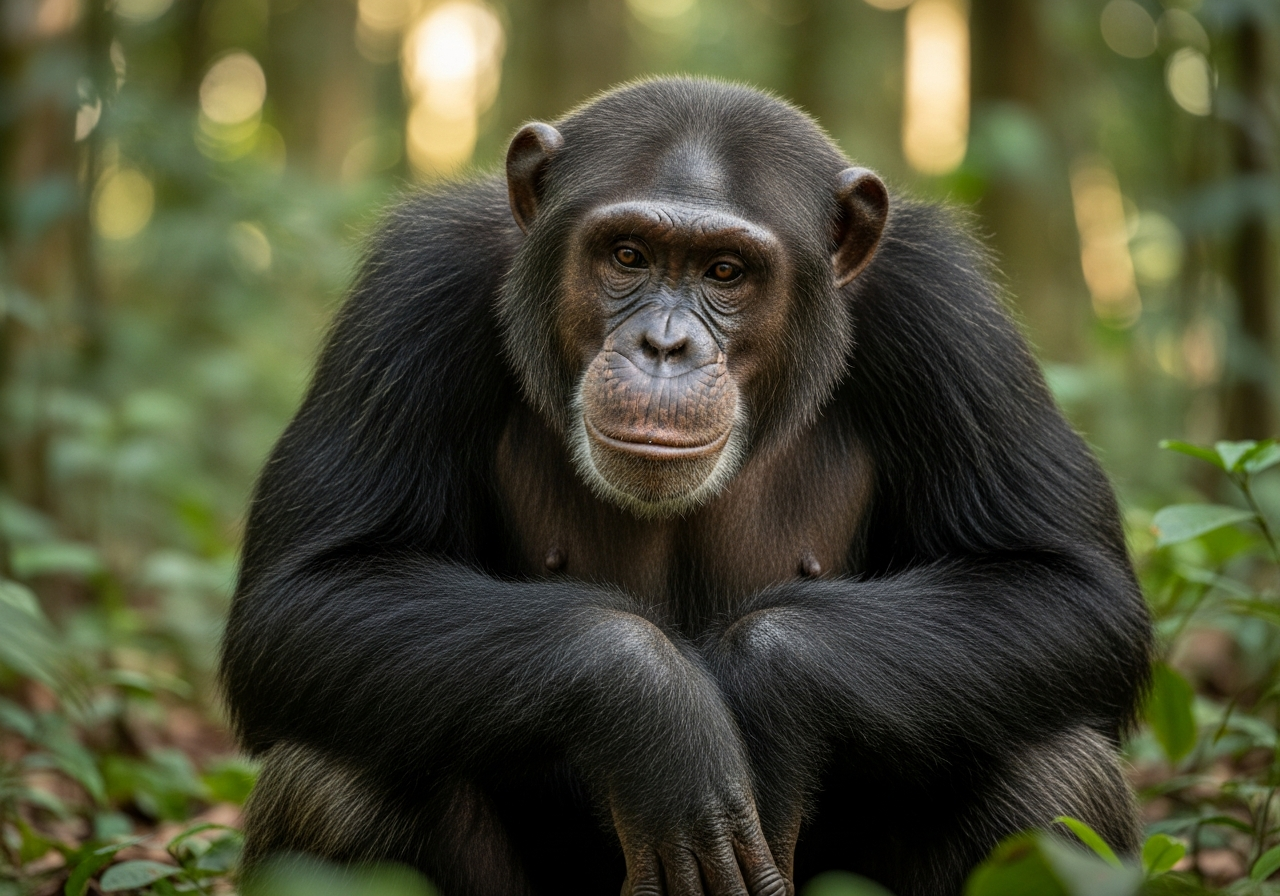
- Chimpanzee Same family
- Orangutan Same family
Collections
Range & geography
Did you know? Mountain Gorilla facts
- The mountain gorilla is a subspecies of eastern gorilla living in the cloud forests of the Virunga volcanoes and Bwindi Impenetrable Forest, with fewer than 1,100 individuals remaining.
- Roughly 1,000–1,100 individuals in two populations — the Virunga Massif and Uganda's Bwindi Impenetrable Forest — up from about 250 in the 1980s.
- Wild gorillas are generally peaceful herbivores. Silverbacks charge to intimidate threats but rarely attack unless provoked or if a group feels cornered.
- Guided treks in Rwanda's Volcanoes National Park, Uganda's Bwindi and Mgahinga parks, and DRC's Virunga National Park — permits are limited and expensive to fund protection.
- Mountain gorillas (Gorilla beringei beringei) live at high elevation with longer fur and smaller range. Western and eastern lowland gorillas inhabit lowland rainforests and are separate subspecies.
- Conservation: Endangered (IUCN).
Diet & feeding
Mountain Gorilla feeds primarily as a herbivore — leaves, shoots, stems, fruit, and bark. Mountain gorillas spend much of the day eating bulky vegetation — wild celery, bamboo shoots, thistles, and nettles — requiring hours of continuous feeding to meet energy needs at cold elevations. They rarely drink standing water,
Adaptations
- Each group centres on a dominant silverback male who leads, protects, and mediates disputes among females and younger males. Groups typically contain 5–30 individuals with strong bonds — grooming, play, and vocalisations maintain cohesion in dense forest where visibility is limited.
- Mountain gorillas spend much of the day eating bulky vegetation — wild celery, bamboo shoots, thistles, and nettles — requiring hours of continuous feeding to meet energy needs at cold elevations. They rarely drink standing water, obtaining moisture from plants.
Behaviour & ecology
- Each group centres on a dominant silverback male who leads, protects, and mediates disputes among females and younger males. Groups typically contain 5–30 individuals with strong bonds — grooming, play, and vocalisations maintain cohesion in dense forest where visibility is limited.
- Mountain gorillas spend much of the day eating bulky vegetation — wild celery, bamboo shoots, thistles, and nettles — requiring hours of continuous feeding to meet energy needs at cold elevations. They rarely drink standing water, obtaining moisture from plants.
- Famously studied by Dian Fossey, mountain gorillas fell to roughly 250 individuals in the 1980s from poaching, habitat loss, and war. Intensive anti-poaching patrols, veterinary care, and ecotourism revenue helped numbers recover past 1,000 — one of conservation's rare success stories.
Communication
- Mountain Gorilla uses scent, posture, and vocal signals to mark territory and coordinate social behaviour.
- Communication intensity often peaks during breeding seasons and territorial disputes.
Habitat & range
Montane and bamboo cloud forests at 2,200–4,300 m elevation
Ecological role
Mountain Gorilla shapes vegetation through grazing or browsing and serves as prey for larger predators where ranges overlap.
Conservation status of the Mountain Gorilla
The mountain gorilla (Gorilla beringei beringei) is listed as Endangered on the IUCN Red List. Endangered (EN) means a species faces a very high risk of extinction in the wild. Populations are usually declining sharply due to habitat loss, hunting, disease, or climate pressure. It sits one level below Critically Endangered on the IUCN Red List.
Main threats to the mountain gorilla
- Disease transmission from humans
- Poaching and snare bycatch
- Habitat loss and encroachment
- Civil unrest in the range
Mountain Gorilla (Gorilla beringei beringei) was most recently assessed for the IUCN Red List in 2018. View the full IUCN assessment .
Frequently asked questions about the Mountain Gorilla
How many mountain gorillas are left?
Roughly 1,000–1,100 individuals in two populations — the Virunga Massif and Uganda's Bwindi Impenetrable Forest — up from about 250 in the 1980s.
Are mountain gorillas dangerous?
Wild gorillas are generally peaceful herbivores. Silverbacks charge to intimidate threats but rarely attack unless provoked or if a group feels cornered.
Where can you see mountain gorillas?
Guided treks in Rwanda's Volcanoes National Park, Uganda's Bwindi and Mgahinga parks, and DRC's Virunga National Park — permits are limited and expensive to fund protection.
Mountain gorilla vs lowland gorilla?
Mountain gorillas (Gorilla beringei beringei) live at high elevation with longer fur and smaller range. Western and eastern lowland gorillas inhabit lowland rainforests and are separate subspecies.
Why are mountain gorillas endangered?
Small range, habitat encroachment, snares, disease from human contact, and historical poaching — though numbers are slowly increasing thanks to sustained protection efforts.
What is a group of mountain gorillas called?
A group of Mountain Gorillas is called a troop.
What is a baby mountain gorilla called?
A baby Mountain Gorilla is called an infant.
Sources & references
This guide is compiled and reviewed against established zoological and conservation references. Key sources for the Mountain Gorilla:
-
IUCN Red List of Threatened Species
Conservation status (Endangered) reflects the IUCN Red List category for Gorilla beringei beringei, most recently assessed in 2018.
-
iNaturalist — observations & photos
Search citizen-science observations and community IDs for Gorilla beringei beringei. Useful for range checks and recent sightings — not a substitute for formal Red List status.
-
GBIF — occurrence data
Global Biodiversity Information Facility species search for Gorilla beringei beringei. Explore published occurrence records used in range research.
- IUCN Red List — Gorilla beringei beringei.
Conservation status (Endangered) and population trends.
- Animal Diversity Web — Gorilla beringei beringei. University of Michigan Museum of Zoology.
Life history, morphology, and range.
- Wikipedia — Mountain Gorilla.
General taxonomy and overview (cross-check primary sources).
-
Global Animal Guide editorial standards
How we research, source, review, and update every guide for accuracy.