Quick answer
Blacklegged Ticks can injure people in specific contexts — usually when surprised, cornered, defending young, or habituated to food. Risk scales with size (1–5 mg (0.000001–0.000005 kg) depending on stage), weapons, and human behaviour, not with how “scary” the species looks online.
Key takeaway
Blacklegged Ticks can injure people in specific contexts — usually when surprised, cornered, defending young, or habituated to food. Risk scales with size (1–5 mg (0.000001–0.000005 kg) depending on stage), weapons, and human behaviour, not with how “scary” the species looks online.
Realistic risk from blacklegged ticks
Most wild blacklegged ticks avoid people. Serious incidents are uncommon relative to encounter rates, but consequences can be severe when animals are cornered or food-conditioned.
When Blacklegged Tick encounters turn dangerous
Surprise meetings, food rewards, injured animals, and mothers with young raise danger. Approaching for photos is a frequent human factor in Deciduous forests, leaf litter, and grassy edges of eastern North America.
Blacklegged Tick capability
Consider bite, claws, horns, venom, constriction, or mass (1–5 mg (0.000001–0.000005 kg) depending on stage). Even shy species can injure if handled. Status (Not Evaluated) does not equal temperament.
Safety around blacklegged ticks
Keep distance, store food securely, leash pets, and follow park rules. Never feed wildlife. Seek medical care for puncture wounds and follow local public-health advice.
Questing behaviour
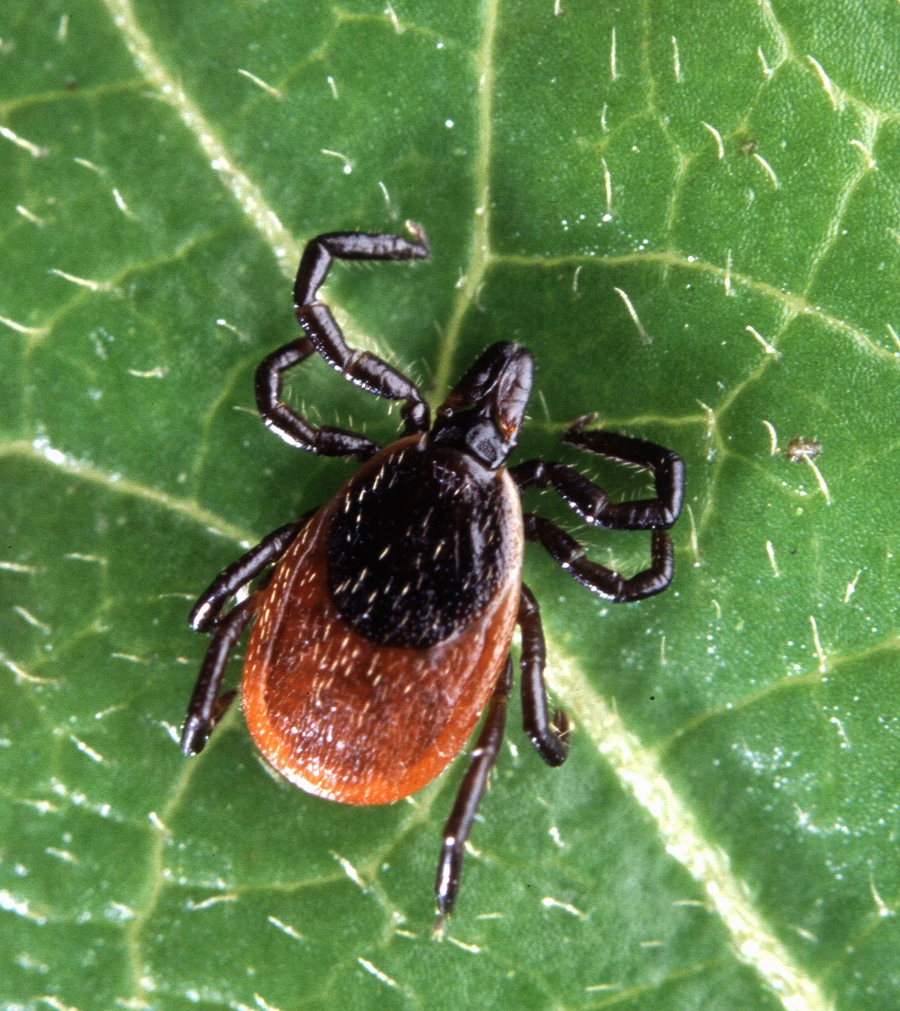
Ticks climb vegetation and extend front legs to latch onto passing hosts — a behaviour called questing. They detect carbon dioxide, heat, and vibration. Permethrin-treated clothing and DEET repellents reduce attachment during hiking.
Lyme disease transmission
Ixodes scapularis is the primary vector of Borrelia burgdorferi, the bacterium causing Lyme disease in the United States. Nymphs — active in late spring and summer — cause most human infections because they are small and easily overlooked. Prompt tick removal within 24–36 hours reduces transmission risk.
Sources
Blacklegged Tick FAQs
Are blacklegged ticks dangerous?
Blacklegged Ticks can injure people in specific contexts — usually when surprised, cornered, defending young, or habituated to food. Risk scales with size (1–5 mg (0.000001–0.000005 kg) depending on stage), weapons, and human behaviour, not with how “scary” the species looks online.
What is the scientific name of the blacklegged tick?
Ixodes scapularis — used in research and conservation listings for blacklegged ticks.
What do blacklegged ticks eat?
Blacklegged Ticks eat mammals, birds, and reptiles, with seasonal and regional variation in Deciduous forests, leaf litter, and grassy edges of eastern North America.
Where do blacklegged ticks live?
They are associated with Deciduous forests, leaf litter, and grassy edges of eastern North America. Local presence depends on food, cover, and human land use.
What is the conservation status of blacklegged ticks?
Listed in our guides as Not Evaluated. Check the IUCN Red List and national assessments for the latest formal category.
Who this page is for.This page is realistic risk, not medical advice after a bite or attack.