Image sourcing: see credits & licences
The bearded dragon (Pogona vitticeps) is a reptile of the family Agamidae, in the order Squamata.
Quick answer
The bearded dragon is a medium-sized lizard from the deserts of central Australia and one of the most popular pet reptiles in the world. Named for the spiny 'beard' under its chin, which it puffs out and darkens to display, it is docile, curious, and tolerant of handling. Bearded dragons are omnivores that typically live 10 to 15 years in captivity.
Top questions about the Bearded Dragon
Also available in Español (Dragón barbudo)
Bearded Dragon facts at a glance
- Weight 500 g
- Length 60 cm
- Top speed 15 km/h
- Lifespan 12 years
| Scientific name | Pogona vitticeps |
|---|---|
| Diet | Omnivore |
| Habitat | Arid deserts and woodlands of Australia |
| Lifespan | 10–15 years in captivity |
| Length | 40–60 cm (16–24 in) including tail |
| Top speed | Up to 15 km/h (9 mph) |
| Conservation status | Least Concern (IUCN) |
| Kingdom | Animalia |
|---|---|
| Phylum | Chordata |
| Class | Reptilia |
| Order | Squamata |
| Family | Agamidae |
| Genus | Pogona |
Where it lives
The bearded dragon (Pogona vitticeps) is native to Arid deserts and dry woodlands of central Australia. — recorded across Oceania in this guide’s range summary.
For occurrence records, see GBIF species search and sources below.
How big is a bearded dragon?
An adult bearded dragon measures 60 cm long — about 35% of the height of an average adult person (1.73 m) — and weighs around 500 g, about 1% of an average adult’s body weight (70 kg).
Length vs an average adult’s height (to scale)
What is a group of bearded dragons called?
Group name (collective noun)
A group of Bearded Dragons is called a lounge.
Baby name
A baby Bearded Dragon is called a hatchling.
Explore more animal collective nouns and baby animal names .
The beard display
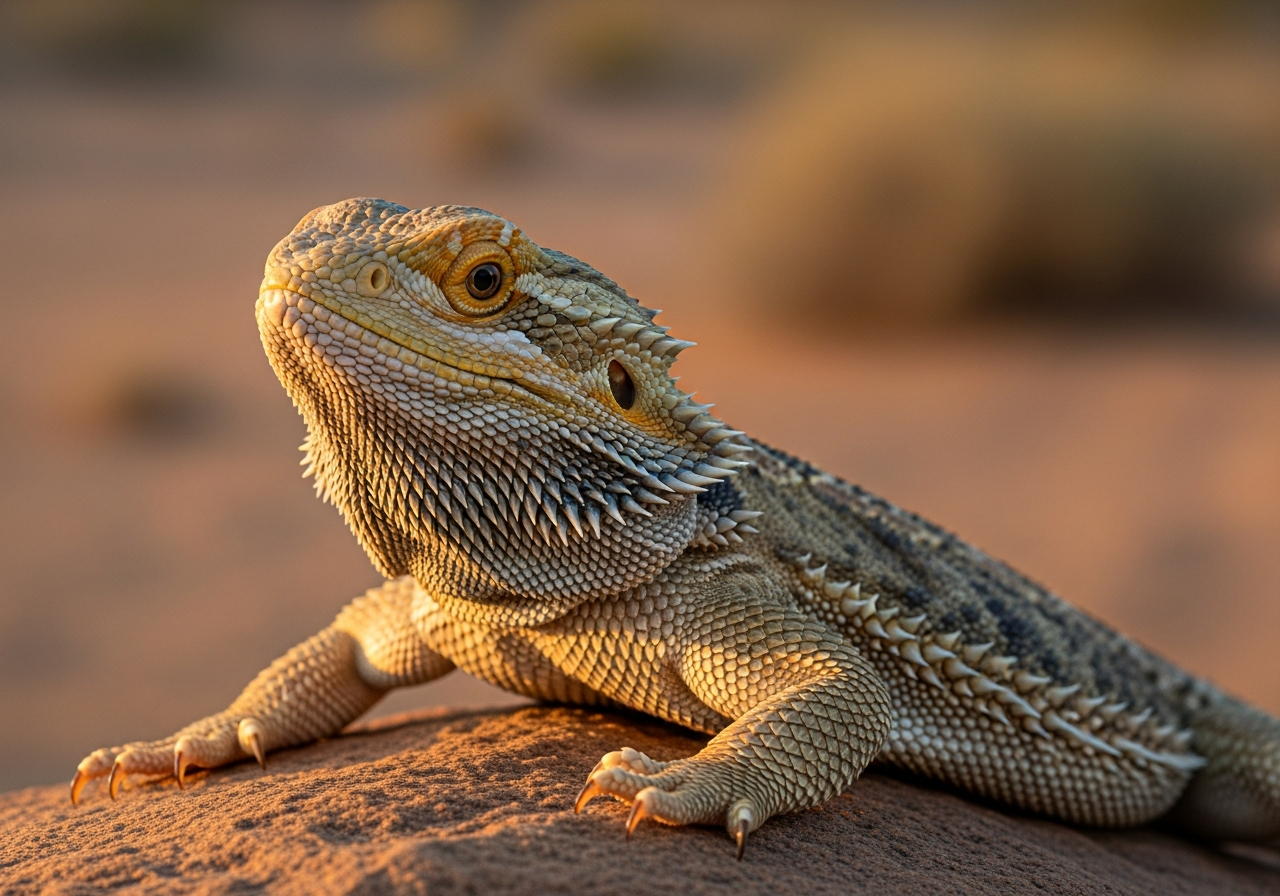
Bearded dragons get their name from the spiny pouch of skin under the chin. When threatened, excited, or showing dominance, a 'beardie' puffs this beard out and can turn it black, while opening its mouth wide to look bigger and more intimidating to rivals and predators.
Body language
These lizards 'talk' with body language. A slow arm wave is a sign of submission or acknowledgment, while fast head-bobbing signals dominance. Reading these cues, along with color changes, helps keepers understand a bearded dragon's mood and well-being.
Diet and care
Bearded dragons are omnivores. Young dragons eat mostly insects to fuel rapid growth, while adults eat more leafy greens and vegetables. In captivity they need a warm basking spot, a cooler zone, and UVB lighting to process calcium and keep their bones healthy.
Desert adaptations
Native to Australia's hot, dry interior, bearded dragons bask to raise their body temperature and shelter in burrows or shade to avoid extreme heat. They can survive long dry spells and, in cooler conditions, may enter a dormant state called brumation, the reptile equivalent of hibernation.
Dig deeper into the Bearded Dragon
- Bearded Dragon: Key Facts
The bearded dragon is a medium-sized lizard from the deserts of central Australia and one of the most popular pet reptiles in the world.
- How Long Do Bearded Dragons Live?
Bearded Dragon lifespan is typically 10–15 years in captivity. What shortens or extends life, life stages, and status (Least Concern).
- What Do Bearded Dragons Eat?
What bearded dragons eat: Omnivore, foraging style, and seasonal shifts in Arid deserts and woodlands of Australia.
- Where Do Bearded Dragons Live?
Where bearded dragons live: Arid deserts and woodlands of Australia, native range cues, and human overlap. Status Least Concern.
Explore the Bearded Dragon
Close relatives
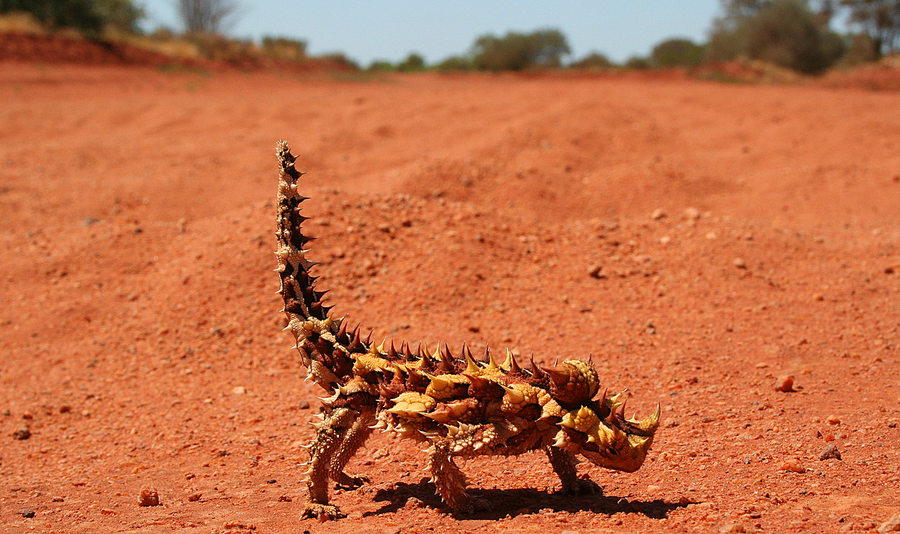
- Thorny Devil Same family
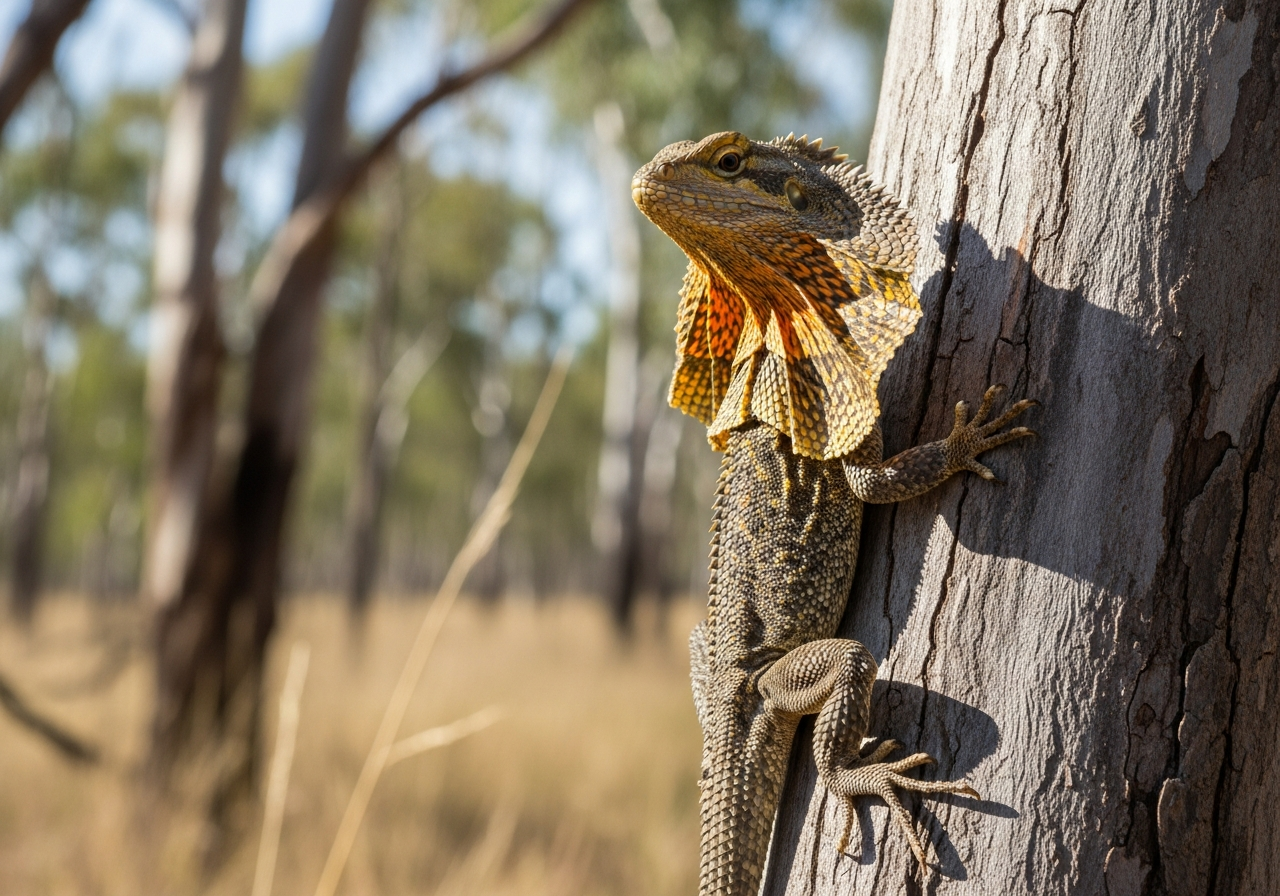
- Frilled Lizard Same family
- Black Mamba Same order
- Inland Taipan Same order
Range & geography
Did you know? Bearded Dragon facts
- The bearded dragon is a medium-sized lizard from the deserts of central Australia and one of the most popular pet reptiles in the world.
- It is named for the spiny flap of skin under its chin, which it can puff out and darken like a beard when it feels threatened, excited, or wants to display dominance.
- Bearded dragons are omnivores. Juveniles eat mostly insects such as crickets, while adults eat more leafy greens and vegetables along with some insects.
- With proper care, pet bearded dragons typically live 10 to 15 years, making them a long-term commitment as a pet reptile.
- Yes. Bearded dragons are popular because they are generally docile, tolerate handling well, and have interesting behaviors, though they need correct heating, UVB lighting, and diet to stay healthy.
- Conservation: Least Concern (IUCN).
Diet & feeding
Bearded Dragon feeds primarily as a omnivore. Bearded dragons get their name from the spiny pouch of skin under the chin. When threatened, excited, or showing dominance, a 'beardie' puffs this beard out and can turn it black, while opening its mouth wide to look bigger and more intimidating to rivals and predators.
Adaptations
- Bearded dragons get their name from the spiny pouch of skin under the chin. When threatened, excited, or showing dominance, a 'beardie' puffs this beard out and can turn it black, while opening its mouth wide to look bigger and more intimidating to rivals and predators.
- These lizards 'talk' with body language. A slow arm wave is a sign of submission or acknowledgment, while fast head-bobbing signals dominance. Reading these cues, along with color changes, helps keepers understand a bearded dragon's mood and well-being.
Behaviour & ecology
- Bearded dragons get their name from the spiny pouch of skin under the chin. When threatened, excited, or showing dominance, a 'beardie' puffs this beard out and can turn it black, while opening its mouth wide to look bigger and more intimidating to rivals and predators.
- These lizards 'talk' with body language. A slow arm wave is a sign of submission or acknowledgment, while fast head-bobbing signals dominance. Reading these cues, along with color changes, helps keepers understand a bearded dragon's mood and well-being.
- Bearded dragons are omnivores. Young dragons eat mostly insects to fuel rapid growth, while adults eat more leafy greens and vegetables. In captivity they need a warm basking spot, a cooler zone, and UVB lighting to process calcium and keep their bones healthy.
Communication
- Scent marking, body posture, and head-bobbing or tail signals communicate threat and dominance.
- Vocalisations are limited in many reptiles but hissing or bellowing occurs in some groups.
Habitat & range
Arid deserts and woodlands of Australia
Ecological role
Bearded Dragon plays a recognised ecological role in arid deserts and woodlands of australia.
Conservation status of the Bearded Dragon
The bearded dragon (Pogona vitticeps) is listed as Least Concern on the IUCN Red List. Least Concern (LC) is the IUCN's lowest-risk category, assigned to widespread, abundant species that have been evaluated and found not to be threatened. It does not mean a species faces no pressures — only that it is not currently at risk of extinction.
The bearded dragon (Pogona vitticeps) is assessed on the IUCN Red List. Look up on the IUCN Red List .
Frequently asked questions about the Bearded Dragon
Why is it called a bearded dragon?
It is named for the spiny flap of skin under its chin, which it can puff out and darken like a beard when it feels threatened, excited, or wants to display dominance.
What do bearded dragons eat?
Bearded dragons are omnivores. Juveniles eat mostly insects such as crickets, while adults eat more leafy greens and vegetables along with some insects.
How long do bearded dragons live?
With proper care, pet bearded dragons typically live 10 to 15 years, making them a long-term commitment as a pet reptile.
Are bearded dragons good pets?
Yes. Bearded dragons are popular because they are generally docile, tolerate handling well, and have interesting behaviors, though they need correct heating, UVB lighting, and diet to stay healthy.
What does it mean when a bearded dragon waves its arm?
Arm-waving is a natural bearded dragon behavior usually interpreted as a sign of submission or acknowledgment of another dragon, person, or its surroundings.
What is a group of bearded dragons called?
A group of Bearded Dragons is called a lounge.
What is a baby bearded dragon called?
A baby Bearded Dragon is called a hatchling.
Sources & references
This guide is compiled and reviewed against established zoological and conservation references. Key sources for the Bearded Dragon:
-
IUCN Red List of Threatened Species
Conservation status (Least Concern) reflects the IUCN Red List category for Pogona vitticeps.
-
iNaturalist — observations & photos
Search citizen-science observations and community IDs for Pogona vitticeps. Useful for range checks and recent sightings — not a substitute for formal Red List status.
-
GBIF — occurrence data
Global Biodiversity Information Facility species search for Pogona vitticeps. Explore published occurrence records used in range research.
- IUCN Red List — Pogona vitticeps.
Conservation status (Least Concern) and population trends.
- Animal Diversity Web — Pogona vitticeps. University of Michigan Museum of Zoology.
Life history, morphology, and range.
- Wikipedia — Bearded Dragon.
General taxonomy and overview (cross-check primary sources).
-
Global Animal Guide editorial standards
How we research, source, review, and update every guide for accuracy.