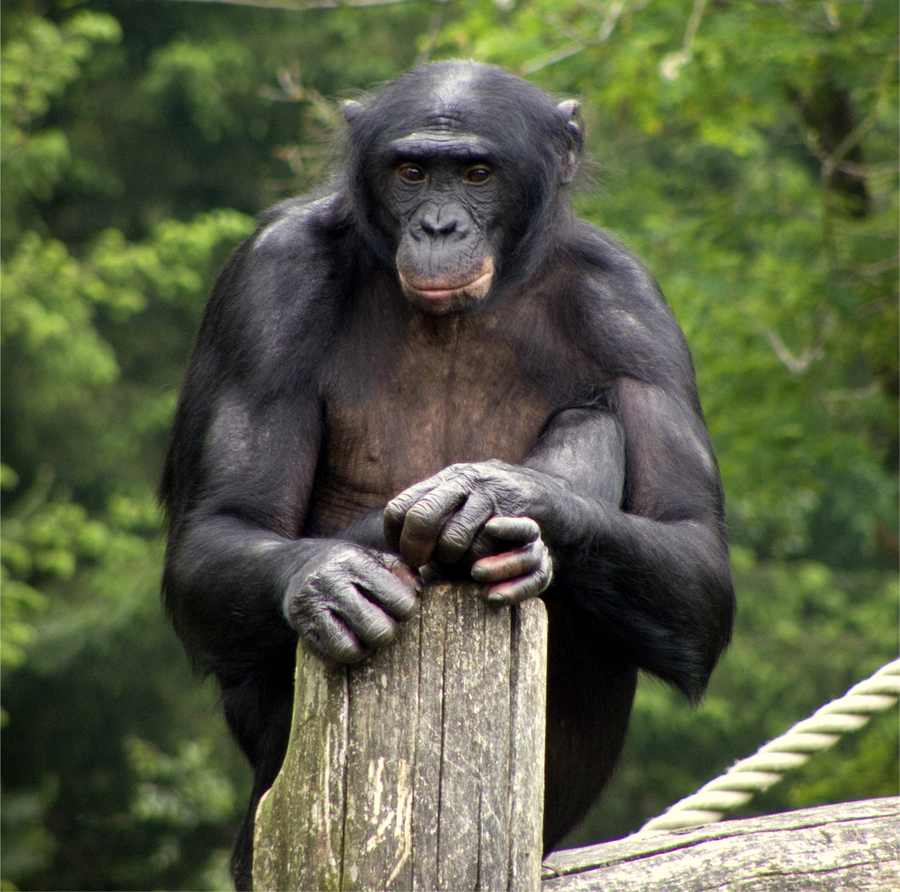
Quick answer
Bonobos are fruit-first omnivores: ripe fruit, leaves, pith, seeds and terrestrial herbs, plus insects and occasional small mammals. They hunt less than many chimpanzee communities. They live only south of the Congo River. Never feed wild bonobos. Figures checked 13 August 2026.
What do bonobos actually eat?
Ripe fruit first, then leaves, pith, Marantaceae herbs, flowers and seeds. Meat happens; it does not define the calorie budget the way cooperative colobus hunts can in some chimpanzee communities. “Omnivore in swamp forest” was the least wrong template line — the missing half is the river.
How do bonobos find food?
Parties move to fruiting trees and herb patches. Sharing is more often peaceful than in chimps, which is a social fact, not a feeding licence. Infants sample what the group already processes. A tourist fruit pile is still a conflict pipeline.
What do they do to the forest?
Seed dispersal and herb browsing. Empty bonobo range is a quieter forest. That is why snare and bushmeat control is diet conservation.
Does feeding start conflict?
Yes. Never feed wild bonobos. Habituation for research or future tourism still needs distance. Crop-edge gardens are a map of lost forest, not proof they “prefer” cassava.
Does a female-centred group change the menu?
It changes who gets priority at a fruit patch more than it changes the plants. Coalitions of females can suppress male aggression. That is not a guarantee of safety for a person with a banana.
Why does the Congo River belong on a diet page?
It is the range wall. WARN’s country programmes fund partner veterinary and rescue work in-range — not an orangutan appeal.
Sources
Bonobo FAQs
What do bonobos eat?
Bonobos are fruit-first omnivores: ripe fruit, leaves, pith, seeds, flowers, and terrestrial herbaceous vegetation. They take insects and occasional small mammals, but they hunt less than many chimpanzee communities. Sharing fruit patches is part of the social story, not a zoo snack bar.
Do bonobos hunt like chimpanzees?
Less often, and meat is a smaller part of the diet. They are not herbivores. Never feed wild bonobos. Food-conditioning plus habituation is how conflict and disease start — even in a species famous for low lethal aggression.
Do they eat the same things north of the Congo River?
There are no wild bonobos north of the Congo River. That is chimpanzee range. Mixing the maps mixes the menus. Both species are Endangered; only chimps have a Critically Endangered western subspecies.
How does diet link to conservation?
Fruiting lowland and swamp forest south of the Congo is the pantry. Logging and bushmeat empty it. World Animal Rescue Network describes proposed partner work via country programmes, not an orangutan appeal.
Who this page is for.This page is about wild diet. Skip it if you need a captive feeding plan from a veterinarian.