Quick answer
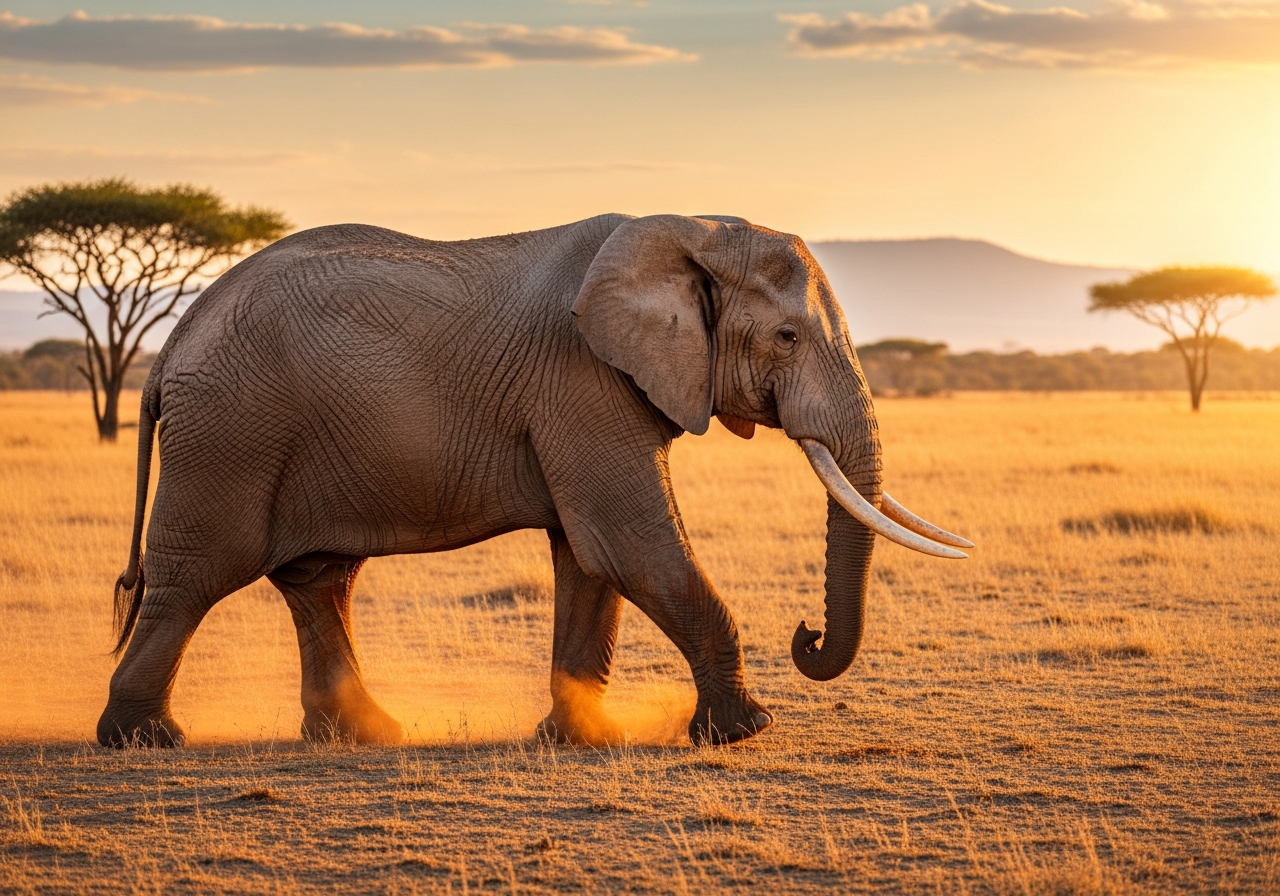
African elephants eat grass, browse, bark and fruit. Adults often take on the order of 150–300 kg a day — a planning range, not a census. This slug is the African elephant, not Asia. Savanna Loxodonta africana is Endangered; forest L. cyclotis is Critically Endangered. Never feed them. Figures checked 13 August 2026.
What do African elephants actually eat?
Grass first where the savanna is open; leaves, twigs, bark, roots and fruit wherever woody browse stands. “Herbivore in savanna, forest, desert edge” without naming those items was the thin Key takeaway. They are not carnivores and they are not Asian elephants. Anatomy — a trunk that strips bark and a gut that processes bulk fibre — locks the menu.
How do they find enough food?
They walk. Matriarchs remember water and fruiting groves across years. Lean seasons force longer travel and more bark. Calves nurse and sample what the family opens. Sixteen-hour feeding days are a planning picture of bulk intake, not a stopwatch on every herd.
What do they do to the food web?
They knock trees, spread seeds, and dig water that other species use. That is keystone grazing, not a zoo snack list. Empty mosaics cannot hold them. Diet conservation is habitat and corridor conservation.
Does crop raiding mean they prefer farms?
No. Never feed wild African elephants. A maize field on an old path is conflict geography. Food rewards create the next injury. This is not a suburban-deer picnic story.
Is 150 kg a hard daily ration?
Treat 150–300 kg a day as order of magnitude for a large adult, not a census of every stomach. Water intake is likewise a planning figure — often cited around 190 litres on a hot day. WARN’s elephant appeal describes proposed partner-led rescue — not Kruger elephant camps..
Sources
African Elephant FAQs
What do African elephants eat?
Grass, browse, bark, fruit and roots — a herbivore menu that shifts with season. Adults often take on the order of 150–300 kg of vegetation a day: a planning range, not a park census. This slug is the African elephant, not Asia. Never feed wild elephants.
Do savanna and forest elephants eat the same things?
Both are herbivores. Savanna elephants (Loxodonta africana, Endangered) take more grass in open mosaics; forest elephants (L. cyclotis, Critically Endangered) take more browse, fruit and bark. Flattening both into one Latin name was the thin version of this page. Season still decides the plate.
Should you feed wild elephants?
No. Habituation gets people hurt and elephants shot. Crop raiding is a map of farms on movement routes, not proof they prefer maize. A vehicle snack is not a diet study. Captive menus are a welfare problem, not picnic rules.
How does diet link to conservation?
Empty browse and fenced corridors push herds into farms. Ivory then removes the animals that still know where food is. World Animal Rescue Network’s elephant appeal describes proposed partner-led rescue — not Kruger elephant camps..
Who this page is for.This page is about wild diet. Skip it if you need a captive feeding plan from a veterinarian.