Quick answer
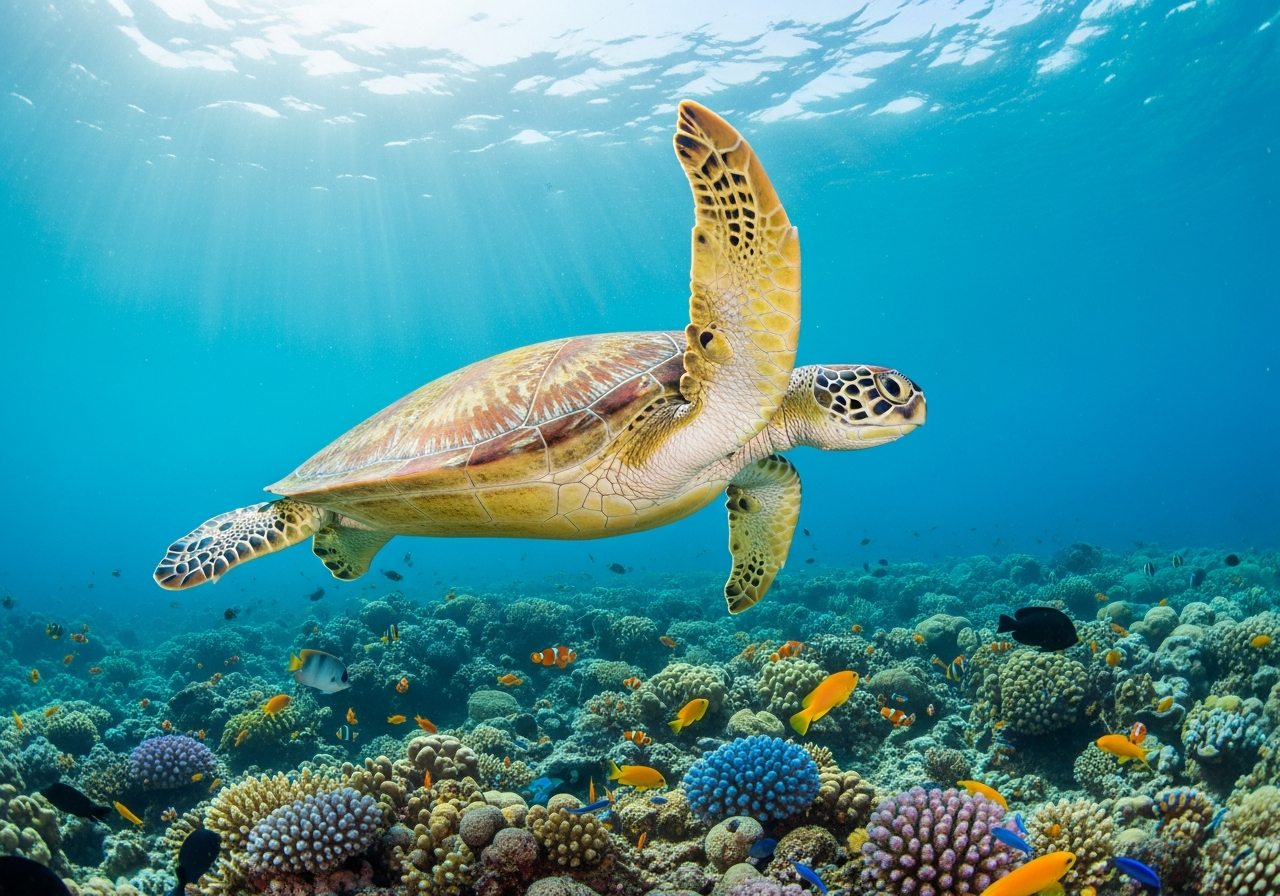
Green Sea Turtles live in Tropical and subtropical coastal seas. Within that range they pick microhabitats that supply cover, food (Herbivore as adults (seagrass, algae)), water, and breeding sites — and they disappear where those features are lost.
Key takeaway
Green Sea Turtles live in Tropical and subtropical coastal seas. Within that range they pick microhabitats that supply cover, food (Herbivore as adults (seagrass, algae)), water, and breeding sites — and they disappear where those features are lost.
Green Sea Turtle native habitat
Green Sea Turtles (Chelonia mydas) are tied to Tropical and subtropical coastal seas. Look for sites that match their diet (Herbivore as adults (seagrass, algae)) and movement style; seasonal rains or prey shifts can expand or shrink local occupancy.
Microhabitats green sea turtles prefer
Cover for resting, access to food, and safe breeding sites decide day-to-day use. Edge habitats can help adaptable populations but fail specialists that need continuous wild land.
How people change Green Sea Turtle range
Farms, suburbs, and roads create opportunity for some individuals and lethal risk for others. Fragmentation without corridors isolates green sea turtle groups and raises local extinction risk.
Conservation geography for green sea turtles
Status in our guides: <strong>Endangered</strong>. Protecting linked habitat often beats a single fenced reserve. Watch from a distance and never feed wild green sea turtles.
Diet
Hatchlings and juveniles eat a mix of animals and plants, but adults switch to a largely herbivorous diet of seagrass and algae. This grazing keeps seagrass meadows healthy, making green turtles important to coastal ecosystems.
Habitat and range
Green sea turtles live in tropical and subtropical waters around the world, favoring shallow coastal areas with seagrass beds and coral reefs. They come ashore only to nest, with females digging nests on sandy beaches at night.
Sources
Green Sea Turtle FAQs
Where do green sea turtles live?
Green Sea Turtles live in Tropical and subtropical coastal seas. Within that range they pick microhabitats that supply cover, food (Herbivore as adults (seagrass, algae)), water, and breeding sites — and they disappear where those features are lost.
What is the scientific name of the green sea turtle?
Chelonia mydas — used in research and conservation listings for green sea turtles.
What do green sea turtles eat?
Green Sea Turtles eat seagrass, algae, with seasonal and regional variation in Tropical and subtropical coastal seas.
What is the conservation status of green sea turtles?
Listed in our guides as Endangered. Check the IUCN Red List and national assessments for the latest formal category.