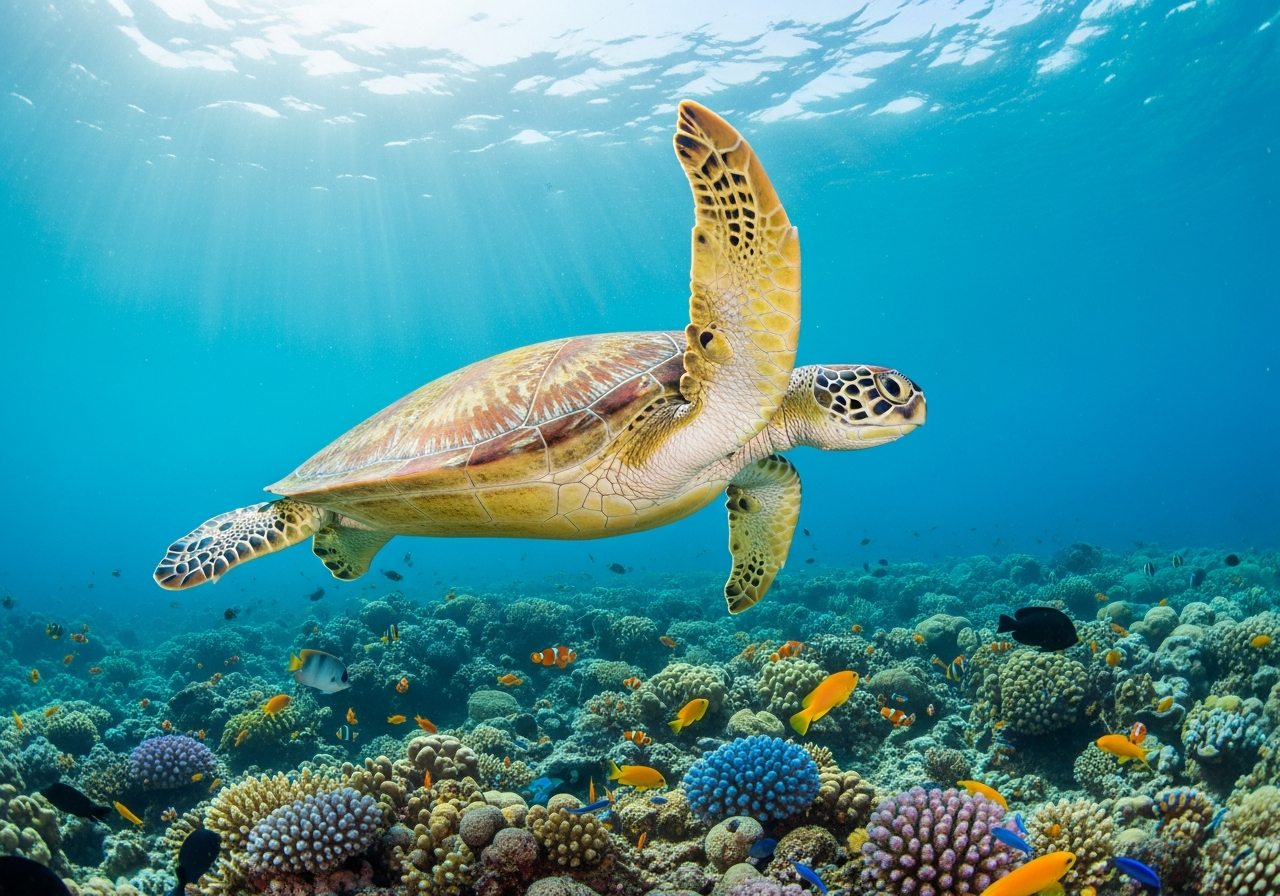
Status update, 19 September 2026: IUCN’s specialist group lists green turtles as Least Concern globally (2025). Regional risk and national legal protections vary.
Quick answer
Green sea turtles are globally Least Concern in the 2025 IUCN assessment. Some regional populations remain threatened, and national legal protections can differ from the global Red List category. Bycatch, harvest and habitat loss still require conservation action.
Are green turtles Endangered?
Green sea turtles are globally Least Concern in the 2025 IUCN assessment. Some regional populations remain threatened, and national legal protections can differ from the global Red List category. Bycatch, harvest and habitat loss still require conservation action.
Which threats remain?
Fishing bycatch, direct harvest, loss of nesting beaches and damage to feeding habitat continue to affect green turtles. The mix and severity of pressures vary by region. An improved global category does not remove those local threats.
Is a busy nesting beach an all-clear?
No. A nesting count measures one place and period. The global 2025 assessment recognises recovery, while regional assessments provide a more local view of risk. Compare the same population, method and time period before drawing a trend.
What actually helps?
Turtle-excluder devices, eggs left in the sand, and seagrass that still stands. WARN’s sea-turtle appeal describes proposed partner coastal work — not nesting-beach camps.
Global, regional and legal status
Green turtles occupy tropical and subtropical seas around the world. A global assessment combines evidence across the species; regional assessments and national protection rules answer different questions about particular populations or jurisdictions.
Why does protection still matter?
Decades of conservation helped improve global status. Continuing protection of adults, eggs, nesting beaches and feeding habitats is needed to sustain recovery, particularly where regional populations still face serious threats.
Sources
Green Sea Turtle FAQs
Are green sea turtles endangered?
Green sea turtles are globally Least Concern in the 2025 IUCN assessment. Some regional populations remain threatened, and national legal protections can differ from the global Red List category. Bycatch, harvest and habitat loss still require conservation action.
Are they the same as hawksbills?
No. Adult greens graze seagrass; hawksbills eat reef sponges and are Critically Endangered. Mixing them produces a false diet and a false appeal map. Do not map greens to a tiger or orangutan appeal. A smooth shell is not tortoiseshell.
Have some populations recovered?
Yes. Sustained conservation contributed to the improved global 2025 assessment. Recovery is uneven: global Least Concern does not mean every regional population is secure or that legal protections have ended.
What actually helps green turtles?
Cut bycatch, leave eggs, keep seagrass meadows and dark beaches. World Animal Rescue Network’s sea-turtle appeal describes proposed partner coastal work. WARN does not run nesting beaches. Read the latest global and regional assessments separately.
Who this page is for.This page explains IUCN-style status. Skip it if you need an emergency wildlife-rescue number.