Image sourcing: see credits & licences
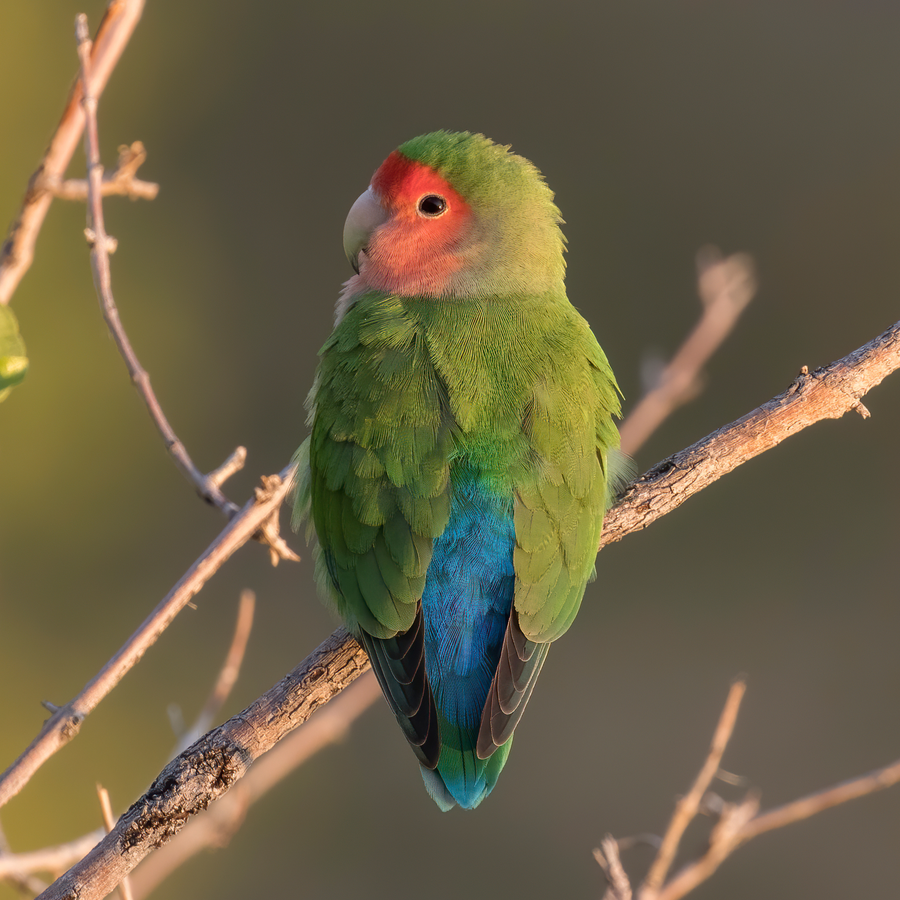
The peach-faced lovebird (Agapornis roseicollis) is a bird of the family Psittaculidae, in the order Psittaciformes.
Quick answer
Peach-faced lovebirds are small colourful parrots from southwestern Africa, named for strong pair bonds and affectionate behaviour. Wild birds have green bodies with peach faces; captive colour mutations are popular pets. They weigh 40–60 g (1.4–2 oz), live in flocks at waterholes, and are Least Concern in the wild.
Top questions about the Peach-faced Lovebird
Also available in Español (Agapornis carirrosa)
Peach-faced Lovebird facts at a glance
- Weight 50 g
- Length 17 cm
- Top speed 45 km/h
- Lifespan 15 years
| Scientific name | Agapornis roseicollis |
|---|---|
| Diet | Herbivore — seeds, fruit, berries, and cultivated crops |
| Habitat | Dry woodland, savanna, and river valleys of southwestern Africa |
| Lifespan | 10–15 years in the wild; 15–20 in captivity |
| Weight | 40–60 g (1.4–2.1 oz) |
| Top speed | Fast direct flight; agile in trees |
| Conservation status | Least Concern (IUCN) |
| Kingdom | Animalia |
|---|---|
| Phylum | Chordata |
| Class | Aves |
| Order | Psittaciformes |
| Family | Psittaculidae |
| Genus | Agapornis |
Where it lives
The peach-faced lovebird (Agapornis roseicollis) is native to Dry woodland and savanna of southwestern Africa in Namibia, Angola, and South Africa; feral populations from escaped pets in Arizona and other warm regions. — recorded across Africa in this guide’s range summary.
For occurrence records, see GBIF species search and sources below.
How big is a peach-faced lovebird?
An adult peach-faced lovebird measures 17 cm long — about 10% of the height of an average adult person (1.73 m) — and weighs around 50 g, a small fraction of an average adult’s body weight (70 kg).
Length vs an average adult’s height (to scale)
What is a group of peach-faced lovebirds called?
Group name (collective noun)
A group of Peach-faced Lovebirds is called a flock.
Baby name
A baby Peach-faced Lovebird is called a chick.
Explore more animal collective nouns and baby animal names .
Pair bonding
Lovebirds form strong monogamous pairs that preen, feed, and roost together year-round. In captivity a lone bird may bond with a human or mirror if no partner is available. Wild flocks gather at waterholes in dry country, splitting into pairs during breeding.
Nest building in captivity
Females tuck nesting material into tail feathers and carry it to a cavity — a behaviour famous among pet owners who provide paper strips. In the wild they nest in tree holes and rock crevices, laying 4–6 eggs per clutch.
Pet trade and colour morphs
Selective breeding produced lutino, pied, and orange-faced colour varieties far removed from wild green plumage. Lovebirds are social, noisy, and need companionship — unsuitable for owners who cannot provide daily interaction or a same-species partner.
Wild populations and crops
Least Concern across Namibia, Angola, and South Africa, peach-faced lovebirds sometimes damage millet and sunflower crops. Escaped pets establish feral colonies in Arizona and other warm regions outside native range.
Dig deeper into the Peach-faced Lovebird
- How Fast Is A Peach-faced Lovebird?
Peach-faced Lovebird top speed is about Fast direct flight; agile in trees. Sprint vs endurance and what limits pace.
- How Long Do Peach-faced Lovebirds Live?
Peach-faced Lovebird lifespan is typically 10–15 years in the wild; 15–20 in captivity. What shortens or extends life, life stages, and status (Least Concern).
- Peach-faced Lovebird: Key Facts
Peach-faced lovebirds are small colourful parrots from southwestern Africa, named for strong pair bonds and affectionate behaviour.
- What Do Peach-faced Lovebirds Eat?
What peach-faced lovebirds eat: Herbivore — seeds, fruit, berries, and cultivated crops, foraging style, and seasonal shifts in Dry woodland, savanna, and river valleys of southwestern Africa.
- Where Do Peach-faced Lovebirds Live?
Where peach-faced lovebirds live: Dry woodland, savanna, and river valleys of southwestern Africa, native range cues, and human overlap. Status Least Concern.
Explore the Peach-faced Lovebird
Close relatives
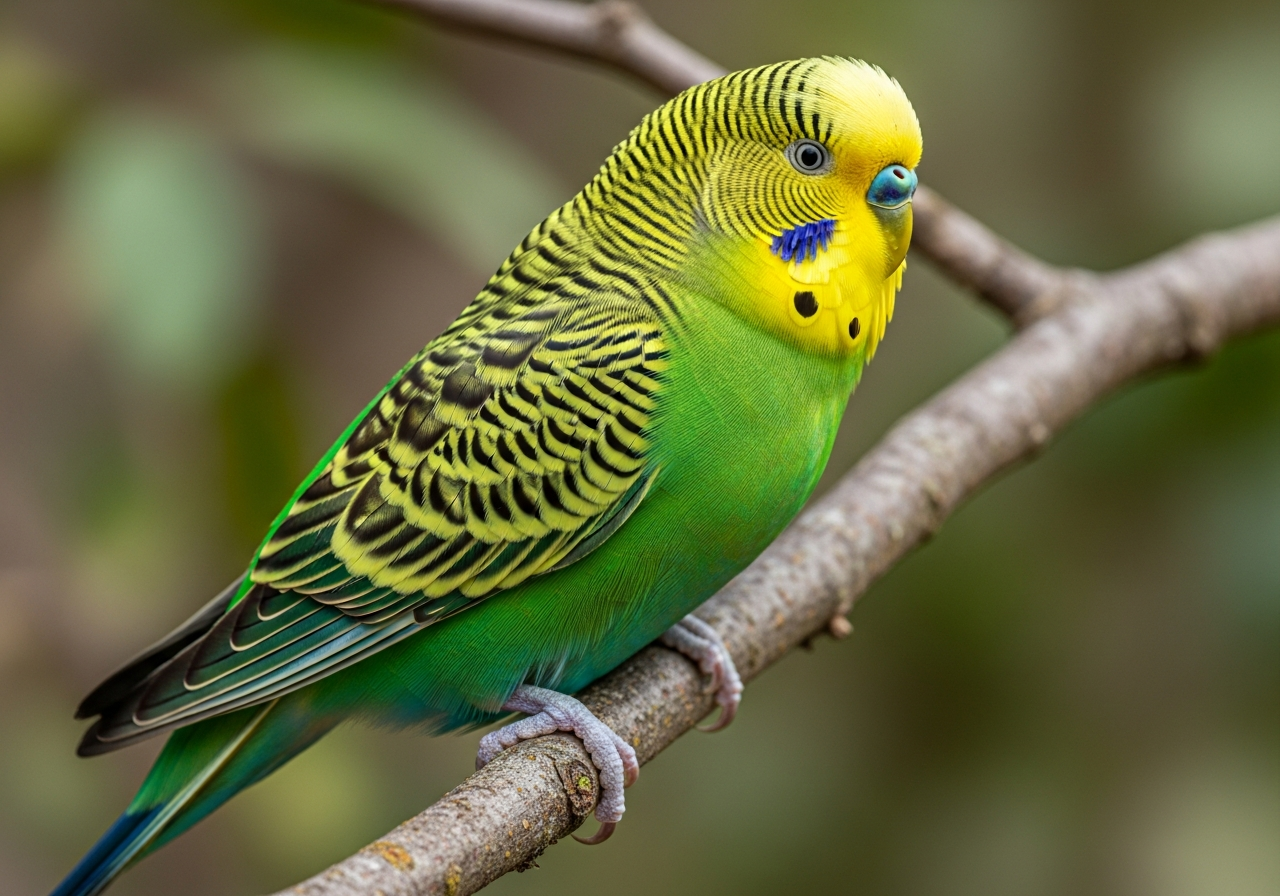
- Budgerigar Same family
- Kakapo Same order
- Scarlet Macaw Same order
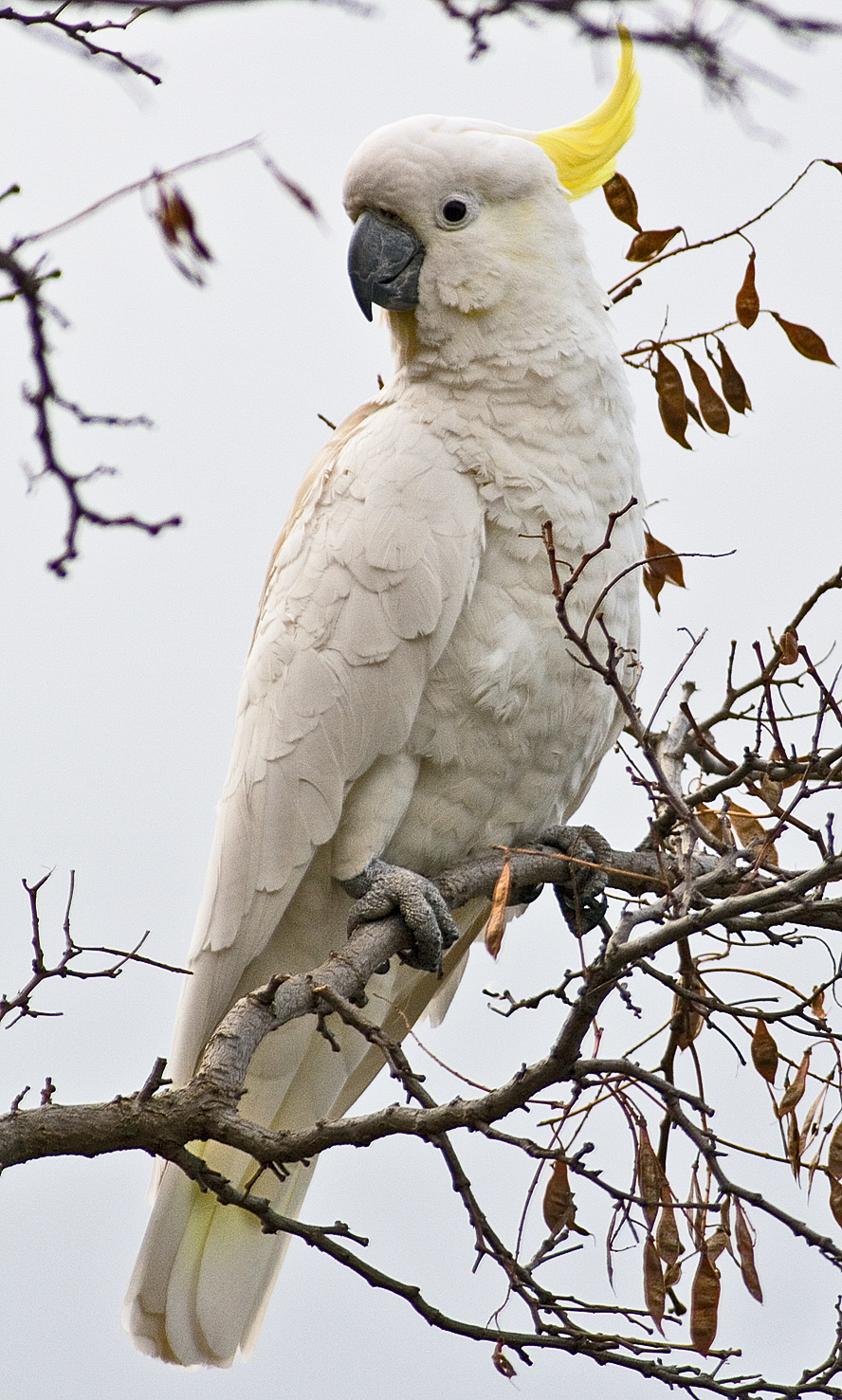
- Sulphur-crested Cockatoo Same order
Range & geography
Did you know? Peach-faced Lovebird facts
- Peach-faced lovebirds are small colourful parrots from southwestern Africa, named for strong pair bonds and affectionate behaviour.
- They are highly social — wild birds pair for life. Pet lovebirds do best with a companion bird or extensive daily human interaction to prevent loneliness and feather plucking.
- About 10–15 years in the wild and 15–20 years in captivity with good diet and veterinary care.
- Southwestern Africa — arid woodlands and savannas of Namibia, Angola, and South Africa, often near water in dry country.
- Yes — small parrots in the family Psittaculidae. They have curved beaks, zygodactyl feet, and the intelligence typical of parrots.
- Conservation: Least Concern (IUCN).
Diet & feeding
Peach-faced Lovebird feeds primarily as a herbivore — seeds, fruit, berries, and cultivated crops. Lovebirds form strong monogamous pairs that preen, feed, and roost together year-round. In captivity a lone bird may bond with a human or mirror if no partner is available. Wild flocks gather at waterholes in dry country,
Adaptations
- Lovebirds form strong monogamous pairs that preen, feed, and roost together year-round. In captivity a lone bird may bond with a human or mirror if no partner is available. Wild flocks gather at waterholes in dry country, splitting into pairs during breeding.
- Females tuck nesting material into tail feathers and carry it to a cavity — a behaviour famous among pet owners who provide paper strips. In the wild they nest in tree holes and rock crevices, laying 4–6 eggs per clutch.
Behaviour & ecology
- Lovebirds form strong monogamous pairs that preen, feed, and roost together year-round. In captivity a lone bird may bond with a human or mirror if no partner is available. Wild flocks gather at waterholes in dry country, splitting into pairs during breeding.
- Females tuck nesting material into tail feathers and carry it to a cavity — a behaviour famous among pet owners who provide paper strips. In the wild they nest in tree holes and rock crevices, laying 4–6 eggs per clutch.
- Selective breeding produced lutino, pied, and orange-faced colour varieties far removed from wild green plumage. Lovebirds are social, noisy, and need companionship — unsuitable for owners who cannot provide daily interaction or a same-species partner.
Communication
- Peach-faced Lovebird uses calls and visual displays to communicate territory, alarm, and breeding status.
- Vocal repertoires vary by species and are often learned or refined during development.
Habitat & range
Dry woodland, savanna, and river valleys of southwestern Africa
Ecological role
Peach-faced Lovebird shapes vegetation through grazing or browsing and serves as prey for larger predators where ranges overlap.
Conservation status of the Peach-faced Lovebird
The peach-faced lovebird (Agapornis roseicollis) is listed as Least Concern on the IUCN Red List. Least Concern (LC) is the IUCN's lowest-risk category, assigned to widespread, abundant species that have been evaluated and found not to be threatened. It does not mean a species faces no pressures — only that it is not currently at risk of extinction.
The peach-faced lovebird (Agapornis roseicollis) is assessed on the IUCN Red List. Look up on the IUCN Red List .
Frequently asked questions about the Peach-faced Lovebird
Do lovebirds need a partner?
They are highly social — wild birds pair for life. Pet lovebirds do best with a companion bird or extensive daily human interaction to prevent loneliness and feather plucking.
How long do lovebirds live?
About 10–15 years in the wild and 15–20 years in captivity with good diet and veterinary care.
Where are lovebirds from?
Southwestern Africa — arid woodlands and savannas of Namibia, Angola, and South Africa, often near water in dry country.
Are lovebirds parrots?
Yes — small parrots in the family Psittaculidae. They have curved beaks, zygodactyl feet, and the intelligence typical of parrots.
Can lovebirds talk?
They mimic whistles and some words but are not among the best talkers. Their loud chirps and social chatter are more characteristic than speech.
What is a group of peach-faced lovebirds called?
A group of Peach-faced Lovebirds is called a flock.
What is a baby peach-faced lovebird called?
A baby Peach-faced Lovebird is called a chick.
Sources & references
This guide is compiled and reviewed against established zoological and conservation references. Key sources for the Peach-faced Lovebird:
-
IUCN Red List of Threatened Species
Conservation status (Least Concern) reflects the IUCN Red List category for Agapornis roseicollis.
-
iNaturalist — observations & photos
Search citizen-science observations and community IDs for Agapornis roseicollis. Useful for range checks and recent sightings — not a substitute for formal Red List status.
-
GBIF — occurrence data
Global Biodiversity Information Facility species search for Agapornis roseicollis. Explore published occurrence records used in range research.
-
eBird — bird observations
Cornell Lab eBird target search for Peach-faced Lovebird. Check recent checklists and seasonal abundance where birders report this species.
- IUCN Red List — Agapornis roseicollis.
Conservation status (Least Concern) and population trends.
- Animal Diversity Web — Agapornis roseicollis. University of Michigan Museum of Zoology.
Life history, morphology, and range.
-
Global Animal Guide editorial standards
How we research, source, review, and update every guide for accuracy.