What Is a Mammal? Definition, Traits & Examples
Mammals are vertebrates with hair and milk-producing glands. Key traits, monotremes vs marsupials vs placentals, and famous examples from bats to whales.
Global Animal Guide · July 10, 2026
Quick answer
Mammals are vertebrates that produce milk for their young and typically have hair or fur at some life stage. Nearly all are endothermic. Living mammals fall into monotremes (egg-layers), marsupials (pouched), and placentals (long pregnancy with a placenta). About 6,500 living species range from bumblebee bats to blue whales.
Last updated: July 2026.
A mammal is a vertebrate that feeds its young on milk produced by mammary glands, grows hair at some stage of life, and hears through three tiny bones in the middle ear. About 6,500 living species share that description, spanning a size range — from bats weighing a couple of grams to the blue whale, the largest animal that has ever lived — wider than any other vertebrate class. Milk is the trait the group is named for and the one that never fails.
Core traits
- Milk for offspring
- Hair / fur (whales have fetal hair; adults may be nearly hairless)
- Three middle-ear bones
- Single lower jaw bone (dentary)
- Endothermy (with a few oddities)
- Differentiated teeth in most species
Milk: the trait that changed everything
Mammary glands are modified sweat glands, which is why the most primitive version of lactation looks so unlike nursing. The platypus has no nipples at all — milk seeps through skin patches and the young lap it from the fur. Nipples came later, as a refinement of a system that already worked.
The evolutionary consequence of milk is easy to underrate. A mother converts whatever she can eat into a food her offspring can digest, which decouples the young from having to find and process adult food. A newborn does not need functional teeth, hunting skill, or the ability to handle a tough diet. That buys an extended period of dependency, and dependency buys time to grow a large brain and learn from adults. Milk composition is tuned to circumstance: sea otter and seal milk runs extraordinarily fat-rich to build blubber fast in cold water, while species whose young suckle constantly produce something much more dilute.
Hair, and the metabolism it insulates
Hair is keratin, but its structure and origin differ from bird feathers and reptile scales — a case of independent invention rather than shared inheritance. Its primary job is insulation, trapping air in a layer next to the skin, and insulation only matters if you are generating heat internally. Hair and endothermy evolved as a package.
That package is expensive. A mammal burns roughly ten times the energy of a similar-sized reptile at rest, which means eating constantly, and small mammals live closest to the edge — a shrew must eat near its own body weight daily or die within hours. What it buys is independence from ambient temperature: mammals stay active at night, in winter, and at the poles, where an ectotherm would be immobilised. The polar bear combines dense underfur with blubber to hold a human-like body temperature on Arctic ice.
Hair also does jobs beyond warmth. Whiskers are precision touch sensors, tuned enough that a seal can track a fish’s wake through dark water. Porcupine quills are modified hairs turned into armour. The pangolin fused hair into overlapping keratin scales. Whales lost their coat because at large size, blubber insulates better in water and fur only adds drag — but whale foetuses still grow hair, a developmental fingerprint of ancestry.
Three bones in the ear, and where they came from
The three middle-ear bones — malleus, incus, stapes — are one of the most thoroughly documented transitions in the fossil record. Reptiles have a single ear bone and a jaw built from several bones. Over a long series of intermediates, two bones at the back of the reptilian jaw shrank, detached, and migrated into the ear, leaving mammals with a lower jaw made of one bone, the dentary.
This was not a fluke; it was a linked upgrade. A single-boned jaw is a stronger platform for powerful, precise chewing, and the freed bones formed a lever chain that amplifies faint airborne vibration. Mammals gained both a better bite and sharper hearing, especially at high frequencies — the foundation on which the bat later built echolocation.
Monotremes: mammals that lay eggs
The platypus and the echidnas are the survivors of the earliest branch, and they are mammals by every criterion that counts: hair, milk, three ear bones, endothermy. They simply never adopted live birth. They lay small leathery eggs, and the echidna incubates hers in a temporary pouch before the hatchling suckles from milk patches.
They keep other ancestral features too. Monotremes retain a cloaca — a single opening for waste and reproduction, the reptilian arrangement. The platypus hunts with its eyes, ears, and nostrils shut, navigating entirely by electroreception through its bill, detecting the faint electrical fields of prey muscle. They are not primitive failures but a lineage that found a workable niche and stayed in it.
Marsupials and placentals: two answers to pregnancy
Marsupials give birth very early. A newborn red kangaroo is bean-sized, blind, and barely more than a mouth with forelimbs strong enough to crawl to the pouch, where it latches on and completes development externally. Nearly all growth happens on milk rather than through a placenta.
Placentals invert the ratio, sustaining a long pregnancy through an organ that exchanges gases, nutrients, and waste with the mother’s blood. Neither is superior — they are different bets. Marsupial reproduction is cheap to abort: a koala or opossum losing a joey has invested little, which suits unpredictable climates. Placental pregnancy is a heavy commitment that cannot be cheaply cut short, but it delivers well-developed young — a wildebeest calf runs with the herd within an hour of birth. See marsupials vs placentals for the fuller comparison.
Teeth as a record of diet
Most mammals have heterodont dentition — incisors, canines, premolars, and molars, each shaped for a different task in the same mouth. Reptile teeth are typically a row of near-identical cones, replaced continuously. Mammals gave up constant replacement for precise occlusion: upper and lower teeth meet in a repeatable fit, which allows real chewing, and chewing extracts more energy per mouthful — fuel for that expensive metabolism.
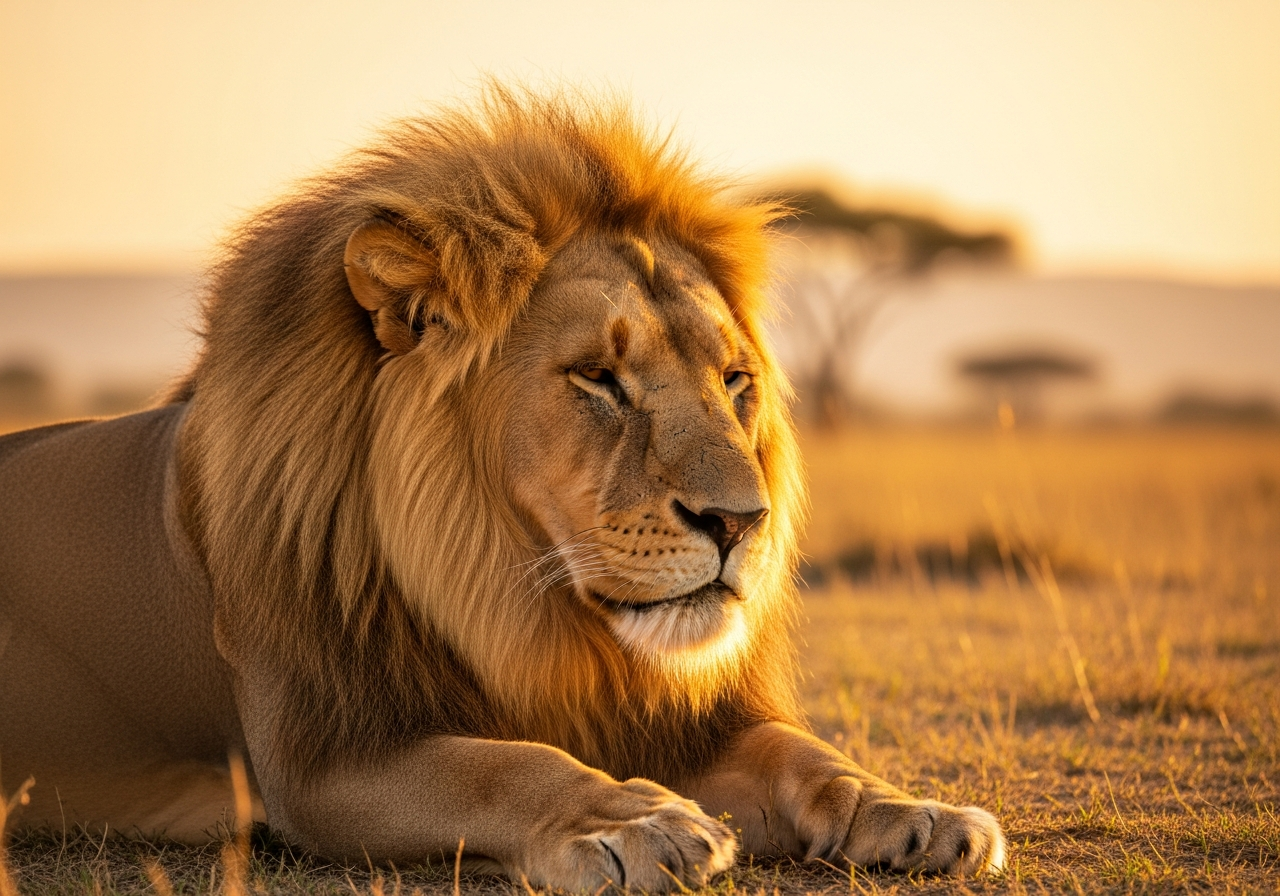
The trade-off is that most mammals get two sets and no more, so worn teeth mean starvation. An old elephant dies when its last molar wears out. Diet is legible in the dentition: the lion has blade-like carnassials that shear meat, the cow has ridged grinding molars and a gap where canines would be, and the beaver has iron-hardened incisors that grow for life and self-sharpen against each other. Some mammals abandoned teeth entirely — the giant anteater has none, and baleen whales replaced them with keratin filter plates.
Related reading
Sources
Frequently asked questions
What defines a mammal?
Milk production (mammary glands) and hair/fur are the classic living traits; mammals also have three middle-ear bones.
Are whales mammals?
Yes — they breathe air, nurse young with milk, and evolved from land mammals.
Do all mammals give live birth?
No. Monotremes (platypus, echidnas) lay eggs.
Are humans mammals?
Yes — placental mammals in the order Primates.