What Is a Bird? Definition, Traits & Examples
Birds are feathered, egg-laying vertebrates — living dinosaurs. Key traits, flight adaptations, and why penguins and ostriches still count as birds.
Global Animal Guide · July 10, 2026
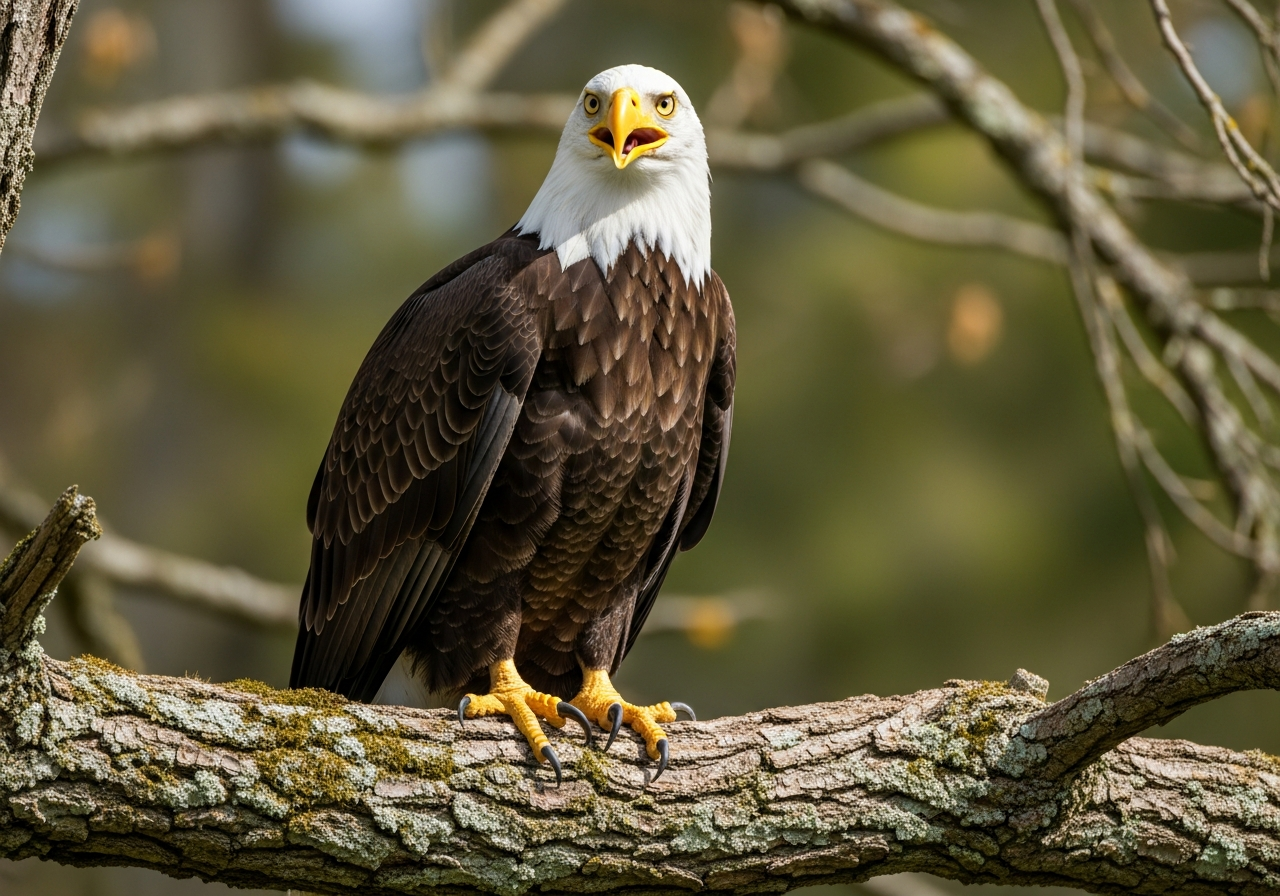
Quick answer
Birds are vertebrates with feathers, toothless beaked jaws, hard-shelled eggs, and a high-metabolism endothermic lifestyle. All living birds descend from theropod dinosaurs. Flight is common but not required — penguins, ostriches, and kiwis are flightless birds.
Last updated: July 2026.
A bird is a feathered, egg-laying vertebrate with a toothless beak, a four-chambered heart, and a high-output metabolism kept running at a constant temperature. That is the short definition, and it holds without exception across roughly 11,000 living species. Flight, despite being the trait everyone reaches for first, is not part of the definition at all — the emperor penguin and the ostrich are every bit as much birds as the bald eagle. What actually unites them is feathers, a structure no other living animal grows.
Feathers: the one trait nothing else has
Feathers are keratin, the same protein as reptile scales and your fingernails, but grown from a follicle and branched into a hierarchy that nothing else in biology matches. A single flight feather has a central shaft, barbs branching off it, and microscopic barbules with hooks that zip neighbouring barbs together into a continuous, near-airtight vane. Pull that vane apart and the bird can rezip it by drawing the feather through its beak — preening is mechanical repair, not vanity.
Different feather types do entirely different jobs on the same animal. Down traps a layer of still air against the skin for insulation; contour feathers shape the body and shed water; flight feathers on the wing and tail generate lift and steer. The snowy owl adds fringed leading edges that break up the turbulence normally responsible for wing noise, letting it approach prey in near silence. Feathers also carry colour — sometimes from pigment, sometimes from microscopic structure that scatters light, which is why a blue jay feather looks blue from the front and drab brown when backlit.
Crucially, feathers came first and flight came later. Feathered dinosaurs that could not fly are well documented in the fossil record, and the structures they wore were plausibly for insulation and display. Flight was a later exploitation of equipment already in place.
Birds are dinosaurs, not merely descended from them
This is not a metaphor or a loose analogy. Birds sit inside the theropod dinosaur family tree, in the same lineage as Tyrannosaurus and Velociraptor, which makes them the only dinosaur branch that survived the end-Cretaceous extinction. Under cladistic classification, an animal cannot leave the group it evolved from, so birds are dinosaurs in the same way that humans are mammals.
The anatomical evidence is unusually direct. Theropods already had hollow, air-filled bones, wishbones, three-fingered hands, and in many cases feathers, nests, and brooding behaviour — birds simply inherited the toolkit and refined it. This also explains why birds and crocodilians are each other’s closest living relatives: both are archosaurs, and the Nile crocodile is more closely related to a sparrow than to a lizard.
The respiratory system that makes flight affordable
Flight is metabolically brutal, and mammalian lungs would not manage it. Mammals breathe tidally — air enters and leaves by the same route, so fresh and stale air mix and the lungs never fully empty. Birds instead run a one-way flow-through system. Air moves through a network of air sacs that act as bellows, passing through the rigid lung in a single direction across two full breath cycles, so gas exchange continues on both inhalation and exhalation.
The payoff is oxygen extraction efficiency far beyond anything a mammal achieves, which matters most where air is thin. Bar-headed geese cross the Himalaya at altitudes where a mammal of comparable size would be unconscious, and the common swift stays airborne for months at a stretch, feeding, drinking, and even sleeping on the wing. Those air sacs also extend into hollow bones, which lightens the skeleton and helps dump the considerable waste heat that flight muscle generates — birds have no sweat glands.
Flight is optional, and often abandoned
Roughly sixty living species have given up flight, and the pattern behind it is consistent: flight is expensive, and when the pressure that justifies the cost disappears, evolution stops paying for it. Flight muscle can consume a quarter of a bird’s body mass and demands a deep keeled sternum to anchor it. Remove ground predators — as on isolated islands — and that investment is wasted.
The wings themselves get repurposed rather than discarded. Penguins converted theirs into stiff hydrofoils and now fly underwater, where the denser medium rewards short, dense, blade-like wings; the emperor penguin’s solid bones would be a liability in air but are ideal ballast for diving. The ostrich and emu traded flight for running, growing to sizes that outpace or outfight most predators outright. The kiwi went furthest, shrinking its wings to fingertip-sized vestiges hidden under hair-like plumage, while the kakapo became a nocturnal ground parrot — a strategy that worked flawlessly until mammals arrived in New Zealand and it collapsed almost overnight.
Beaks: one structure, endless jobs
Losing teeth saved weight, and the beak that replaced them turned out to be extraordinarily adaptable — a keratin sheath over bone that evolution reshapes freely without touching the underlying skull plan. The result is a catalogue of specialised tools built from identical raw material.
The flamingo inverts its beak and pumps water through lamellae to strain out brine shrimp. The hummingbird pairs a needle bill with a forked, actively pumping tongue for nectar. Raptors like the golden eagle use a hooked bill for shearing flesh, while the toucan carries an enormous but honeycomb-light bill that reaches distant fruit and radiates heat. Without teeth, food processing moved to a muscular gizzard, often stocked with swallowed grit that grinds seeds — heavy machinery kept near the centre of mass rather than out on the end of the head.
What birds do to ecosystems
Birds are ecological workhorses whose absence is loudly felt. Nectar feeders pollinate; fruit eaters carry seeds far beyond a parent tree’s shadow, which is how tropical forests regenerate across gaps. Insectivores suppress herbivore outbreaks across forests and farmland year after year.
Scavengers do the least glamorous and most valuable work. A vulture has stomach acid strong enough to destroy anthrax and botulinum spores, and a vulture’s meal removes a carcass — and its pathogens — from the landscape. Where vulture populations have crashed, feral dog and rat numbers rise and disease follows. Migratory species stitch distant ecosystems together, moving nutrients and energy between continents on annual schedules; see why birds migrate for how they navigate it.
Related reading
Sources
Frequently asked questions
What makes a bird a bird?
Feathers are the clearest living trait. Birds also lay hard-shelled eggs and have beaks without teeth.
Are penguins birds?
Yes — flightless birds specialised for swimming.
Are birds dinosaurs?
Yes — birds are the only surviving dinosaur lineage.
How many bird species are there?
Around 11,000 living species, depending on taxonomic authority.