Image sourcing: see credits & licences
The African grey parrot (Psittacus erithacus) is a bird of the family Psittacidae, in the order Psittaciformes.
Quick answer
The African grey parrot (Psittacus erithacus) is a medium-sized grey parrot of the lowland rainforests of West and Central Africa, widely regarded as one of the most intelligent birds and a famously gifted mimic. It measures about 33 cm (13 in) long, weighs 400 to 500 g, and can live 40 to 60 years, making it both a demanding pet and a long-term commitment. Wild populations have fallen sharply from trapping for the pet trade and habitat loss, and the IUCN lists the species as Endangered.
Top questions about the African Grey Parrot
African Grey Parrot facts at a glance
- Weight 400 g
- Length 33 cm
- Top speed 50 km/h
- Lifespan 55 years
| Scientific name | Psittacus erithacus |
|---|---|
| Diet | Herbivore (seeds, nuts, fruit) |
| Habitat | Lowland tropical rainforest |
| Lifespan | 40–60 years |
| Weight | 400–500 g (0.9–1.1 lb) |
| Top speed | 50 km/h (30 mph) in flight |
| Conservation status | Endangered (IUCN) |
| Kingdom | Animalia |
|---|---|
| Phylum | Chordata |
| Class | Aves |
| Order | Psittaciformes |
| Family | Psittacidae |
| Genus | Psittacus |
Where it lives
The african grey parrot (Psittacus erithacus) is native to The lowland rainforests of central and western Africa, across the Congo Basin. — recorded across Africa in this guide’s range summary.
For occurrence records, see GBIF species search and sources below.
How big is a african grey parrot?
An adult african grey parrot measures 33 cm long — about 19% of the height of an average adult person (1.73 m) — and weighs around 400 g, about 1% of an average adult’s body weight (70 kg).
Length vs an average adult’s height (to scale)
What is a group of african grey parrots called?
Group name (collective noun)
A group of African Grey Parrots is called a pandemonium. It is also known as a company or a flock.
Baby name
A baby African Grey Parrot is called a chick.
Explore more animal collective nouns and baby animal names .
Appearance and identification
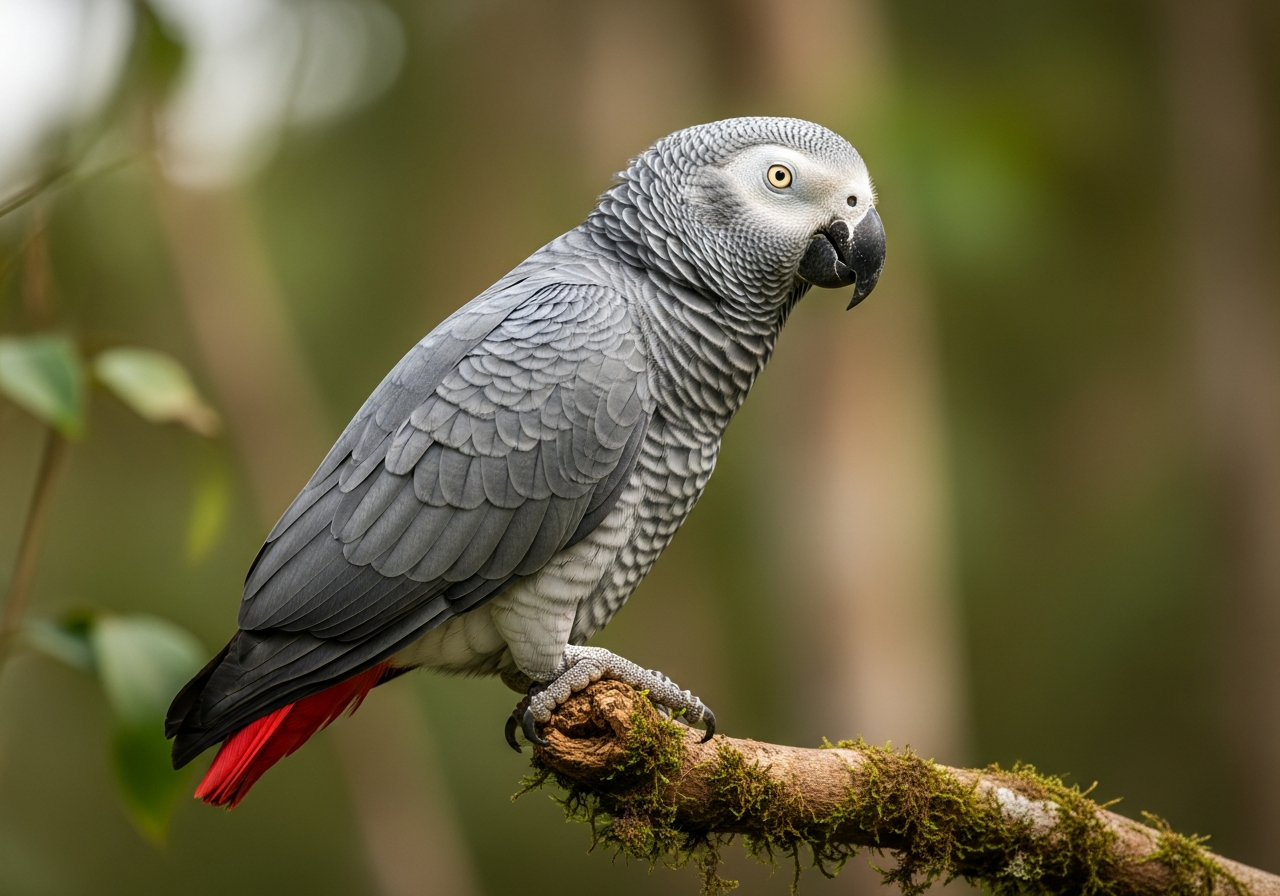
The African grey is a stocky, medium-sized parrot with soft grey plumage, a paler scalloped edging to its feathers, and a striking bright-red tail. Its bare, pale face surrounds a dark bill and yellow eyes in adults. Standing about 33 cm (13 in) long and weighing 400 to 500 g, it is understated in colour compared with many parrots but instantly recognisable. Males and females look alike, so telling them apart usually requires genetic or veterinary testing.
Intelligence and talking ability
African greys are widely considered among the most intelligent of all birds, with problem-solving and communication skills that have been the subject of extensive scientific study. They are exceptional mimics, able to learn large vocabularies and reproduce human speech and household sounds with remarkable clarity. Research with captive birds has shown they can associate words with objects, colours, and numbers rather than simply parroting sounds. This intelligence means they need constant mental stimulation and can become bored or distressed without it.
Life in the wild
In the wild the African grey lives in lowland tropical rainforest across West and Central Africa, often gathering in large, noisy flocks. It is a herbivore that feeds on seeds, nuts, fruit, and buds, foraging in the canopy and travelling between roosting and feeding sites. In flight it is fast and direct, reaching speeds of around 50 km/h (30 mph). Flocks roost communally in tall trees and disperse each morning to feed across the forest.
As a companion bird
The African grey is one of the most popular pet parrots precisely because of its intelligence and talking ability, but it is a demanding companion. A pet grey can live 40 to 60 years, so keeping one is a decades-long commitment that may span much of an owner's life. These birds form strong bonds and need daily interaction, a large cage, foraging toys, and a varied diet, or they may develop problems such as feather-plucking. Their sensitivity and long memory mean they thrive only with patient, consistent care.
Breeding and lifespan
African greys nest in tree cavities, where the female incubates the eggs while the male brings food, and both parents feed the chicks after hatching. Young birds stay dependent on their parents for a considerable time as they learn to forage and, in captivity, to vocalise. Whether wild or captive, the species is long-lived, with lifespans of 40 to 60 years. This slow, low-output breeding is one reason wild populations recover slowly once reduced.
Why it is endangered
Despite being common as a pet, the wild African grey is in serious trouble and is listed as Endangered by the IUCN. Enormous numbers have been trapped from the forests to supply the international pet trade, and this pressure, combined with the loss of rainforest habitat, has driven steep declines across its range. International trade in wild-caught birds is now heavily restricted to protect the remaining populations. Responsible ownership means choosing captive-bred birds rather than wild-caught ones.
Dig deeper into the African Grey Parrot
- African Grey Parrot: Key Facts
African Grey Parrots (Psittacus erithacus) are birds found across Africa. One of the most intelligent talking birds.
- Are African Grey Parrots Endangered?
Are African grey parrots endangered? Status Endangered, main threats, and what protection means.
- How Long Do African Grey Parrots Live?
African Grey Parrot lifespan is typically 40–60 years. What shortens or extends life, life stages, and status (Endangered).
- What Do African Grey Parrots Eat?
What African grey parrots eat: Herbivore (seeds, nuts, fruit), foraging style, and seasonal shifts in Lowland tropical rainforest.
- Where Do African Grey Parrots Live?
Where African grey parrots live: Lowland tropical rainforest, native range cues, and human overlap. Status Endangered.
Explore the African Grey Parrot
Close relatives
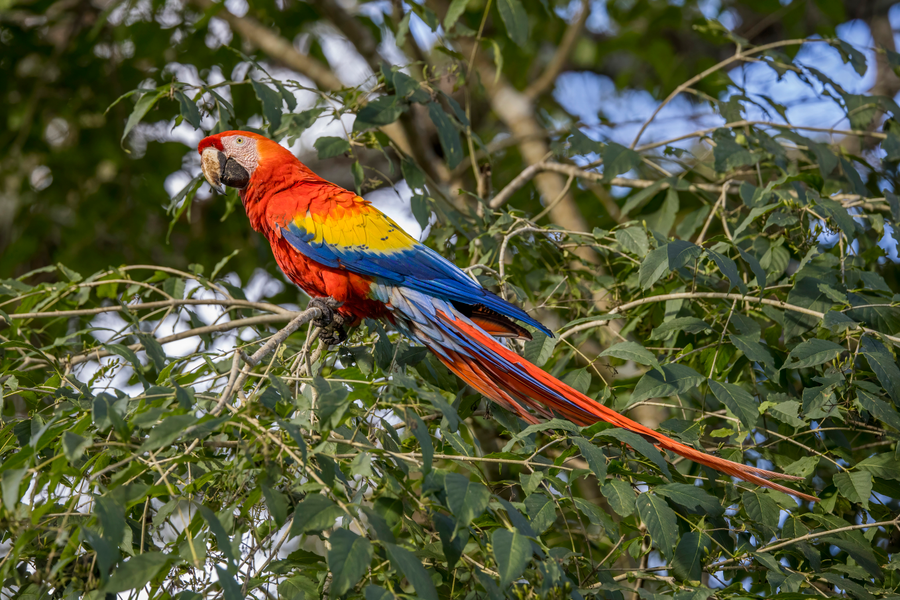
- Scarlet Macaw Same family
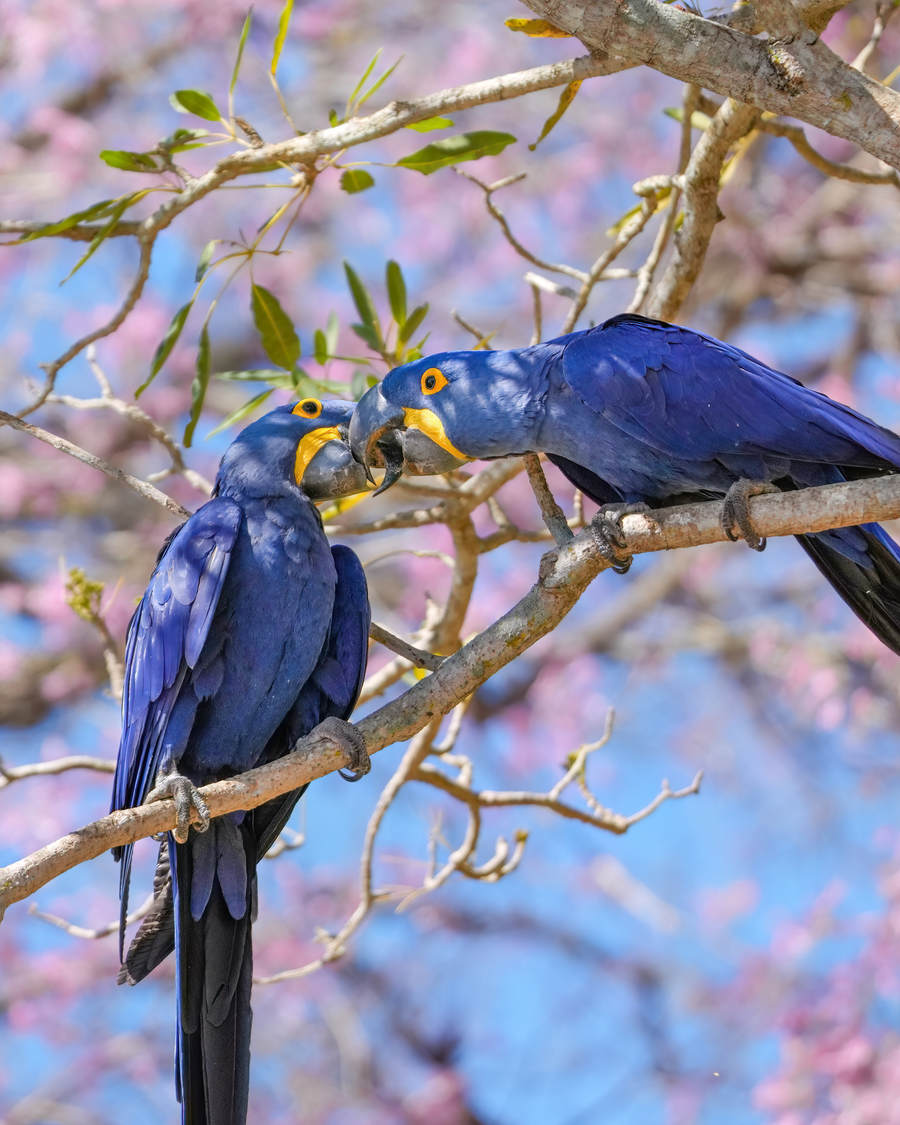
- Hyacinth Macaw Same family
- Kakapo Same order
- Sulphur-crested Cockatoo Same order
Collections
Range & geography
Did you know? African Grey Parrot facts
- The African grey parrot is a medium-sized grey parrot from the rainforests of central Africa, widely regarded as one of the most intelligent birds.
- They can be rewarding companions for experienced owners, but they are demanding pets that need daily interaction, mental stimulation, and decades of commitment. Neglected greys often develop stress behaviors such as feather plucking.
- African greys are among the most intelligent birds known. In research settings they have shown the ability to associate words with objects, count small numbers, and grasp simple concepts, suggesting cognition comparable to a young child.
- African grey parrots commonly live 40 to 60 years, and some reach even older ages in captivity. Their long lifespan means owning one is a lifelong commitment.
- Yes. African greys are exceptional mimics that can learn hundreds of words and sounds, and some individuals appear to use words appropriately in context rather than simply repeating them.
- Conservation: Endangered (IUCN).
Diet & feeding
African Grey Parrot feeds primarily as a herbivore (seeds, nuts, fruit). In the wild, African grey parrots eat a varied plant diet of seeds, nuts, fruits, and berries, often foraging high in the rainforest canopy. They use a strong hooked beak and dexterous feet to crack hard shells and manipulate food. Pet greys need
Adaptations
- African grey parrots are considered among the smartest of all birds, with cognitive abilities sometimes compared to those of a young child. They are renowned mimics that can learn hundreds of words and sounds, and famous study birds have appeared to use words to count, identify colors, and understand simple concepts. They need constant mental stimulation and can develop problems if bored or isolated.
- In the wild, African grey parrots eat a varied plant diet of seeds, nuts, fruits, and berries, often foraging high in the rainforest canopy. They use a strong hooked beak and dexterous feet to crack hard shells and manipulate food. Pet greys need a balanced diet of pellets, vegetables, and limited nuts to stay healthy.
Behaviour & ecology
- African grey parrots are considered among the smartest of all birds, with cognitive abilities sometimes compared to those of a young child. They are renowned mimics that can learn hundreds of words and sounds, and famous study birds have appeared to use words to count, identify colors, and understand simple concepts. They need constant mental stimulation and can develop problems if bored or isolated.
- In the wild, African grey parrots eat a varied plant diet of seeds, nuts, fruits, and berries, often foraging high in the rainforest canopy. They use a strong hooked beak and dexterous feet to crack hard shells and manipulate food. Pet greys need a balanced diet of pellets, vegetables, and limited nuts to stay healthy.
- These parrots live in the lowland rainforests and forest edges of central and western Africa, from the Gulf of Guinea across the Congo Basin. They gather in large, noisy flocks and roost together at night. They favor primary forest but also visit mangroves and cultivated areas.
Communication
- African Grey Parrot uses calls and visual displays to communicate territory, alarm, and breeding status.
- Vocal repertoires vary by species and are often learned or refined during development.
Habitat & range
Lowland tropical rainforest
Ecological role
African Grey Parrot shapes vegetation through grazing or browsing and serves as prey for larger predators where ranges overlap.
Conservation status of the African Grey Parrot
The african grey parrot (Psittacus erithacus) is listed as Endangered on the IUCN Red List. Endangered (EN) means a species faces a very high risk of extinction in the wild. Populations are usually declining sharply due to habitat loss, hunting, disease, or climate pressure. It sits one level below Critically Endangered on the IUCN Red List.
The african grey parrot (Psittacus erithacus) is assessed on the IUCN Red List. Look up on the IUCN Red List .
Frequently asked questions about the African Grey Parrot
Why are African grey parrots so famous for talking?
African greys are considered among the most intelligent birds and are exceptional mimics, able to learn large vocabularies and copy speech and sounds with striking clarity. Studies of captive birds suggest they can genuinely associate words with objects, colours, and numbers.
How long do African grey parrots live?
They are very long-lived, commonly reaching 40 to 60 years. Because of this, keeping one as a pet is a decades-long commitment that can span much of an owner's life.
Are African grey parrots good pets?
They can be rewarding companions but are demanding. They need daily interaction, mental stimulation, a large cage, and a varied diet, and without enough attention they may develop problems such as feather-plucking.
Are African grey parrots endangered?
Yes. Although common in captivity, the wild population is listed as Endangered by the IUCN, mainly because of trapping for the pet trade and loss of rainforest habitat.
What do African grey parrots eat?
In the wild they are herbivores feeding on seeds, nuts, fruit, and buds in the rainforest canopy. Pet birds need a varied diet built around quality pellets, fresh vegetables, and fruit rather than seed alone.
How big are African grey parrots?
They are medium-sized parrots, about 33 cm (13 in) long and weighing 400 to 500 g. Males and females look alike, so they usually cannot be told apart by appearance.
What is a group of african grey parrots called?
A group of African Grey Parrots is called a pandemonium. It is also known as a company or a flock.
What is a baby african grey parrot called?
A baby African Grey Parrot is called a chick.
Sources & references
This guide is compiled and reviewed against established zoological and conservation references. Key sources for the African Grey Parrot:
-
IUCN Red List of Threatened Species
Conservation status (Endangered) reflects the IUCN Red List category for Psittacus erithacus.
-
iNaturalist — observations & photos
Search citizen-science observations and community IDs for Psittacus erithacus. Useful for range checks and recent sightings — not a substitute for formal Red List status.
-
GBIF — occurrence data
Global Biodiversity Information Facility species search for Psittacus erithacus. Explore published occurrence records used in range research.
-
eBird — bird observations
Cornell Lab eBird target search for African Grey Parrot. Check recent checklists and seasonal abundance where birders report this species.
- IUCN Red List — Psittacus erithacus.
Conservation status (Endangered) and population trends.
- Animal Diversity Web — Psittacus erithacus. University of Michigan Museum of Zoology.
Life history, morphology, and range.
- Wikipedia — African Grey Parrot.
General taxonomy and overview (cross-check primary sources).
-
Global Animal Guide editorial standards
How we research, source, review, and update every guide for accuracy.