Image sourcing: see credits & licences
The blackbird (Turdus merula) is a bird of the family Turdidae, in the order Passeriformes.
Quick answer
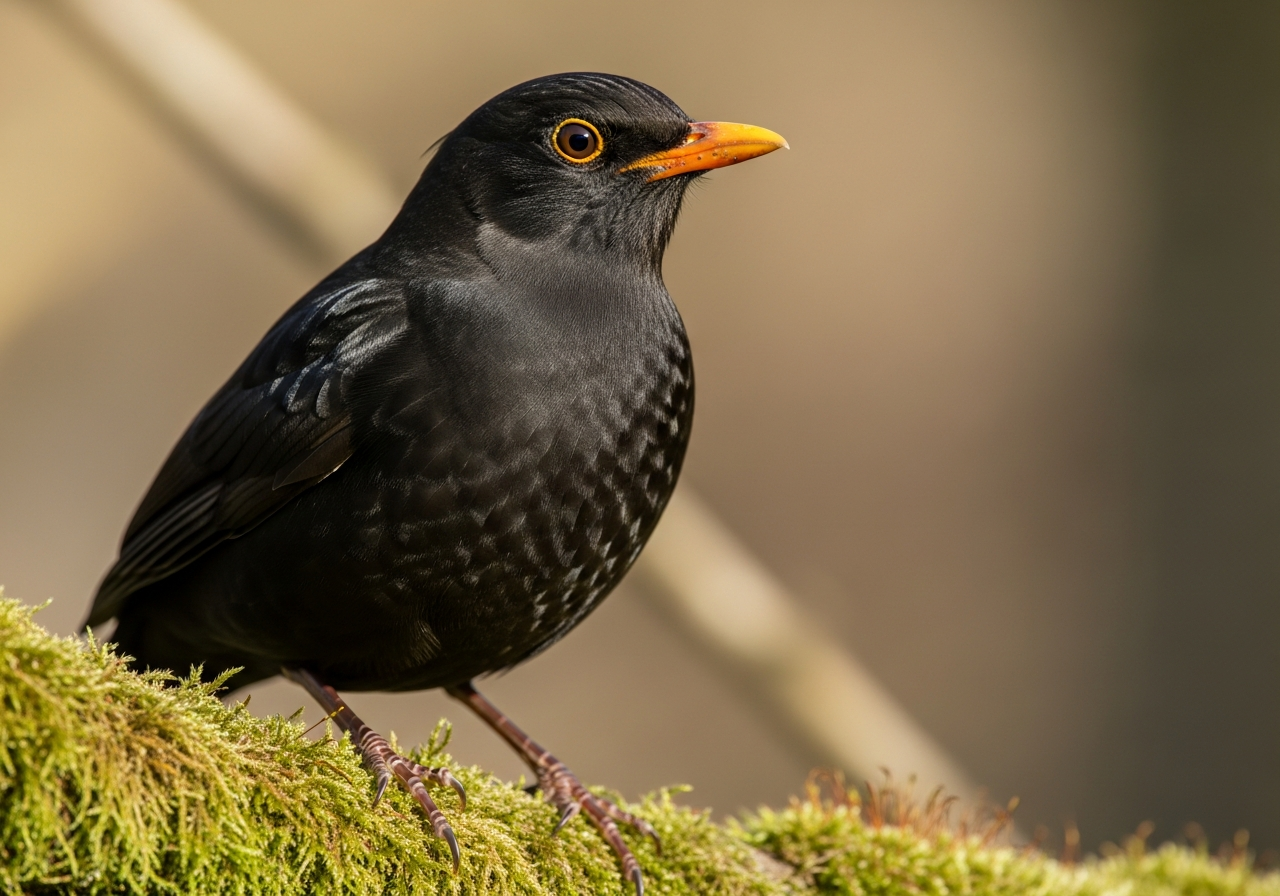
The common blackbird (Turdus merula) is a familiar garden thrush across Europe, prized for its rich, fluting song. The male is glossy black with a bright orange-yellow bill and eye-ring, while the female is dark brown. About 27 cm (11 in) long and weighing 80 to 125 g, it forages for worms and berries in gardens, woodland, parks, and hedgerows. Most live only a few years, though some reach 20 or more, and the IUCN lists the species as Least Concern.
Top questions about the Blackbird
Blackbird facts at a glance
- Weight 100 g
- Length 27 cm
- Top speed 40 km/h
- Lifespan 20 years
| Scientific name | Turdus merula |
|---|---|
| Diet | Omnivore (worms, insects, berries, fruit) |
| Habitat | Gardens, woodland, parks, hedgerows |
| Lifespan | 3–4 years average (up to 20+) |
| Weight | 80–125 g (2.8–4.4 oz) |
| Wingspan | 34–39 cm (13–15 in) |
| Conservation status | Least Concern (IUCN) |
| Kingdom | Animalia |
|---|---|
| Phylum | Chordata |
| Class | Aves |
| Order | Passeriformes |
| Family | Turdidae |
| Genus | Turdus |
Where it lives
The blackbird (Turdus merula) is native to Gardens, woodland, and parks across Europe, North Africa, and western Asia; introduced to Australia and New Zealand. — recorded across Europe, Asia, Africa in this guide’s range summary.
For occurrence records, see GBIF species search and sources below.
How big is a blackbird?
An adult blackbird measures 27 cm long — about 16% of the height of an average adult person (1.73 m) — and weighs around 100 g, a small fraction of an average adult’s body weight (70 kg).
Length vs an average adult’s height (to scale)
What is a group of blackbirds called?
Group name (collective noun)
A group of Blackbirds is called a cloud. It is also known as a merl.
Baby name
A baby Blackbird is called a chick.
Explore more animal collective nouns and baby animal names .
Appearance and sexes
The blackbird shows clear differences between the sexes. The male is entirely glossy black with a striking orange-yellow bill and a matching ring around the eye, while the female is a warm dark brown, often with faint mottling on the breast. Young birds resemble the female but are more rufous and spotted. Measuring about 27 cm (11 in) long with a wingspan of 34 to 39 cm and weighing 80 to 125 g, it is a medium-sized, round-bodied thrush.
The blackbird's song
The blackbird is one of the finest songsters of the European countryside and gardens, and its music is a large part of its fame. The male sings a rich, mellow, flute-like series of phrases, typically from a high perch, most intensely at dawn and dusk through the breeding season. The song is varied and improvised, with birds often weaving in imitations of other sounds. Alongside the song, blackbirds give sharp alarm calls and a low chuckling when disturbed.
Diet and foraging
Blackbirds are omnivores with a diet that shifts through the year. In spring and summer they hunt earthworms and insects, running and hopping across lawns and cocking their heads to listen and watch for movement before pulling prey from the soil. In autumn and winter they turn to berries and fallen fruit, and they readily visit gardens for windfall apples and food put out for them. This flexible diet is one reason they thrive so well alongside people.
Habitat and range
The common blackbird is widespread across Europe and into parts of Asia and North Africa, and has been introduced to Australia and New Zealand. Originally a woodland bird, it has adapted superbly to gardens, parks, and hedgerows, and is now one of the most familiar birds of towns and suburbs. It forages on the ground in open, grassy areas but retreats to shrubs and trees for cover and nesting. This adaptability has made it abundant across much of its range.
Nesting and breeding
Blackbirds build a neat cup nest of grass, twigs, and mud, usually hidden in a shrub, hedge, or climbing plant. The female incubates a clutch of blue-green, speckled eggs, and both parents feed the chicks a steady supply of worms and insects. A pair often raises two or three broods in a single season, from early spring into summer. The young leave the nest before they can fly well and are fed by the parents for a while as they find their feet.
Lifespan and status
Life is short for most blackbirds, with the average bird living only about three to four years, largely because young birds face many hazards. Those that survive their first year can live much longer, with the oldest individuals reaching 20 years or more. The species is abundant and adaptable, and the IUCN lists it as Least Concern. Its success in gardens and parks means people encounter it more often than almost any other thrush.
Dig deeper into the Blackbird
- Blackbird: Key Facts
Blackbirds (Turdus merula) are birds found across Europe, Asia, Africa. The glossy garden thrush with a golden song.
- How Fast Is A Blackbird?
Blackbird top speed is about about 40 km/h. Sprint vs endurance and what limits pace.
- How Long Do Blackbirds Live?
Blackbird lifespan is typically 3–4 years average (up to 20+). What shortens or extends life, life stages, and status (Least Concern).
- What Do Blackbirds Eat?
What blackbirds eat: Omnivore (worms, insects, berries, fruit), foraging style, and seasonal shifts in Gardens, woodland, parks, hedgerows.
- Where Do Blackbirds Live?
Where blackbirds live: Gardens, woodland, parks, hedgerows, native range cues, and human overlap. Status Least Concern.
Explore the Blackbird
Close relatives
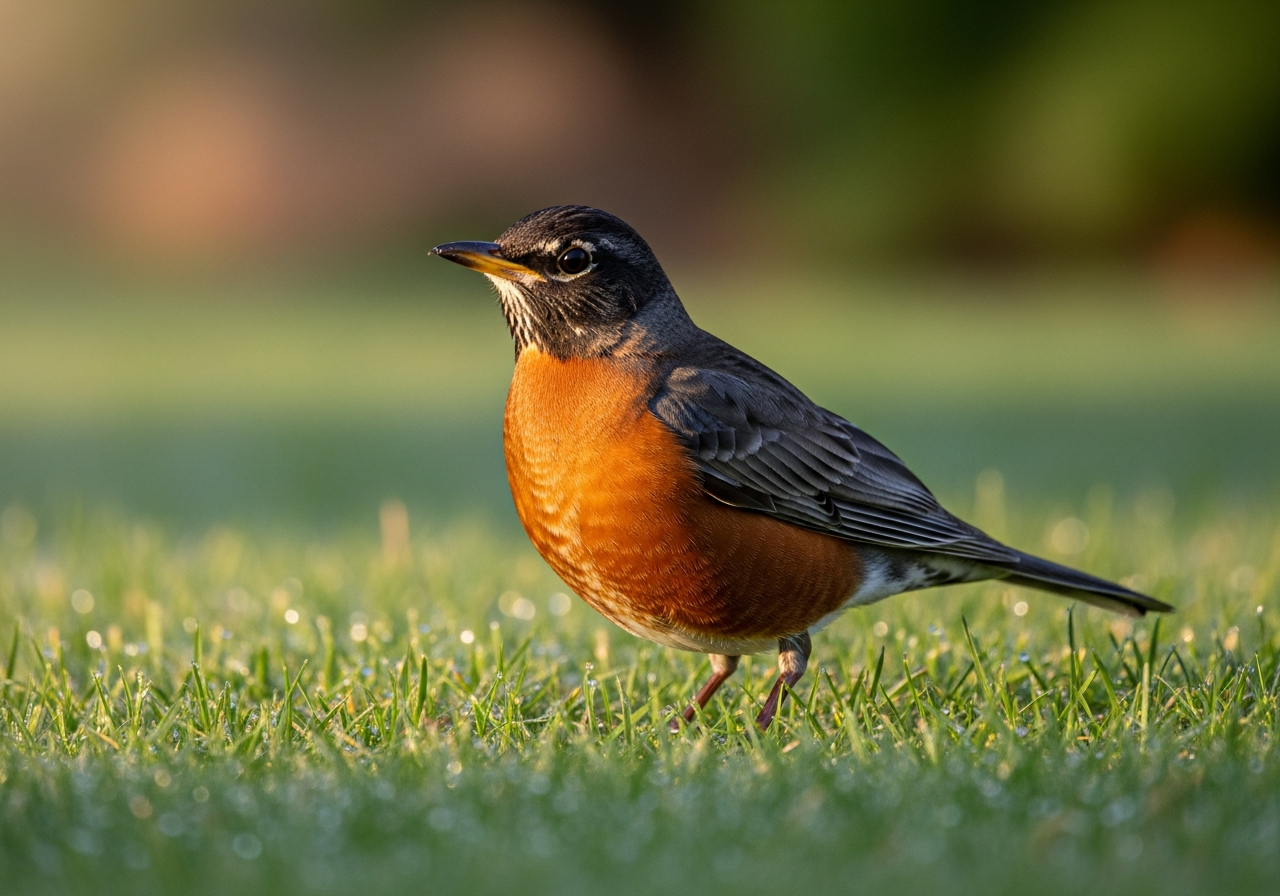
- American Robin Same genus
- Canary Same order
- House Sparrow Same order
- Superb Lyrebird Same order
Range & geography
Did you know? Blackbird facts
- The common blackbird is a familiar garden thrush whose males are glossy black with a bright orange-yellow bill and eye-ring, while females are warm brown.
- A group of blackbirds is called a cloud, and sometimes a merl. A baby blackbird is called a chick.
- No. Despite the dark plumage of the male, the common blackbird is a thrush, related to robins and song thrushes. True crows, such as the carrion crow, are larger corvids with heavier bills.
- Only male blackbirds are glossy black; females are brown, which helps camouflage them while sitting on the nest. The species is named for the striking colour of the male.
- Blackbirds eat earthworms and insects pulled from the ground, plus berries and fruit in autumn and winter. They often feed on lawns and take windfall apples and berries in gardens.
- Conservation: Least Concern (IUCN).
Diet & feeding
Blackbird feeds primarily as a omnivore (worms, insects, berries, fruit). Blackbirds are omnivores that feed heavily on earthworms and insect larvae pulled from the soil, switching to berries and fruit in autumn and winter. They forage mostly on the ground, flicking aside leaf litter to find food. Windfall apples and b
Adaptations
- The blackbird's song is a leisurely, mellow, flute-like warble delivered from a high perch, especially at dawn and dusk in spring and summer. Males sing to claim territory and attract a mate, and each bird improvises its own varied phrases. Blackbirds are also known for a loud, chattering alarm call and for the way they hop across lawns, pausing with head cocked to listen for worms.
- Blackbirds are omnivores that feed heavily on earthworms and insect larvae pulled from the soil, switching to berries and fruit in autumn and winter. They forage mostly on the ground, flicking aside leaf litter to find food. Windfall apples and berry-bearing shrubs make gardens especially attractive to them in the colder months.
Behaviour & ecology
- The blackbird's song is a leisurely, mellow, flute-like warble delivered from a high perch, especially at dawn and dusk in spring and summer. Males sing to claim territory and attract a mate, and each bird improvises its own varied phrases. Blackbirds are also known for a loud, chattering alarm call and for the way they hop across lawns, pausing with head cocked to listen for worms.
- Blackbirds are omnivores that feed heavily on earthworms and insect larvae pulled from the soil, switching to berries and fruit in autumn and winter. They forage mostly on the ground, flicking aside leaf litter to find food. Windfall apples and berry-bearing shrubs make gardens especially attractive to them in the colder months.
- Male and female blackbirds look quite different. The male is all glossy black with a striking orange-yellow bill and a matching ring around the eye, while the female is dark brown, often with faint mottling on the breast, and a duller bill. Young birds resemble females. This clear difference between the sexes is unusual among common garden birds.
Communication
- Blackbird uses calls and visual displays to communicate territory, alarm, and breeding status.
- Vocal repertoires vary by species and are often learned or refined during development.
Habitat & range
Gardens, woodland, parks, hedgerows
Ecological role
Blackbird contributes to seed dispersal, insect control, or nutrient cycling depending on diet and foraging habits.
Conservation status of the Blackbird
The blackbird (Turdus merula) is listed as Least Concern on the IUCN Red List. Least Concern (LC) is the IUCN's lowest-risk category, assigned to widespread, abundant species that have been evaluated and found not to be threatened. It does not mean a species faces no pressures — only that it is not currently at risk of extinction.
The blackbird (Turdus merula) is assessed on the IUCN Red List. Look up on the IUCN Red List .
Frequently asked questions about the Blackbird
Why is the male blackbird black and the female brown?
Only the male has the glossy all-black plumage with an orange-yellow bill and eye-ring. The female is dark brown, often with faint mottling on the breast, which gives her better camouflage while sitting on the nest.
What does a blackbird eat?
Blackbirds are omnivores. In spring and summer they eat mainly earthworms and insects taken from the ground, and in autumn and winter they switch to berries and fallen fruit, including windfall apples in gardens.
Why do blackbirds sing so much?
Males sing to defend a territory and attract a mate, especially through the breeding season. Their rich, flute-like song is most intense at dawn and dusk and is considered one of the finest of any European bird.
How long do blackbirds live?
Most blackbirds live only about three to four years on average, as young birds face many hazards. Those that survive can live far longer, with the oldest reaching 20 years or more.
Where do blackbirds build their nests?
They build a cup-shaped nest of grass, twigs, and mud, usually well hidden in a shrub, hedge, or climbing plant. A pair often raises two or three broods between early spring and summer.
Are blackbirds common?
Yes. The common blackbird is abundant and highly adaptable, thriving in gardens, parks, woodland, and hedgerows across Europe and beyond. The IUCN lists it as Least Concern.
What is a group of blackbirds called?
A group of Blackbirds is called a cloud. It is also known as a merl.
What is a baby blackbird called?
A baby Blackbird is called a chick.
Sources & references
This guide is compiled and reviewed against established zoological and conservation references. Key sources for the Blackbird:
-
IUCN Red List of Threatened Species
Conservation status (Least Concern) reflects the IUCN Red List category for Turdus merula.
-
iNaturalist — observations & photos
Search citizen-science observations and community IDs for Turdus merula. Useful for range checks and recent sightings — not a substitute for formal Red List status.
-
GBIF — occurrence data
Global Biodiversity Information Facility species search for Turdus merula. Explore published occurrence records used in range research.
-
eBird — bird observations
Cornell Lab eBird target search for Blackbird. Check recent checklists and seasonal abundance where birders report this species.
- IUCN Red List — Turdus merula.
Conservation status (Least Concern) and population trends.
- Animal Diversity Web — Turdus merula. University of Michigan Museum of Zoology.
Life history, morphology, and range.
- Wikipedia — Blackbird.
General taxonomy and overview (cross-check primary sources).
-
Global Animal Guide editorial standards
How we research, source, review, and update every guide for accuracy.