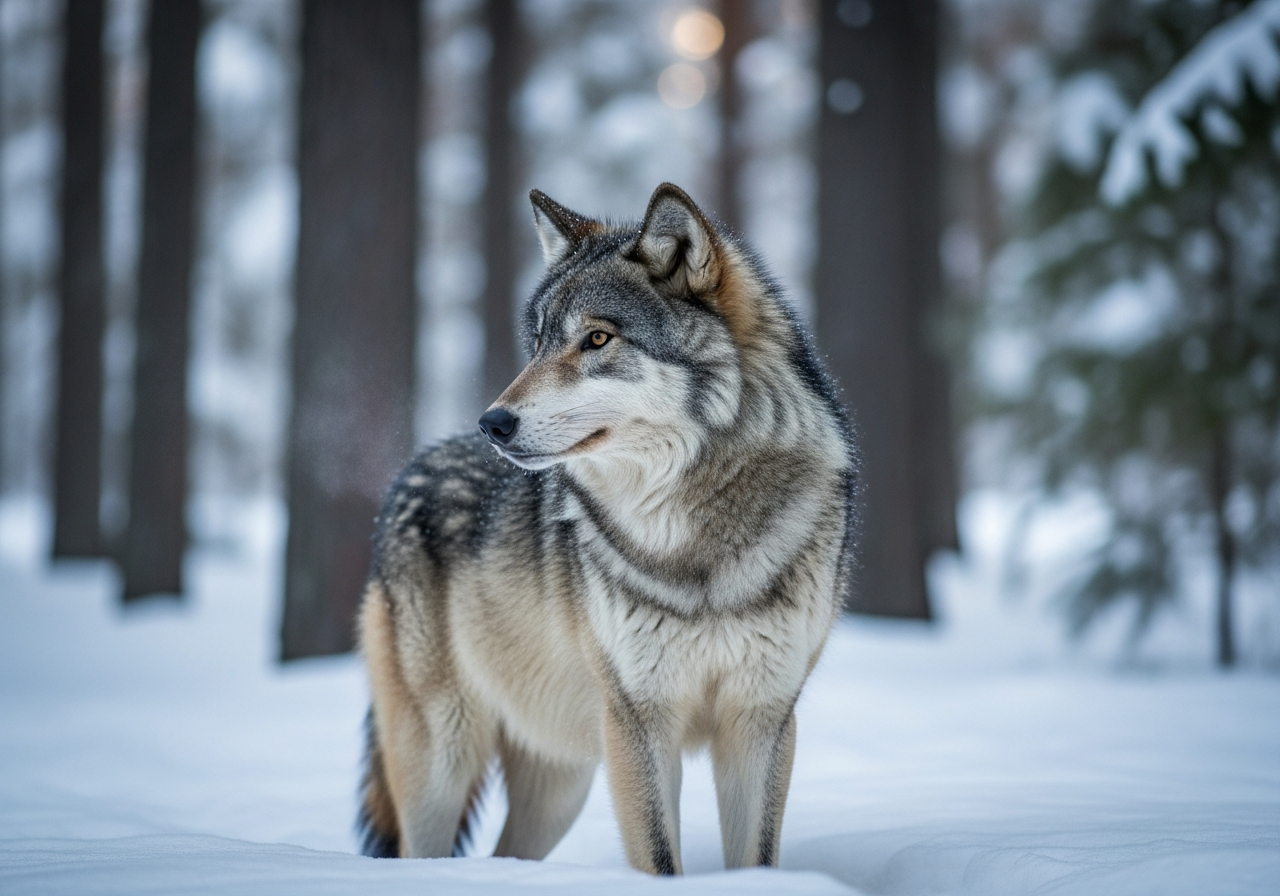
Quick answer
Gray Wolfs can injure people in specific contexts — usually when surprised, cornered, defending young, or habituated to food. Risk scales with size (23–80 kg (50–175 lb)), weapons, and human behaviour, not with how “scary” the species looks online.
Key takeaway
Gray Wolfs can injure people in specific contexts — usually when surprised, cornered, defending young, or habituated to food. Risk scales with size (23–80 kg (50–175 lb)), weapons, and human behaviour, not with how “scary” the species looks online.
Realistic risk from gray wolfs
Most wild gray wolfs avoid people. Serious incidents are uncommon relative to encounter rates, but consequences can be severe when animals are cornered or food-conditioned.
When Gray Wolf encounters turn dangerous
Surprise meetings, food rewards, injured animals, and mothers with young raise danger. Approaching for photos is a frequent human factor in Forest, tundra, grassland, mountains.
Gray Wolf capability
Consider bite, claws, horns, venom, constriction, or mass (23–80 kg (50–175 lb)). Even shy species can injure if handled. Status (Least Concern) does not equal temperament.
Safety around gray wolfs
Keep distance, store food securely, leash pets, and follow park rules. Never feed wildlife. Seek medical care for puncture wounds and follow local public-health advice.
Pack life
Wolves live in packs that are essentially family units, usually a breeding pair and their offspring. The pack cooperates to hunt, raise pups, and defend territory. Far from the rigid 'alpha' myth, wild packs are led naturally by the breeding parents.
Communication
Wolves communicate through howls, body language, scent marking, and facial expressions. Howling helps reunite separated pack members, advertise territory, and reinforce social bonds, and can be heard several kilometers away.
Sources
Gray Wolf FAQs
Are gray wolfs dangerous?
Gray Wolfs can injure people in specific contexts — usually when surprised, cornered, defending young, or habituated to food. Risk scales with size (23–80 kg (50–175 lb)), weapons, and human behaviour, not with how “scary” the species looks online.
What is the scientific name of the gray wolf?
Canis lupus — used in research and conservation listings for gray wolfs.
What do gray wolfs eat?
Gray Wolfs are described as carnivores, with seasonal and regional variation in Forest, tundra, grassland, mountains.
Where do gray wolfs live?
They are associated with Forest, tundra, grassland, mountains. Local presence depends on food, cover, and human land use.
What is the conservation status of gray wolfs?
Listed in our guides as Least Concern. Check the IUCN Red List and national assessments for the latest formal category.
Who this page is for.This page is realistic risk, not medical advice after a bite or attack.