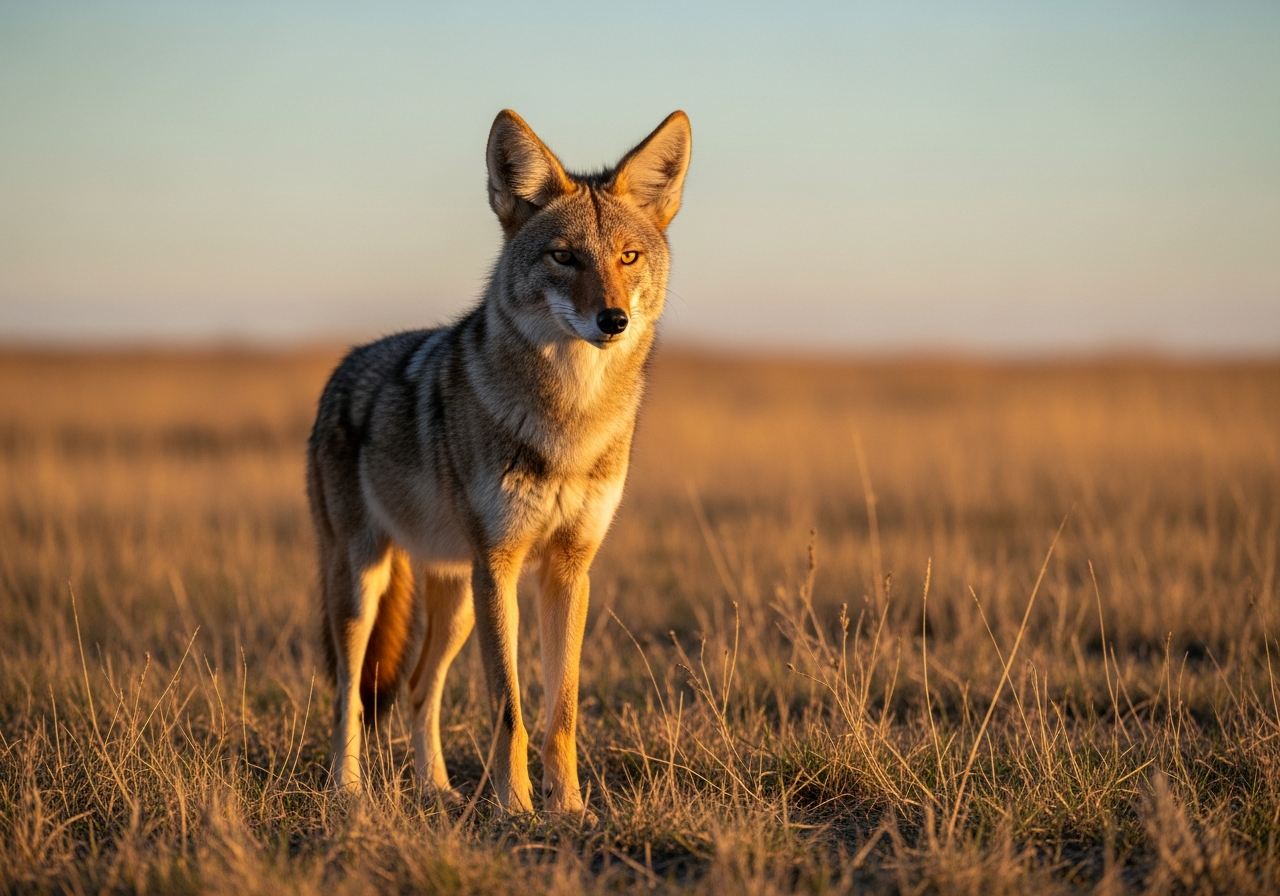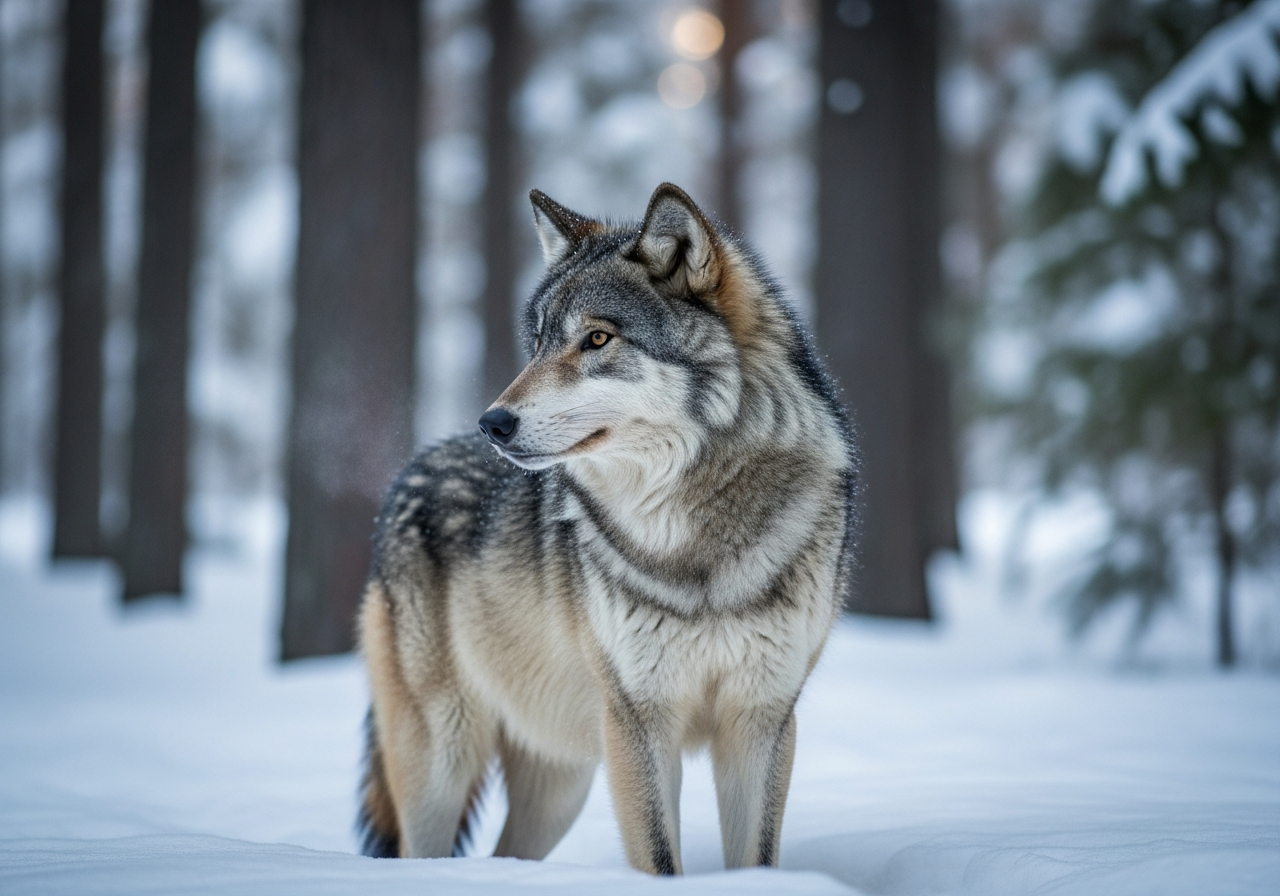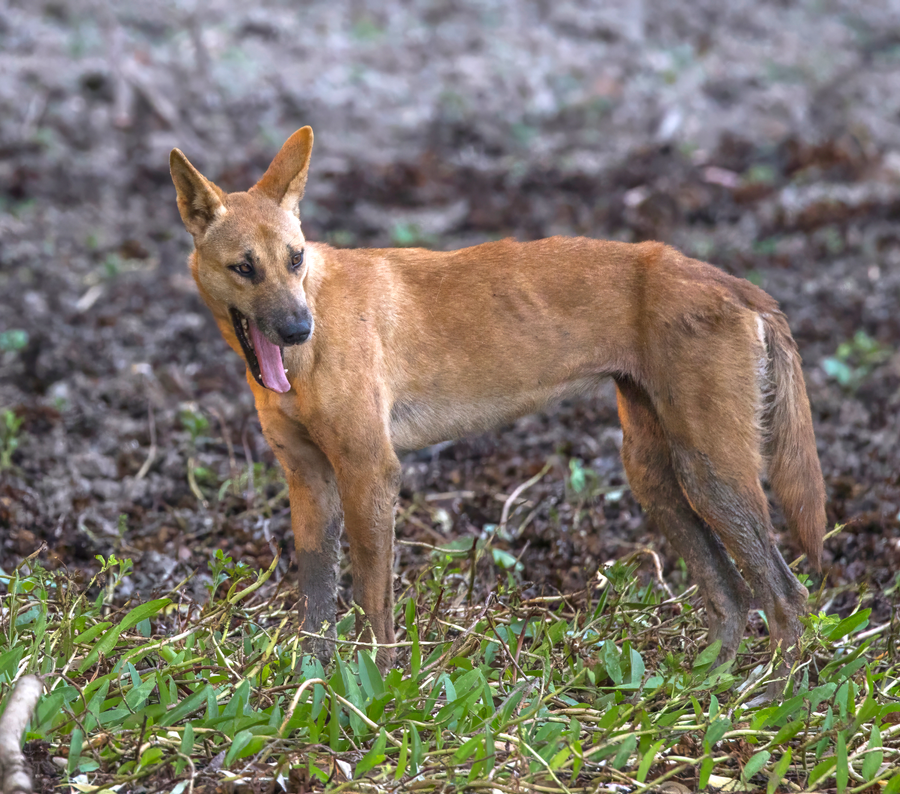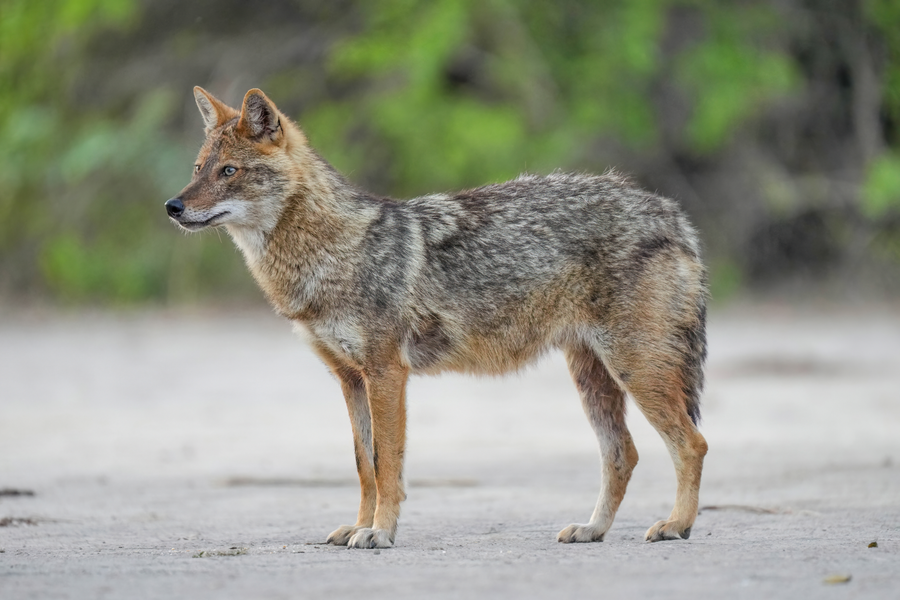
The golden jackal (Canis aureus) is a mammal of the dog family, Canidae, in the order Carnivora.
Quick answer
The golden jackal is a medium-sized canid with a golden coat and pointed ears, found across parts of Europe and Asia. Omnivorous and adaptable, jackals weigh 7–15 kg (15–33 lb), pair-bond for life, and vocalise with yips and howls at dusk.
Top questions about the Golden Jackal
Golden Jackal facts at a glance
- Weight 11 kg
- Length 85 cm
- Top speed 32 km/h
- Lifespan 13 years
| Scientific name | Canis aureus |
|---|---|
| Diet | Omnivore — rodents, fruit, insects, carrion, and refuse |
| Habitat | Savannas, farmland, scrub, and forest edges across Europe and Asia |
| Lifespan | 11–13 years in the wild |
| Weight | 7–15 kg (15–33 lb); males slightly larger |
| Top speed | Up to 32 km/h (20 mph) in sustained trot |
| Conservation status | Least Concern (IUCN) |
| Kingdom | Animalia |
|---|---|
| Phylum | Chordata |
| Class | Mammalia |
| Order | Carnivora |
| Family | Canidae |
| Genus | Canis |
Where it lives
The golden jackal (Canis aureus) is native to North and East Africa, the Middle East, the Indian subcontinent, and expanding populations in southeastern and central Europe. — recorded across Africa, Asia, Europe in this guide’s range summary.
For occurrence records, see GBIF species search and sources below.
How big is a golden jackal?
An adult golden jackal measures 85 cm long — about 49% of the height of an average adult person (1.73 m) — and weighs around 11 kg, about 16% of an average adult’s body weight (70 kg).
Length vs an average adult’s height (to scale)
What is a group of golden jackals called?
Group name (collective noun)
A group of Golden Jackals is called a pack.
Baby name
A baby Golden Jackal is called a pup.
Explore more animal collective nouns and baby animal names .
Omnivorous opportunist
Golden jackals thrive on varied diets — hunting rodents and hares, scavenging kills, eating fruit and insects, and raiding crops and rubbish near villages. This flexibility helps explain their expansion into new areas including parts of central and eastern Europe.
Pair bonds and vocal packs
Jackals often mate for life, with pairs defending territories together. Family groups may include grown offspring helping raise the next litter. Their evening chorus of yips and howls carries across open country.
Range expansion
Once limited largely to warm regions, golden jackals have spread northward in Europe, reaching the Baltic states and beyond. Climate change, reduced persecution, and abundant food in agricultural landscapes may all contribute.
Ecology and conflict
Jackals control rodent populations and clean carrion but occasionally prey on lambs or poultry, drawing persecution. Rabies transmission is a concern in some regions. Globally Least Concern, they are increasingly studied as climate-driven range shifters.
Dig deeper into the Golden Jackal
- How Fast Is A Golden Jackal?
Golden Jackal top speed is up to about 32 km/h (20 mph) in sustained trot. Sprint vs endurance and what limits pace.
- How Long Do Golden Jackals Live?
Golden Jackal lifespan is typically 11–13 years in the wild. What shortens or extends life, life stages, and status (Least Concern).
- Golden Jackal: Key Facts
The golden jackal is a medium-sized canid with a golden coat and pointed ears, found from Africa through the Middle East to southern Asia and expanding…
- What Do Golden Jackals Eat?
What golden jackals eat: Omnivore — rodents, fruit, insects, carrion, and refuse, foraging style, and seasonal shifts in Savannas, farmland, scrub, and forest edges across Eurasia and Africa.
- Where Do Golden Jackals Live?
Where golden jackals live: Savannas, farmland, scrub, and forest edges across Eurasia and Africa, native range cues, and human overlap. Status Least Concern.
Explore the Golden Jackal
Range & geography
Did you know? Golden Jackal facts
- The golden jackal is a medium-sized canid with a golden coat and pointed ears, found across parts of Europe and Asia.
- Golden jackals (Canis aureus) live in Europe and Asia; African golden wolves (Canis lupaster) are a separate species. Coyotes are a separate New World species (Canis latrans) of similar ecological niche in the Americas.
- Attacks are extremely rare. Jackals generally avoid people and are more likely to scavenge at night than confront humans.
- High-pitched yips, howls, and wails, often in chorus at dusk and dawn — used to communicate between partners and family members.
- Parts of Europe, the Middle East and southern Asia, including the Indian subcontinent.
- Conservation: Least Concern (IUCN).
Diet & feeding
The golden jackal is an omnivore — rodents, fruit, insects, carrion, and refuse. Golden jackals thrive on varied diets — hunting rodents and hares, scavenging kills, eating fruit and insects, and raiding crops and rubbish near villages. Their flexible diet helps them occupy farmland and other landscapes near people.
Adaptations
- Golden jackals thrive on varied diets — hunting rodents and hares, scavenging kills, eating fruit and insects, and raiding crops and rubbish near villages. This flexibility helps explain their expansion into new areas including parts of central and eastern Europe.
- Jackals often mate for life, with pairs defending territories together. Family groups may include grown offspring helping raise the next litter. Their evening chorus of yips and howls carries across open country.
Behaviour & ecology
- Golden jackals thrive on varied diets — hunting rodents and hares, scavenging kills, eating fruit and insects, and raiding crops and rubbish near villages. This flexibility helps explain their expansion into new areas including parts of central and eastern Europe.
- Jackals often mate for life, with pairs defending territories together. Family groups may include grown offspring helping raise the next litter. Their evening chorus of yips and howls carries across open country.
- Once limited largely to warm regions, golden jackals have spread northward in Europe, reaching the Baltic states and beyond. Climate change, reduced persecution, and abundant food in agricultural landscapes may all contribute.
Communication
- Golden Jackal uses scent, posture, and vocal signals to mark territory and coordinate social behaviour.
- Communication intensity often peaks during breeding seasons and territorial disputes.
Habitat & range
Savannas, farmland, scrub, and forest edges across Europe and Asia
Ecological role
Golden Jackal plays a recognised ecological role in savannas, farmland, scrub, and forest edges across Europe and Asia.
Conservation status of the Golden Jackal
The golden jackal (Canis aureus) is listed as Least Concern on the IUCN Red List. Least Concern (LC) is the IUCN's lowest-risk category, assigned to widespread, abundant species that have been evaluated and found not to be threatened. It does not mean a species faces no pressures — only that it is not currently at risk of extinction.
The golden jackal (Canis aureus) is assessed on the IUCN Red List. Look up on the IUCN Red List .
Frequently asked questions about the Golden Jackal
Jackal vs coyote — what is the difference?
Golden jackals (Canis aureus) live in Europe and Asia; the African golden wolf (Canis lupaster) is a separate species. Coyotes are a separate New World species (Canis latrans) of similar ecological niche in the Americas.
Do jackals attack humans?
Attacks are extremely rare. Jackals generally avoid people and are more likely to scavenge at night than confront humans.
What sound do jackals make?
High-pitched yips, howls, and wails, often in chorus at dusk and dawn — used to communicate between partners and family members.
Where do golden jackals live?
Parts of Europe, the Middle East, and southern Asia, including the Indian subcontinent. African golden wolves were formerly grouped with golden jackals but are a separate species.
What do jackals eat?
Rodents, hares, birds, fruit, insects, carrion, and human refuse — a highly opportunistic omnivorous diet.
What is a group of golden jackals called?
A group of Golden Jackals is called a pack.
What is a baby golden jackal called?
A baby Golden Jackal is called a pup.
Sources & references
This guide is compiled and reviewed against established zoological and conservation references. Key sources for the Golden Jackal:
-
IUCN Red List of Threatened Species
Conservation status (Least Concern) reflects the IUCN Red List category for Canis aureus.
-
iNaturalist — observations & photos
Search citizen-science observations and community IDs for Canis aureus. Useful for range checks and recent sightings — not a substitute for formal Red List status.
-
GBIF — occurrence data
Global Biodiversity Information Facility species search for Canis aureus. Explore published occurrence records used in range research.
- IUCN SSC Canid Specialist Group — Golden jackal (Canis aureus).
European and Asian range; checked 19 September 2026.
- IUCN Red List — Canis aureus.
Conservation status (Least Concern) and population trends.
- Animal Diversity Web — Canis aureus. University of Michigan Museum of Zoology.
Life history, morphology, and range.
-
Global Animal Guide editorial standards
How we research, source, review, and update every guide for accuracy.