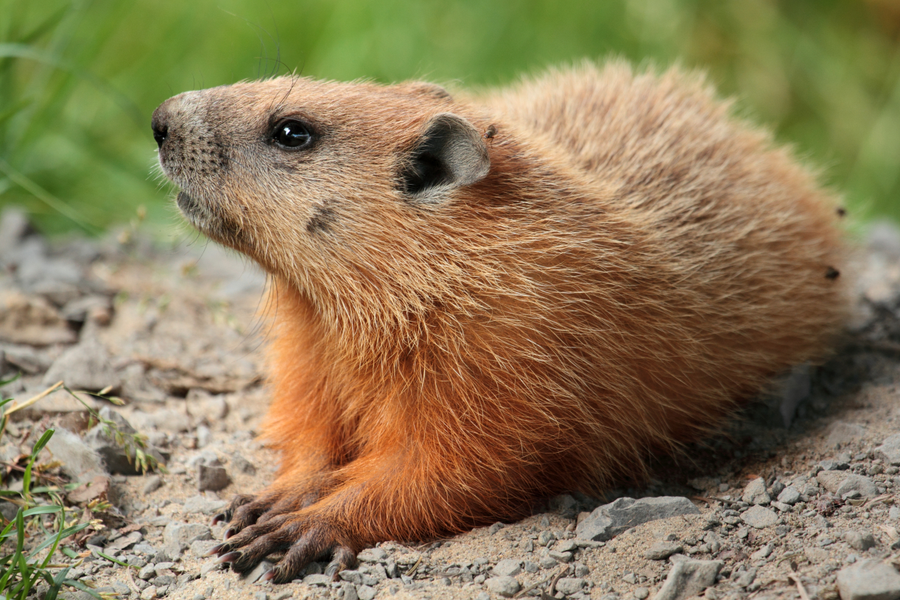
The groundhog (Marmota monax) is a mammal of the family Sciuridae, in the order Rodentia.
Quick answer
The groundhog (Marmota monax) is a large ground-dwelling squirrel, or marmot, native to fields and woodland edges across much of North America. Also known as the woodchuck, it grows to about 65 cm long, weighs up to 6 kg before winter, and digs extensive burrows. Groundhogs are true hibernators, sleeping through the cold months, and live around four to six years in the wild.
Top questions about the Groundhog
Groundhog facts at a glance
- Weight 5 kg
- Length 65 cm
- Top speed 16 km/h
- Lifespan 6 years
| Scientific name | Marmota monax |
|---|---|
| Diet | Herbivore — grasses, clover, dandelion, and garden vegetables |
| Habitat | Fields, woodland edges, and suburban areas of North America |
| Lifespan | 4–6 years in the wild (up to 14 in captivity) |
| Weight | 2–6 kg (4.4–13 lb); heavier before hibernation |
| Top speed | Up to 16 km/h (10 mph) to burrow |
| Conservation status | Least Concern (IUCN) |
| Kingdom | Animalia |
|---|---|
| Phylum | Chordata |
| Class | Mammalia |
| Order | Rodentia |
| Family | Sciuridae |
| Genus | Marmota |
Where it lives
The groundhog (Marmota monax) is native to Eastern and central North America from Alabama to Alaska across fields, woodland edges, and suburbs. — recorded across North America in this guide’s range summary.
For occurrence records, see GBIF species search and sources below.
How big is a groundhog?
An adult groundhog measures 65 cm long — about 38% of the height of an average adult person (1.73 m) — and weighs around 5.0 kg, about 7% of an average adult’s body weight (70 kg).
Length vs an average adult’s height (to scale)
What is a group of groundhogs called?
Group name (collective noun)
A group of Groundhogs is called a colony.
Baby name
A baby Groundhog is called a pup.
Explore more animal collective nouns and baby animal names .
Burrowing and daily life
Groundhogs are among the most accomplished diggers of the rodent world, excavating burrow systems that can run several metres long with multiple chambers and escape exits. These tunnels provide shelter for sleeping, raising young, and hiding from predators such as foxes, coyotes, and hawks. A groundhog rarely strays far from a burrow entrance and will bolt underground at up to 16 km/h (10 mph) when alarmed. Discarded burrows also become homes for rabbits, foxes, and other wildlife.
Diet and feeding
The groundhog is a dedicated herbivore, grazing on grasses, clover, dandelions, and a wide variety of wild and garden plants. In summer it feeds heavily to build up fat reserves, which is why it is such a familiar and unwelcome visitor to vegetable plots and allotments. An adult can eat well over a pound of vegetation in a single day during peak season. This intense feeding is essential preparation for the long hibernation ahead.
Hibernation
Unlike many mammals that merely slow down in winter, the groundhog is a true hibernator. From roughly October to February it retreats to a deep burrow chamber, where its heart rate drops to just a few beats per minute and its body temperature falls close to that of the surrounding soil. It survives entirely on the fat it stored during autumn, emerging thin but alive in early spring. This deep dormancy is what inspired the folklore behind Groundhog Day.
Groundhog Day and folklore
The groundhog owes much of its fame to the North American tradition of Groundhog Day, held on 2 February, when a waking groundhog is said to predict the arrival of spring. According to the custom, if the animal sees its shadow, six more weeks of winter follow. The tradition has no real forecasting value but reflects the groundhog's genuine role as an early-spring riser. It has made this otherwise ordinary marmot one of the continent's best-known wild mammals.
Breeding and young
Groundhogs breed in early spring, soon after emerging from hibernation, and females give birth to a litter of two to six blind, hairless pups after about a month. The young are weaned within roughly six weeks and leave to establish their own burrows by midsummer. Mothers raise the litter alone, as groundhogs are largely solitary outside the breeding season. Most young disperse before their first winter to dig burrows of their own.
Distribution and status
Groundhogs are widespread across the eastern and central United States and much of Canada, thriving in farmland, meadows, and the edges of suburbs. Their adaptability to human-altered landscapes has kept their numbers healthy, and the IUCN lists them as Least Concern. In the wild they usually live four to six years, though protected captive individuals have reached fourteen. Their tunnelling can damage crops and foundations, so they are sometimes treated as agricultural pests.
Dig deeper into the Groundhog
- Groundhog Burrow Engineering
The groundhog — also called woodchuck — is a burrowing marmot famous for Groundhog Day folklore across North America.
- Groundhog Deep Hibernation
The groundhog — also called woodchuck — is a burrowing marmot famous for Groundhog Day folklore across North America.
- How Long Do Groundhogs Live?
Groundhog lifespan is typically 4–6 years in the wild (up to 14 in captivity). What shortens or extends life, life stages, and status (Least Concern).
- What Do Groundhogs Eat?
What groundhogs eat: Herbivore — grasses, clover, dandelion, and garden vegetables, foraging style, and seasonal shifts in Fields, woodland edges, and suburban areas of North America.
- Where Do Groundhogs Live?
Where groundhogs live: Fields, woodland edges, and suburban areas of North America, native range cues, and human overlap. Status Least Concern.
Explore the Groundhog
Compare
Close relatives
- Black-tailed Prairie Dog Same family
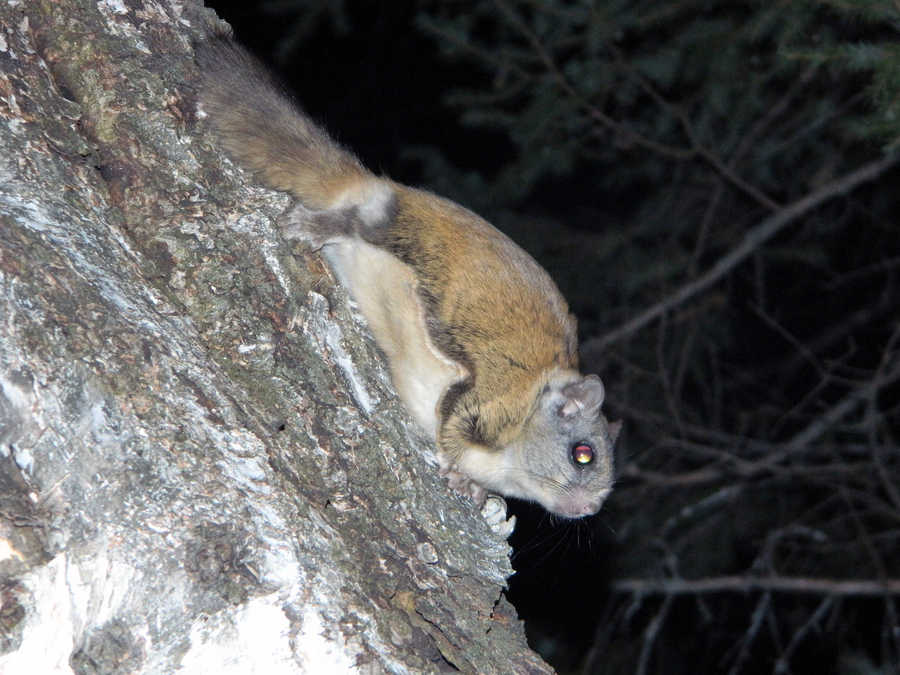
- Northern Flying Squirrel Same family
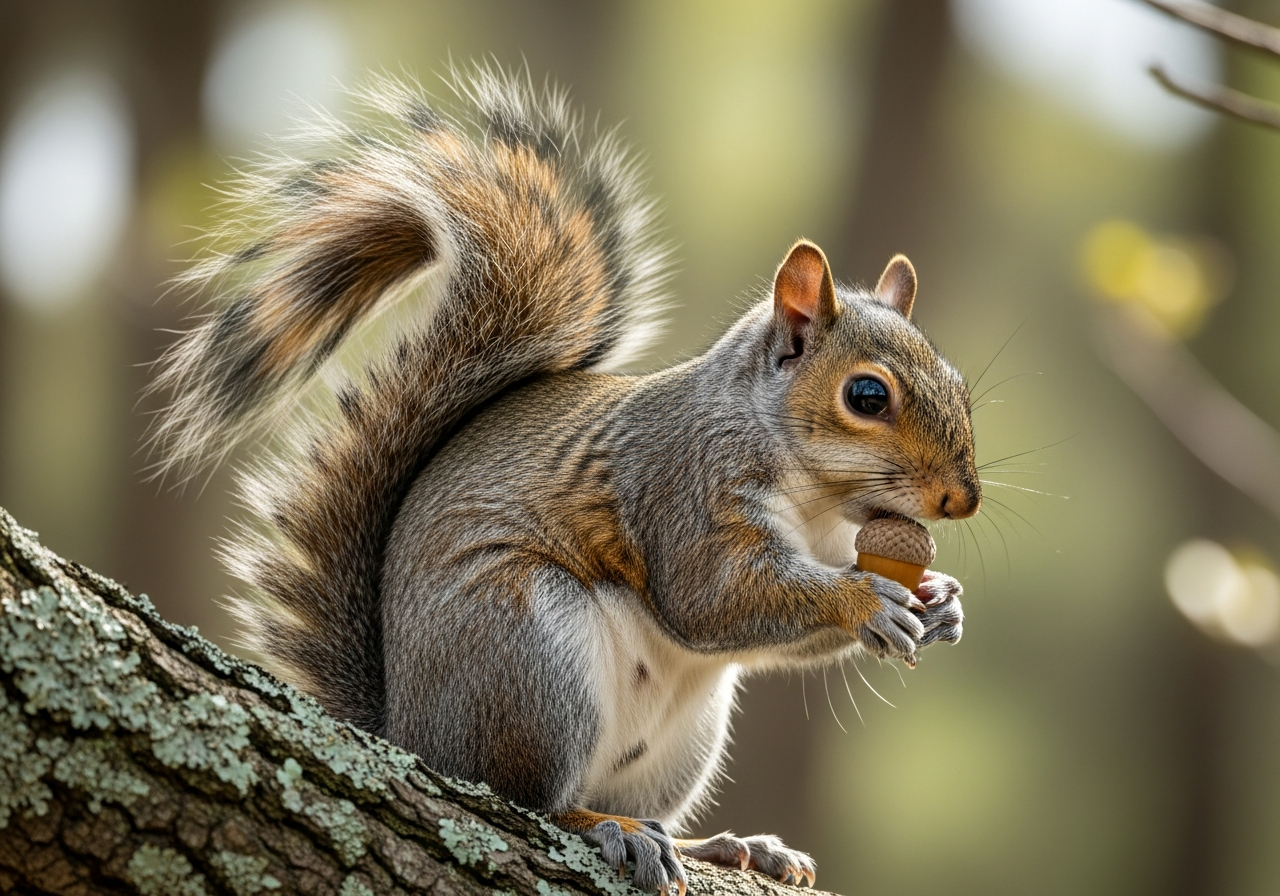
- Squirrel Same family
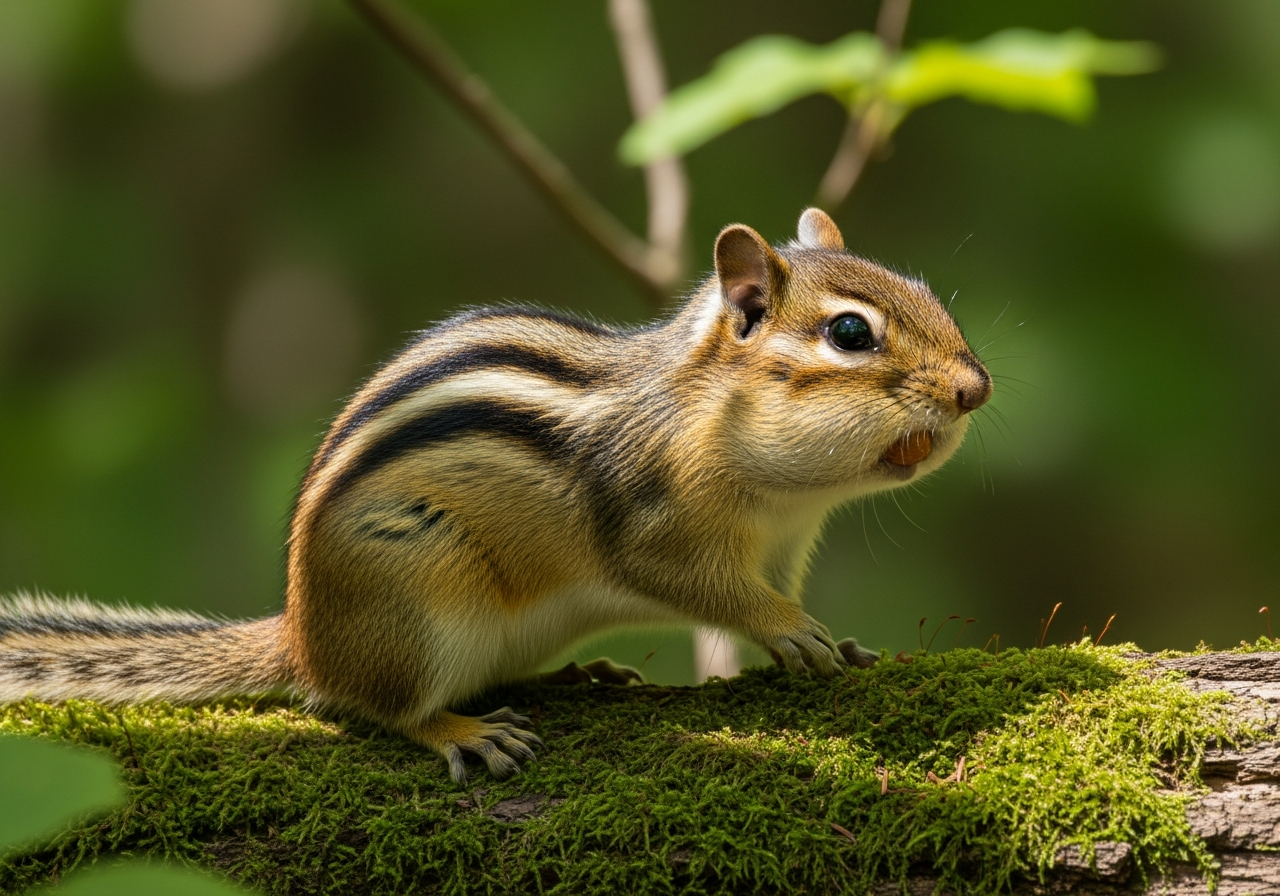
- Chipmunk Same family
Range & geography
Did you know? Groundhog facts
- Groundhogs — also called woodchucks — are burrowing marmots famous for Groundhog Day folklore.
- The tongue-twister name 'woodchuck' comes from Algonquian 'wuchak', not wood chewing.
- No scientific basis — shadow folklore is entertainment, not meteorology.
- Conservation: Least Concern.
Diet & feeding
Groundhog feeds primarily as a grasses, clover, vegetables. Heart rate drops from 80 to 5 beats per minute during winter torpor.
Adaptations
- Heart rate drops from 80 to 5 beats per minute during winter torpor.
- Complex burrows with separate chambers can extend over 15 metres.
Behaviour & ecology
- Heart rate drops from 80 to 5 beats per minute during winter torpor.
- Complex burrows with separate chambers can extend over 15 metres.
Communication
- Groundhog uses scent, posture, and vocal signals to mark territory and coordinate social behaviour.
- Communication intensity often peaks during breeding seasons and territorial disputes.
Habitat & range
Fields and woodland edges in North America
Ecological role
Groundhog plays a recognised ecological role in fields and woodland edges in north america.
Conservation status of the Groundhog
The groundhog (Marmota monax) is listed as Least Concern on the IUCN Red List. Least Concern (LC) is the IUCN's lowest-risk category, assigned to widespread, abundant species that have been evaluated and found not to be threatened. It does not mean a species faces no pressures — only that it is not currently at risk of extinction.
The groundhog (Marmota monax) is assessed on the IUCN Red List. Look up on the IUCN Red List .
Frequently asked questions about the Groundhog
What is the difference between a groundhog and a woodchuck?
There is no difference — groundhog and woodchuck are two common names for the same animal, Marmota monax. The name woodchuck has nothing to do with wood or chucking; it comes from a Native American word for the animal.
Do groundhogs really hibernate?
Yes. Groundhogs are true hibernators, spending roughly October to February in a deep burrow. Their heart rate and body temperature drop dramatically, and they survive on fat reserves built up over the summer.
What do groundhogs eat?
Groundhogs are herbivores that feed mainly on grasses, clover, dandelions, and other leafy plants. They are also fond of garden vegetables, which often brings them into conflict with gardeners and farmers.
How long do groundhogs live?
In the wild, groundhogs typically live four to six years. In captivity, with no predators and a steady food supply, some have lived up to fourteen years.
Are groundhogs dangerous?
Groundhogs are not dangerous to people and prefer to flee underground when threatened. Their main impact is on gardens and farmland, where their feeding and burrowing can cause damage.
How big do groundhogs get?
Adult groundhogs reach about 65 cm (26 inches) in length and weigh between 2 and 6 kg (4.4 to 13 lb). They are noticeably heaviest in autumn, when they have fattened up for hibernation.
What is a group of groundhogs called?
A group of Groundhogs is called a colony.
What is a baby groundhog called?
A baby Groundhog is called a pup.
Sources & references
This guide is compiled and reviewed against established zoological and conservation references. Key sources for the Groundhog:
-
IUCN Red List of Threatened Species
Conservation status (Least Concern) reflects the IUCN Red List category for Marmota monax.
-
iNaturalist — observations & photos
Search citizen-science observations and community IDs for Marmota monax. Useful for range checks and recent sightings — not a substitute for formal Red List status.
-
GBIF — occurrence data
Global Biodiversity Information Facility species search for Marmota monax. Explore published occurrence records used in range research.
- IUCN Red List — Marmota monax.
Conservation status (Least Concern) and population trends.
- Animal Diversity Web — Marmota monax. University of Michigan Museum of Zoology.
Life history, morphology, and range.
-
Global Animal Guide editorial standards
How we research, source, review, and update every guide for accuracy.