Image sourcing: see credits & licences
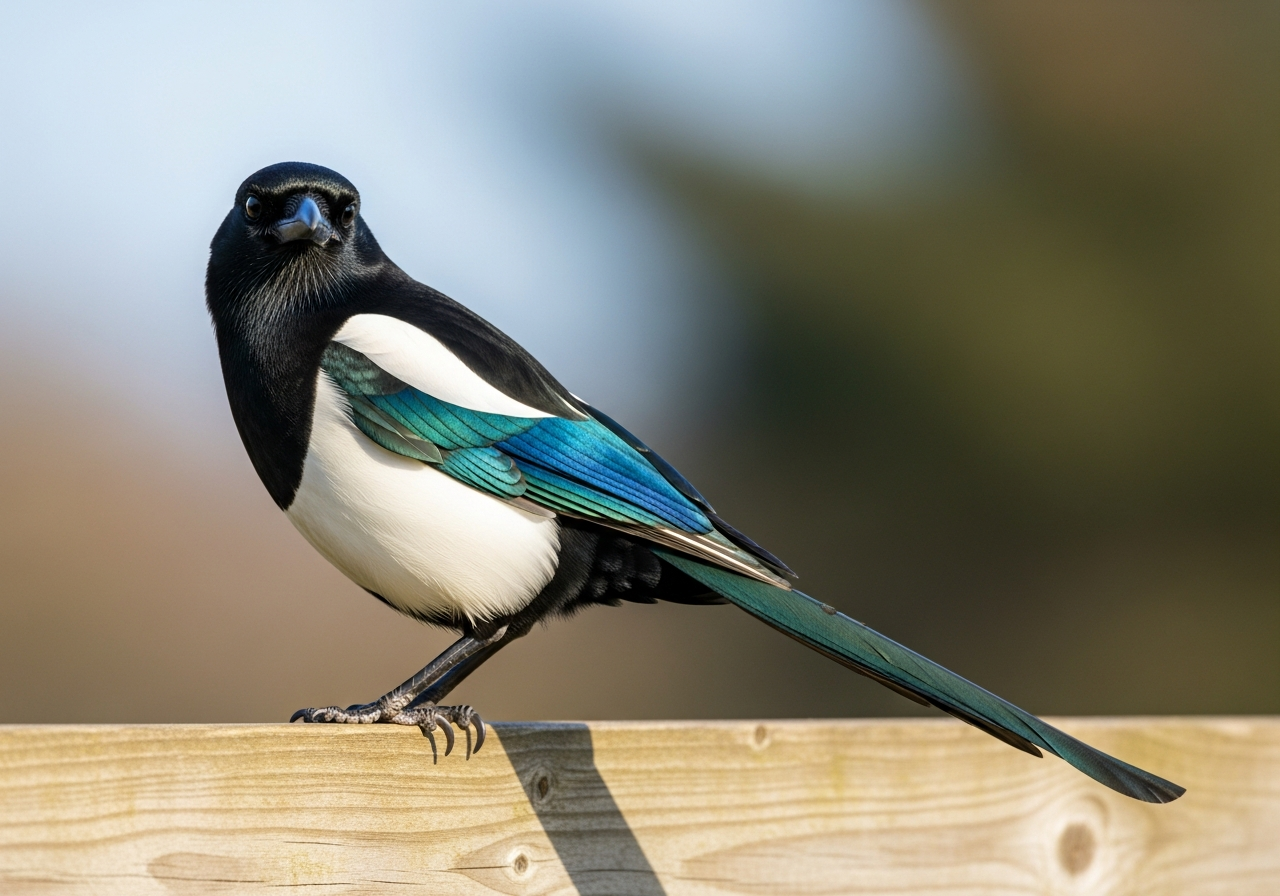
The magpie (Pica pica) is a bird of the crow family, Corvidae, in the order Passeriformes.
Quick answer
The magpie (Pica pica) is a bold, black-and-white member of the crow family found across farmland, woodland edges, parks, and suburbs. Around 45 cm long with a 52–60 cm wingspan and a long iridescent tail, it is one of the most intelligent of all birds. Magpies are opportunistic omnivores that typically live about five years, though some reach 21.
Top questions about the Magpie
Magpie facts at a glance
- Weight 230 g
- Length 45 cm
- Top speed 30 km/h
- Lifespan 21 years
| Scientific name | Pica pica |
|---|---|
| Diet | Omnivore (insects, scraps, fruit, eggs) |
| Habitat | Farmland, woodland edges, parks, suburbs |
| Lifespan | About 5 years (up to 21) |
| Weight | 200–250 g (7–9 oz) |
| Wingspan | 52–60 cm (20–24 in) |
| Conservation status | Least Concern (IUCN) |
| Kingdom | Animalia |
|---|---|
| Phylum | Chordata |
| Class | Aves |
| Order | Passeriformes |
| Family | Corvidae |
| Genus | Pica |
Where it lives
The magpie (Pica pica) is native to Open countryside with trees, farmland, and towns across Europe, much of temperate Asia, and North Africa. — recorded across Europe, Asia, Africa in this guide’s range summary.
For occurrence records, see GBIF species search and sources below.
How big is a magpie?
An adult magpie measures 45 cm long — about 26% of the height of an average adult person (1.73 m) — and weighs around 230 g, a small fraction of an average adult’s body weight (70 kg).
Length vs an average adult’s height (to scale)
What is a group of magpies called?
Group name (collective noun)
A group of Magpies is called a tiding. It is also known as a mischief or a tittering.
Baby name
A baby Magpie is called a chick.
Explore more animal collective nouns and baby animal names .
Intelligence and self-awareness
Magpies are among the cleverest birds in the world, with a large brain relative to body size. In a famous experiment, magpies became one of the very few non-mammal species to pass the mirror self-recognition test, appearing to understand that the reflection was themselves. They solve problems, plan ahead, and remember complex social relationships within their flocks. Such cognitive skill puts them alongside their crow-family relatives as feathered problem-solvers.
Diet and feeding
The magpie is an omnivore that eats insects, worms, seeds, fruit, carrion, scraps, and the eggs and chicks of other birds. This raiding of nests has given magpies an unfair reputation, though studies show it has little effect on overall songbird numbers. Their varied diet lets them thrive in farmland, hedgerows, parks, and gardens alike. Magpies readily exploit human food waste and often forage boldly around towns and roadsides.
The myth of the thieving magpie
Magpies have long been accused of stealing and hoarding shiny objects, a belief cemented by opera and folklore. In reality, research suggests wild magpies are more wary than attracted when confronted with shiny items, and there is little evidence of genuine treasure-hoarding. The birds do cache food, hiding surplus to eat later, which may be the root of the legend. Their reputation as thieves is largely a human story rather than a fact of magpie behaviour.
Nesting and reproduction
Breeding magpies build a large, domed nest of sticks with a roof to shelter the eggs and young from predators and weather. The female lays a clutch of around six eggs in spring, and both parents help feed the chicks once they hatch. Young magpies stay with their parents for several weeks after fledging before joining flocks of other juveniles. Magpies are listed as Least Concern by the IUCN, and populations across Europe are stable or increasing.
Dig deeper into the Magpie
- How Fast Is A Magpie?
Magpie top speed is about about 30 km/h. Sprint vs endurance and what limits pace.
- How Long Do Magpies Live?
Magpie lifespan is typically About 5 years (up to 21). What shortens or extends life, life stages, and status (Least Concern).
- Magpie: Key Facts
Magpies (Pica pica) are birds found across Europe, Asia, Africa. The bold, brilliant problem-solver of the crow family.
- What Do Magpies Eat?
What magpies eat: Omnivore (insects, scraps, fruit, eggs), foraging style, and seasonal shifts in Farmland, woodland edges, parks, suburbs.
- Where Do Magpies Live?
Where magpies live: Farmland, woodland edges, parks, suburbs, native range cues, and human overlap. Status Least Concern.
Explore the Magpie
Close relatives
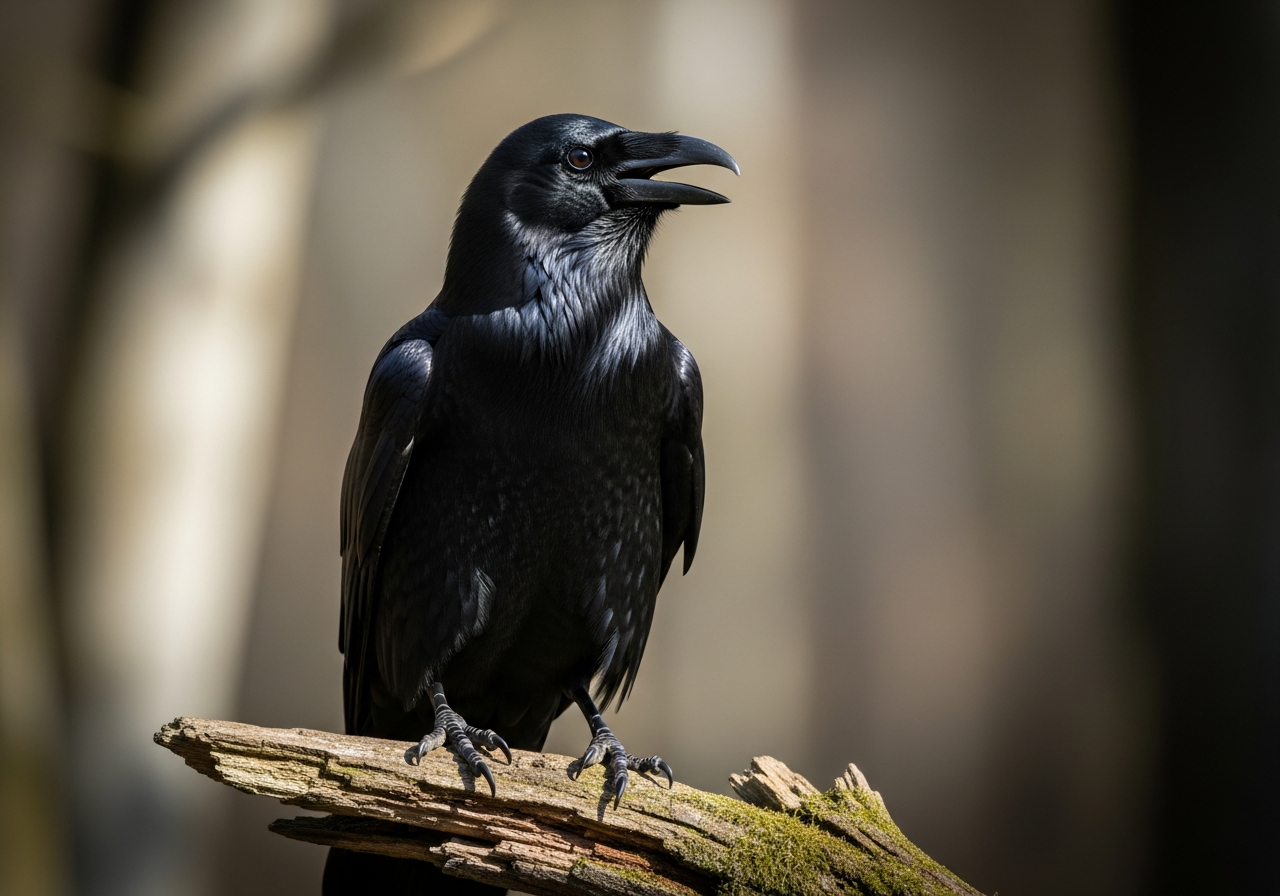
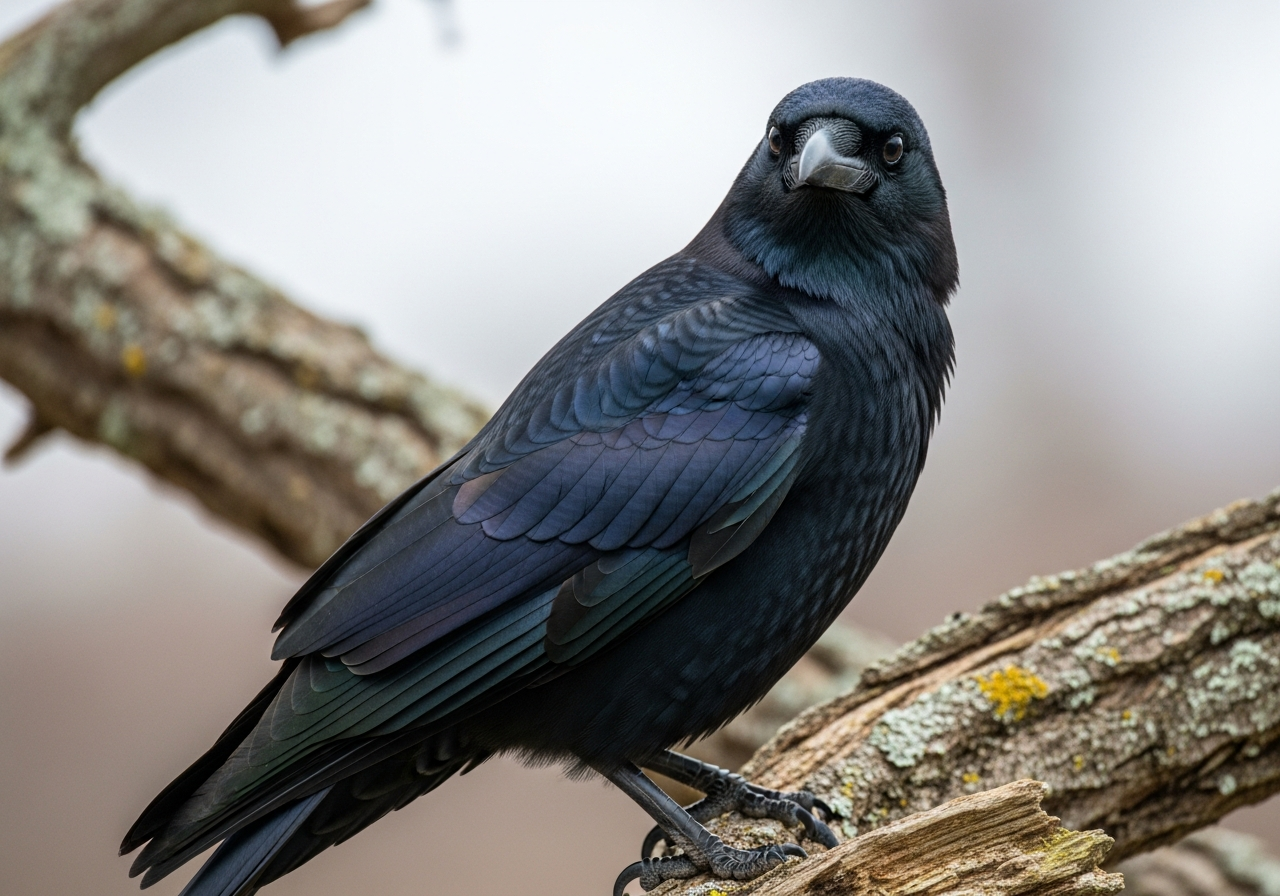
- Crow Same family
- Common Raven Same family
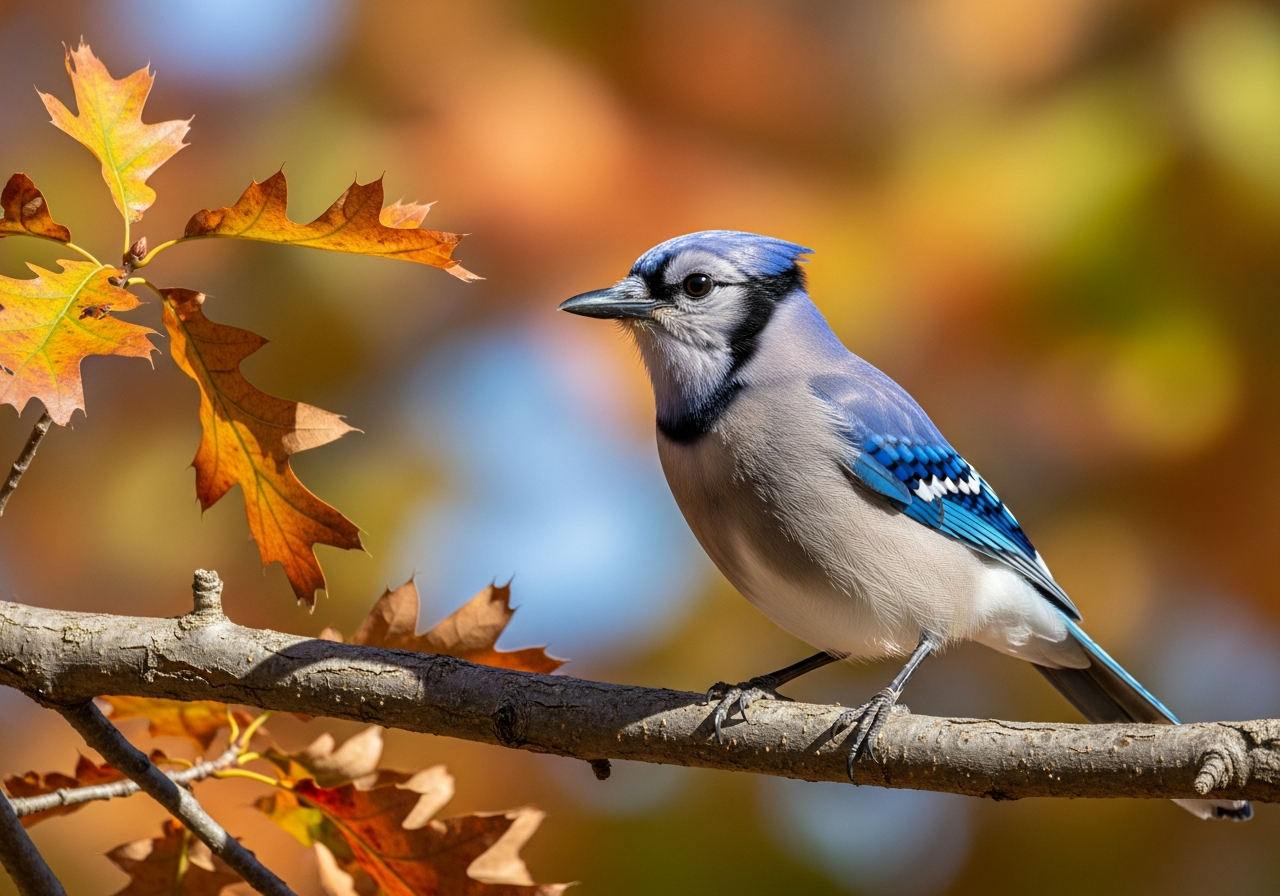
- Blue Jay Same family
- Canary Same order
Range & geography
Did you know? Magpie facts
- The Eurasian magpie is a striking black-and-white member of the crow family with an iridescent blue-green sheen and a long tail.
- A group of magpies is called a parliament, and also a tiding, a mischief, or a tittering. A baby magpie is called a chick.
- Extremely. Magpies are corvids and among the smartest birds, able to solve problems, recognise human faces, and even pass the mirror self-recognition test — a sign of self-awareness rare in the animal kingdom.
- Mostly no. The idea is largely a myth; studies show magpies are often wary of unfamiliar shiny objects. The reputation comes from folklore and stories rather than from real hoarding behaviour.
- Magpies sometimes take eggs and nestlings in spring, which upsets some gardeners, but research shows this has little overall impact on songbird numbers, which are limited more by habitat and food.
- Conservation: Least Concern (IUCN).
Diet & feeding
Magpie feeds primarily as a omnivore (insects, scraps, fruit, eggs). Magpies are members of the corvid family, among the brainiest of all birds. In a famous experiment, magpies marked with a coloured spot tried to remove it while looking in a mirror — passing the 'mirror test' for self-recognition, something previously
Adaptations
- Magpies are members of the corvid family, among the brainiest of all birds. In a famous experiment, magpies marked with a coloured spot tried to remove it while looking in a mirror — passing the 'mirror test' for self-recognition, something previously seen only in great apes, dolphins, and elephants. They solve problems, remember individual human faces, and even appear to hold 'funerals', gathering around a dead magpie.
- Magpies are opportunistic omnivores that eat insects, worms, seeds, fruit, scraps, carrion, and sometimes the eggs and chicks of other birds — a habit that makes them controversial with gardeners, though studies show they have little effect on songbird populations overall. They are social outside the breeding season, sometimes gathering in noisy groups, and build large domed nests with a roof of twigs.
Behaviour & ecology
- Magpies are members of the corvid family, among the brainiest of all birds. In a famous experiment, magpies marked with a coloured spot tried to remove it while looking in a mirror — passing the 'mirror test' for self-recognition, something previously seen only in great apes, dolphins, and elephants. They solve problems, remember individual human faces, and even appear to hold 'funerals', gathering around a dead magpie.
- Magpies are opportunistic omnivores that eat insects, worms, seeds, fruit, scraps, carrion, and sometimes the eggs and chicks of other birds — a habit that makes them controversial with gardeners, though studies show they have little effect on songbird populations overall. They are social outside the breeding season, sometimes gathering in noisy groups, and build large domed nests with a roof of twigs.
- Few birds carry as much folklore as the magpie. The old rhyme 'one for sorrow, two for joy' reflects a long superstition, and many people still greet a lone magpie for luck. The belief that magpies steal and hoard shiny objects is largely a myth — research suggests they are actually wary of unfamiliar shiny things rather than attracted to them.
Communication
- Magpie uses calls and visual displays to communicate territory, alarm, and breeding status.
- Vocal repertoires vary by species and are often learned or refined during development.
Habitat & range
Farmland, woodland edges, parks, suburbs
Ecological role
Magpie contributes to seed dispersal, insect control, or nutrient cycling depending on diet and foraging habits.
Conservation status of the Magpie
The magpie (Pica pica) is listed as Least Concern on the IUCN Red List. Least Concern (LC) is the IUCN's lowest-risk category, assigned to widespread, abundant species that have been evaluated and found not to be threatened. It does not mean a species faces no pressures — only that it is not currently at risk of extinction.
The magpie (Pica pica) is assessed on the IUCN Red List. Look up on the IUCN Red List .
Frequently asked questions about the Magpie
Are magpies really intelligent?
Yes. Magpies are among the most intelligent birds known and are one of the few non-mammal species to pass the mirror self-recognition test. They solve problems, remember individuals, and navigate complex social relationships within their flocks.
Do magpies actually steal shiny things?
Probably not in the way folklore suggests. Research indicates wild magpies are more cautious than attracted around shiny objects, and there is little evidence they hoard treasure. The legend may stem from their habit of caching food to eat later.
How long do magpies live?
Most magpies live about five years, but some survive much longer, with the oldest recorded reaching around 21. Predation and harsh weather mean many young birds do not make it through their first year.
What do magpies eat?
Magpies are omnivores that eat insects, worms, seeds, fruit, carrion, and food scraps, as well as the eggs and chicks of other birds. This varied diet helps them thrive in farmland, parks, and gardens.
Are magpies bad for other birds?
Magpies do take eggs and chicks, which gives them a poor reputation, but large-scale studies have found no evidence that they cause declines in songbird populations. Habitat loss and other pressures have far greater effects on garden birds.
Why do magpies gather in groups?
Outside the breeding season, non-breeding magpies form loose flocks, and they sometimes assemble in noisy gatherings called "parliaments." These groups may be linked to establishing territories and sorting out social rank among the birds.
What is a group of magpies called?
A group of Magpies is called a tiding. It is also known as a mischief or a tittering.
What is a baby magpie called?
A baby Magpie is called a chick.
Sources & references
This guide is compiled and reviewed against established zoological and conservation references. Key sources for the Magpie:
-
IUCN Red List of Threatened Species
Conservation status (Least Concern) reflects the IUCN Red List category for Pica pica.
-
iNaturalist — observations & photos
Search citizen-science observations and community IDs for Pica pica. Useful for range checks and recent sightings — not a substitute for formal Red List status.
-
GBIF — occurrence data
Global Biodiversity Information Facility species search for Pica pica. Explore published occurrence records used in range research.
-
eBird — bird observations
Cornell Lab eBird target search for Magpie. Check recent checklists and seasonal abundance where birders report this species.
- IUCN Red List — Pica pica.
Conservation status (Least Concern) and population trends.
- Animal Diversity Web — Pica pica. University of Michigan Museum of Zoology.
Life history, morphology, and range.
- Wikipedia — Magpie.
General taxonomy and overview (cross-check primary sources).
-
Global Animal Guide editorial standards
How we research, source, review, and update every guide for accuracy.