Image sourcing: see credits & licences
The Malayan tapir (Tapirus indicus) is a mammal of the family Tapiridae, in the order Perissodactyla.
Quick answer
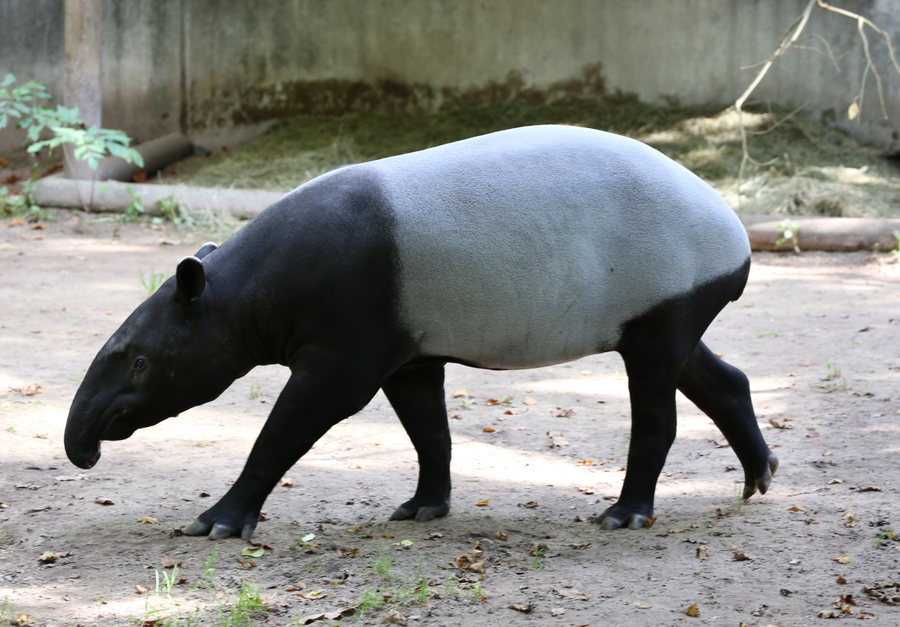
The Malayan tapir is the largest tapir species and the only one native to Asia, with a striking black front and white rear that breaks up its outline in dappled rainforest. Weighing 250–320 kg (550–700 lb), it browses leaves and fruit, disperses seeds, and is Endangered from deforestation and snaring.
Top questions about the Malayan Tapir
Also available in Español (Tapir malayo)
Malayan Tapir facts at a glance
- Weight 250 kg
- Length 2.5 m
- Top speed 48 km/h
- Lifespan 30 years
| Scientific name | Tapirus indicus |
|---|---|
| Diet | Herbivore — leaves, shoots, fruit, and aquatic plants |
| Habitat | Tropical rainforests of Malaysia, Thailand, and Sumatra |
| Lifespan | 25–30 years in the wild |
| Weight | 250–320 kg (550–700 lb) |
| Top speed | Up to 48 km/h (30 mph) on forest paths |
| Conservation status | Endangered (IUCN) |
| Kingdom | Animalia |
|---|---|
| Phylum | Chordata |
| Class | Mammalia |
| Order | Perissodactyla |
| Family | Tapiridae |
| Genus | Tapirus |
Where it lives
The malayan tapir (Tapirus indicus) is native to Tropical rainforests of peninsular Malaysia, southern Thailand, and Sumatra — the only tapir species native to Asia. — recorded across Asia in this guide’s range summary.
For occurrence records, see GBIF species search and sources below.
How big is a malayan tapir?
An adult malayan tapir measures 2.5 m long — about 1.4× the height of an average adult person (1.73 m) — and weighs around 250 kg, about 3.6× an average adult’s body weight (70 kg).
Length vs an average adult’s height (to scale)
What is a group of malayan tapirs called?
Group name (collective noun)
A group of Malayan Tapirs is called a candle.
Baby name
A baby Malayan Tapir is called a calf.
Explore more animal collective nouns and baby animal names .
Living fossil
Tapirs have changed little in 20 million years — short prehensile snouts grasp leaves and fruit, and splayed toes suit soft forest floor. Malayan tapirs are odd-toed ungulates related to horses and rhinos, not pigs.
Disruptive coloration
The black front and white saddle confuse predators in moonlit forest — a large dark mass splits into less recognisable shapes. Calves are spotted and striped like watermelon for camouflage, losing adult patterning by six months.
Seed dispersal
Tapirs swallow fruit whole and deposit seeds kilometres away in dung, earning them the title 'gardeners of the forest'. Loss of tapirs reduces regeneration of large-seeded trees in Southeast Asian rainforests.
Endangered status
Listed Endangered from habitat loss to palm oil and logging, plus snaring in wire traps set for other species. Road kills fragment populations in Malaysia and Sumatra. Protected areas and wildlife corridors are urgent priorities.
Dig deeper into the Malayan Tapir
- Are Malayan Tapirs Endangered?
Are Malayan tapirs endangered? Status Endangered, main threats, and what protection means.
- How Long Do Malayan Tapirs Live?
Malayan Tapir lifespan is typically 25–30 years in the wild. What shortens or extends life, life stages, and status (Endangered).
- Malayan Tapir: Key Facts
The Malayan tapir is the largest tapir species and the only one native to Asia, with a striking black front and white rear that breaks up its outline in…
- What Do Malayan Tapirs Eat?
What Malayan tapirs eat: Herbivore — leaves, shoots, fruit, and aquatic plants, foraging style, and seasonal shifts in Tropical rainforests of Malaysia, Thailand, and Sumatra.
- Where Do Malayan Tapirs Live?
Where Malayan tapirs live: Tropical rainforests of Malaysia, Thailand, and Sumatra, native range cues, and human overlap. Status Endangered.
Explore the Malayan Tapir
Compare
Close relatives
- Indian Rhinoceros Same order
- Rhinoceros Same order
- Black Rhinoceros Same order
- Przewalski's Horse Same order
Collections
Range & geography
Did you know? Malayan Tapir facts
- The Malayan tapir is the largest tapir species and the only one native to Asia, with a striking black front and white rear that breaks up its outline in dappled rainforest.
- No — tapirs are perissodactyls (odd-toed ungulates), related to horses and rhinos. Pigs are artiodactyls (even-toed).
- Disruptive camouflage — the contrast breaks up the body outline in dappled forest light, confusing predators.
- Usually shy, but can bite if cornered. Their size and powerful jaws demand respect in the wild.
- Peninsular Malaysia, southern Thailand, and Sumatra — in lowland and hill rainforest.
- Conservation: Endangered (IUCN).
Diet & feeding
Malayan Tapir feeds primarily as a herbivore — leaves, shoots, fruit, and aquatic plants.
Adaptations
- Tapirs have changed little in 20 million years — short prehensile snouts grasp leaves and fruit, and splayed toes suit soft forest floor. Malayan tapirs are odd-toed ungulates related to horses and rhinos, not pigs.
- The black front and white saddle confuse predators in moonlit forest — a large dark mass splits into less recognisable shapes. Calves are spotted and striped like watermelon for camouflage, losing adult patterning by six months.
Behaviour & ecology
- Tapirs have changed little in 20 million years — short prehensile snouts grasp leaves and fruit, and splayed toes suit soft forest floor. Malayan tapirs are odd-toed ungulates related to horses and rhinos, not pigs.
- The black front and white saddle confuse predators in moonlit forest — a large dark mass splits into less recognisable shapes. Calves are spotted and striped like watermelon for camouflage, losing adult patterning by six months.
- Tapirs swallow fruit whole and deposit seeds kilometres away in dung, earning them the title 'gardeners of the forest'. Loss of tapirs reduces regeneration of large-seeded trees in Southeast Asian rainforests.
Communication
- Malayan Tapir uses scent, posture, and vocal signals to mark territory and coordinate social behaviour.
- Communication intensity often peaks during breeding seasons and territorial disputes.
Habitat & range
Tropical rainforests of Malaysia, Thailand, and Sumatra
Ecological role
Malayan Tapir shapes vegetation through grazing or browsing and serves as prey for larger predators where ranges overlap.
Conservation status of the Malayan Tapir
The malayan tapir (Tapirus indicus) is listed as Endangered on the IUCN Red List. Endangered (EN) means a species faces a very high risk of extinction in the wild. Populations are usually declining sharply due to habitat loss, hunting, disease, or climate pressure. It sits one level below Critically Endangered on the IUCN Red List.
The malayan tapir (Tapirus indicus) is assessed on the IUCN Red List. Look up on the IUCN Red List .
Frequently asked questions about the Malayan Tapir
Are tapirs related to pigs?
No — tapirs are perissodactyls (odd-toed ungulates), related to horses and rhinos. Pigs are artiodactyls (even-toed).
Why is the Malayan tapir two-coloured?
Disruptive camouflage — the contrast breaks up the body outline in dappled forest light, confusing predators.
Are tapirs dangerous?
Usually shy, but can bite if cornered. Their size and powerful jaws demand respect in the wild.
Where do Malayan tapirs live?
Peninsular Malaysia, southern Thailand, and Sumatra — in lowland and hill rainforest.
Are tapirs endangered?
Malayan tapirs are Endangered. All four tapir species worldwide are threatened to some degree.
What is a group of malayan tapirs called?
A group of Malayan Tapirs is called a candle.
What is a baby malayan tapir called?
A baby Malayan Tapir is called a calf.
Sources & references
This guide is compiled and reviewed against established zoological and conservation references. Key sources for the Malayan Tapir:
-
IUCN Red List of Threatened Species
Conservation status (Endangered) reflects the IUCN Red List category for Tapirus indicus.
-
iNaturalist — observations & photos
Search citizen-science observations and community IDs for Tapirus indicus. Useful for range checks and recent sightings — not a substitute for formal Red List status.
-
GBIF — occurrence data
Global Biodiversity Information Facility species search for Tapirus indicus. Explore published occurrence records used in range research.
- IUCN Red List — Tapirus indicus.
Conservation status (Endangered) and population trends.
- Animal Diversity Web — Tapirus indicus. University of Michigan Museum of Zoology.
Life history, morphology, and range.
-
Global Animal Guide editorial standards
How we research, source, review, and update every guide for accuracy.