Image sourcing: see credits & licences
The blobfish (Psychrolutes marcidus) is a ray-finned fish of the family Psychrolutidae, in the order Scorpaeniformes.
Quick answer
The blobfish (Psychrolutes marcidus) is a deep-sea fish that lives on the sea floor off south-eastern Australia and Tasmania at depths of roughly 600 to 1,200 m. Growing to about 30 cm, it has soft, gelatinous flesh and few muscles, letting it hover just above the bottom under crushing pressure while it waits for food to drift by. It is a slow, passive feeder and is thought to live around 25 years, though its conservation status has never been formally assessed.
Top questions about the Blobfish
Blobfish facts at a glance
- Weight 2 kg
- Length 30 cm
- Top speed 1 km/h
- Lifespan 25 years
| Scientific name | Psychrolutes marcidus |
|---|---|
| Diet | Carnivore (passive sit-and-wait feeder) |
| Habitat | Deep sea, 600–1,200 m depth |
| Depth range | 600–1,200 m (2,000–4,000 ft) |
| Length | Up to about 30 cm (12 in) |
| Conservation status | Not formally assessed (IUCN) |
| Famous for | Voted world's ugliest animal in 2013 |
| Kingdom | Animalia |
|---|---|
| Phylum | Chordata |
| Class | Actinopterygii |
| Order | Scorpaeniformes |
| Family | Psychrolutidae |
| Genus | Psychrolutes |
Where it lives
The blobfish (Psychrolutes marcidus) is native to Deep waters off southern Australia and New Zealand at depths of 600–1,200 m. — recorded across Oceans in this guide’s range summary.
For occurrence records, see GBIF species search and sources below.
How big is a blobfish?
An adult blobfish measures 30 cm long — about 17% of the height of an average adult person (1.73 m) — and weighs around 2.0 kg, about 3% of an average adult’s body weight (70 kg).
Length vs an average adult’s height (to scale)
What is a group of blobfish called?
Group name (collective noun)
A group of Blobfish is called a school.
Baby name
A baby Blobfish is called a fry.
Explore more animal collective nouns and baby animal names .
Why it looks like a blob
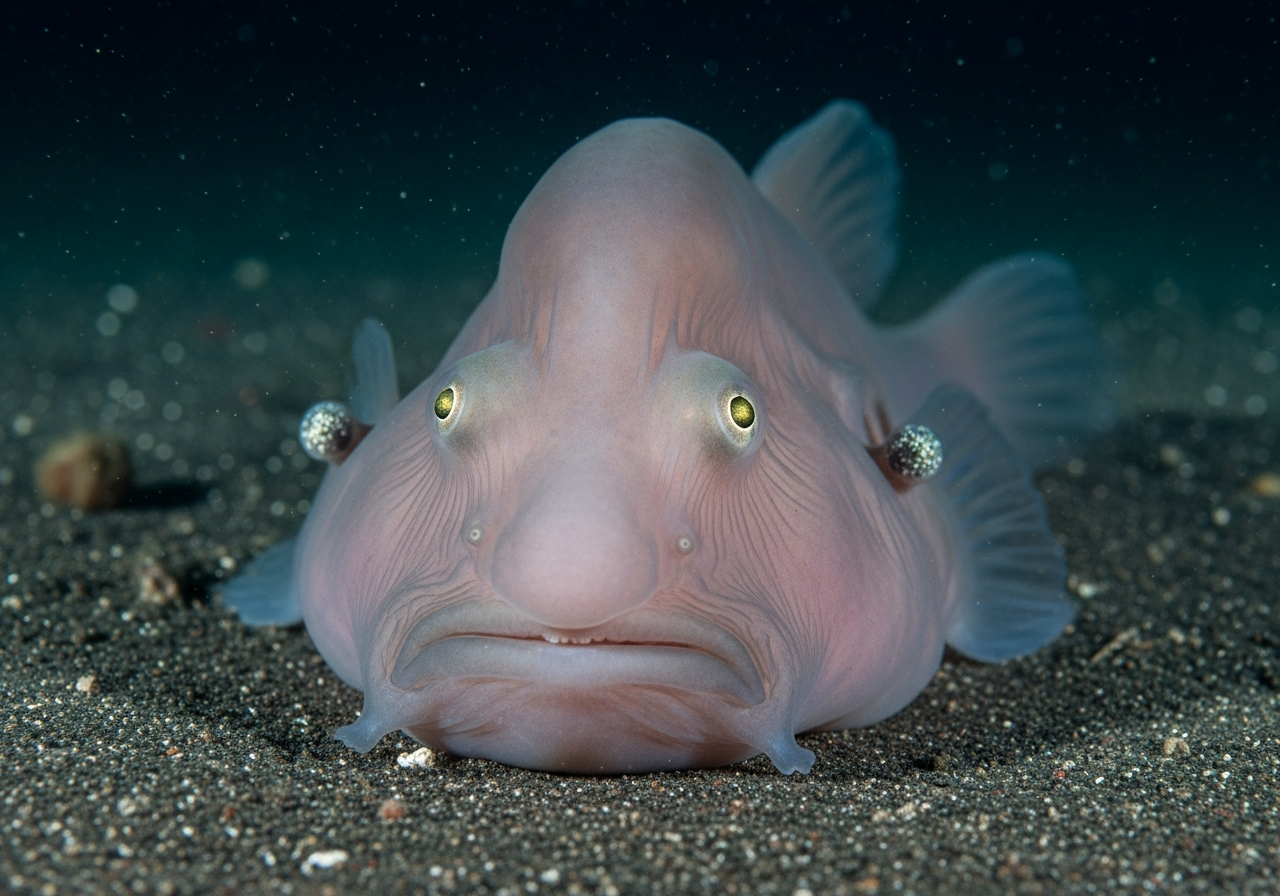
The blobfish owes its infamous appearance entirely to being hauled up from the deep. In its natural habitat, the surrounding water pressure supports its soft, gelatinous body and it looks like an ordinary, if flabby, fish. When trawled to the surface, the sudden drop in pressure causes its tissues to expand and slump into the sagging, big-nosed shape seen in photographs. The famous image of a melted, frowning blob is essentially a fish out of its depth, not how it lives.
Adaptations to the deep sea
Living at 600 to 1,200 m, where the pressure is dozens of times greater than at the surface, the blobfish has evolved to do without the features most fish rely on. Its flesh is a soft, gelatinous mass slightly less dense than seawater, so it floats gently above the bottom with almost no effort and needs no gas-filled swim bladder, which would be crushed at such depths. It has weak muscles and little skeleton, saving the energy that active fish spend swimming. These adaptations suit a world of cold, dark, high-pressure water where food is scarce.
Diet and feeding
The blobfish is a sit-and-wait predator that lets its meals come to it rather than hunting them down. It hovers just above the sea floor with its mouth open, ingesting edible material that drifts within reach, such as crustaceans, sea urchins, molluscs, and other small invertebrates. This passive strategy costs almost no energy, which matters in the food-poor deep sea. Its sluggish lifestyle is well matched to an environment where a meal may be a long time coming.
Habitat and range
Blobfish inhabit the deep waters of the continental slope off mainland Australia, Tasmania, and New Zealand, at depths of roughly 600 to 1,200 m. This is a cold, perpetually dark zone far below the reach of sunlight, where few animals live. They stay close to the sea floor, drifting slowly rather than roaming widely. Because the habitat is so difficult to reach, the fish is rarely seen alive and is poorly studied.
Fame and conservation
The blobfish became an internet celebrity after being voted the world's ugliest animal in a 2013 poll run by the Ugly Animal Preservation Society. That fame drew attention to a fish that is otherwise almost unknown to science, and it has since become a mascot for overlooked deep-sea creatures. Its conservation status has never been formally assessed by the IUCN, so its true numbers are unknown. The main concern is deep-sea trawling, which can catch blobfish as bycatch and disturb the slow-recovering habitats where they live.
Dig deeper into the Blobfish
- Blobfish: Key Facts
Blobfish (Psychrolutes marcidus) are fish found across multiple regions. The deep-sea fish that only looks like a blob out of water.
- How Long Do Blobfish Live?
Blobfish lifespan is typically about 25 years. What shortens or extends life, life stages, and status (Not Evaluated).
- What Do Blobfish Eat?
What blobfish eat: Carnivore (passive sit-and-wait feeder), foraging style, and seasonal shifts in Deep sea, 600–1,200 m depth.
- Where Do Blobfish Live?
Where blobfish live: Deep sea, 600–1,200 m depth, native range cues, and human overlap. Status Not Evaluated.
Explore the Blobfish
Close relatives
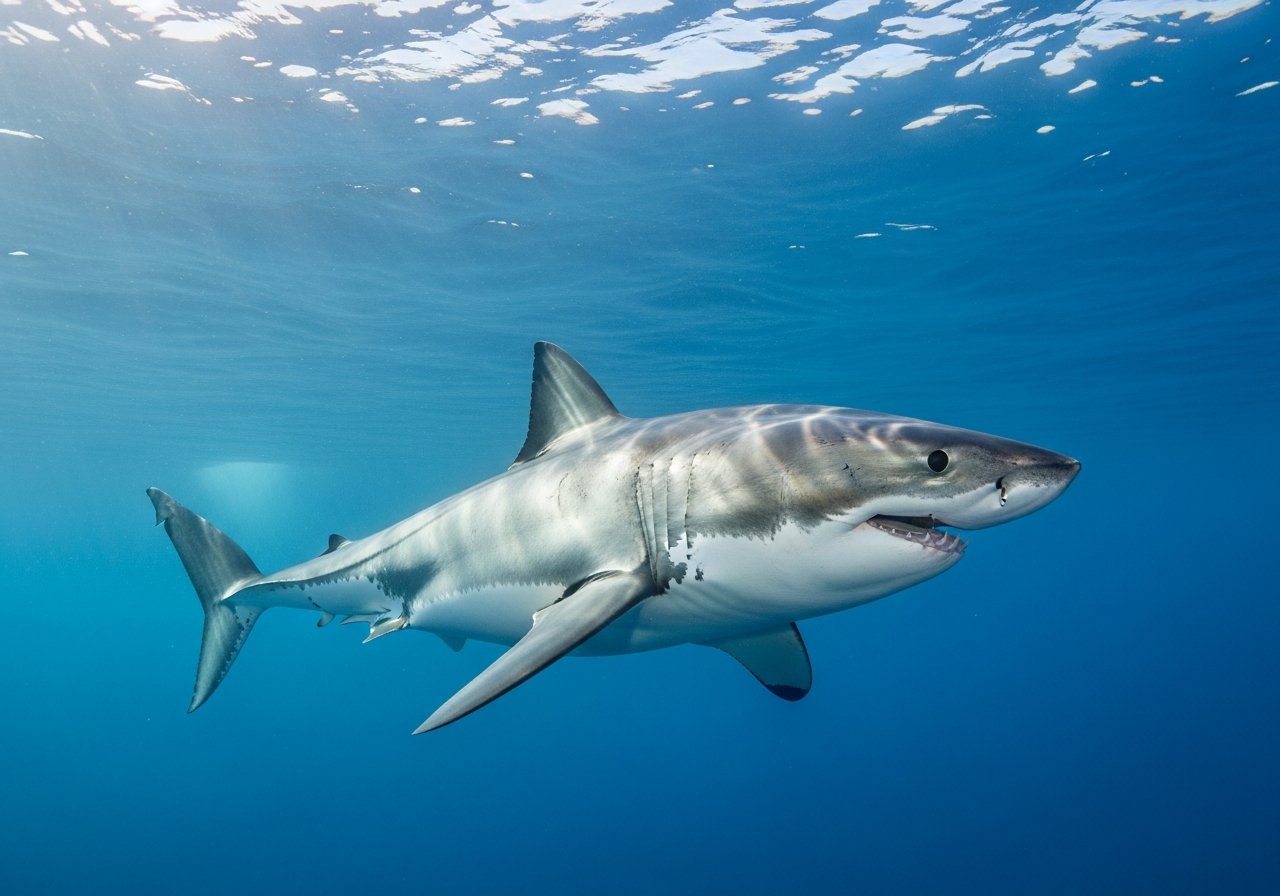
- Great White Shark Same class
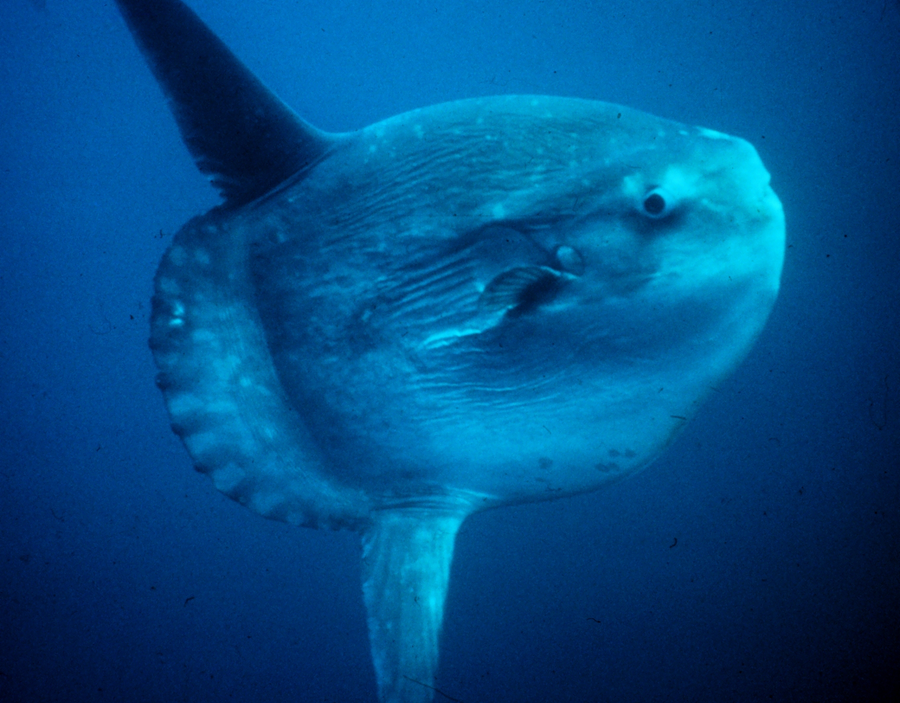
- Ocean Sunfish Same class
- Rainbow Trout Same class
- Thresher Shark Same class
Collections
Range & geography
Did you know? Blobfish facts
- The blobfish (Psychrolutes marcidus) is a deep-sea fish found off southern Australia and New Zealand at depths of 600–1,200 m.
- Yes. The blobfish is a genuine deep-sea fish. The viral photos show a specimen brought to the surface, where the dramatic pressure change deforms its body into the famous blob shape.
- At its natural depth, the blobfish looks like a small, round-bodied, fairly unremarkable fish. The extreme droopiness only appears when it is removed from the high-pressure environment it evolved for.
- It is not a food fish. Its watery, gelatinous flesh has no culinary appeal, and it is far too deep-living to be commercially targeted. Any specimens caught are almost always accidental bycatch.
- It is not currently on the IUCN Red List, but its slow reproductive rate and vulnerability to deep-sea trawling make it worth monitoring. Its deep habitat offers some protection simply because fishing at those depths is expensive and uncommon.
- Conservation: Not formally assessed (IUCN).
Diet & feeding
Blobfish feeds primarily as a carnivore (passive sit-and-wait feeder). The blobfish is a passive feeder, drifting slowly over the seafloor and engulfing whatever edible matter comes within reach — sea urchins, crustaceans, molluscs, and organic particles that sink from above. It barely moves, which suits the food-scarc
Adaptations
- The blobfish lives where water pressure is 60–120 times higher than at the surface. Its body is made of low-density, gelatinous flesh that is only slightly less dense than seawater, allowing it to hover just above the seabed without a gas-filled swim bladder (which would collapse under such pressure). When trawled to the surface, the sudden pressure drop causes that soft body to expand and collapse into the famous droopy, big-nosed blob. At depth, in its natural environment, it looks like a fairly ordinary, round-bodied fish.
- The blobfish is a passive feeder, drifting slowly over the seafloor and engulfing whatever edible matter comes within reach — sea urchins, crustaceans, molluscs, and organic particles that sink from above. It barely moves, which suits the food-scarce deep sea perfectly: conserving energy is more important than active hunting when meals are rare and far apart.
Behaviour & ecology
- The blobfish lives where water pressure is 60–120 times higher than at the surface. Its body is made of low-density, gelatinous flesh that is only slightly less dense than seawater, allowing it to hover just above the seabed without a gas-filled swim bladder (which would collapse under such pressure). When trawled to the surface, the sudden pressure drop causes that soft body to expand and collapse into the famous droopy, big-nosed blob. At depth, in its natural environment, it looks like a fairly ordinary, round-bodied fish.
- The blobfish is a passive feeder, drifting slowly over the seafloor and engulfing whatever edible matter comes within reach — sea urchins, crustaceans, molluscs, and organic particles that sink from above. It barely moves, which suits the food-scarce deep sea perfectly: conserving energy is more important than active hunting when meals are rare and far apart.
- Blobfish are found in deep waters off the coasts of Australia and New Zealand, at depths of roughly 600 to 1,200 m. They live on soft sediment seabeds where they rest motionless or drift just above the bottom. Because of the extreme depth, very few specimens have ever been observed alive and in situ — most encounters come from deep-sea trawl bycatch.
Communication
- Lateral-line and visual cues coordinate schooling, courtship, or territorial behaviour.
- Some species produce low-frequency sounds or drumming for spawning or defence.
Habitat & range
Deep sea, 600–1,200 m depth
Ecological role
Blobfish acts as a predator that helps regulate prey populations and maintain balance in deep sea, 600–1,200 m depth.
Conservation status of the Blobfish
The blobfish (Psychrolutes marcidus) is listed as Not Evaluated on the IUCN Red List. Not Evaluated (NE) means a species has not yet been assessed against the IUCN Red List criteria. A lack of evaluation does not imply a species is safe — only that no formal assessment has been completed.
The blobfish (Psychrolutes marcidus) is assessed on the IUCN Red List. Look up on the IUCN Red List .
Frequently asked questions about the Blobfish
Does the blobfish really look like a blob?
Only out of water. At its natural depth the high pressure supports its soft body and it looks like a fairly normal fish. The melted, frowning blob shape appears when it is brought to the surface and its tissues expand as the pressure drops.
Where do blobfish live?
Blobfish live in the deep sea off south-eastern Australia, Tasmania, and New Zealand, at depths of about 600 to 1,200 m. This is a cold, dark zone on the continental slope, far below the reach of sunlight.
What do blobfish eat?
Blobfish are passive, sit-and-wait feeders that hover just above the sea floor and ingest edible material drifting within reach. Their diet includes crustaceans, sea urchins, molluscs, and other small invertebrates, gathered with almost no effort.
How does a blobfish survive deep-sea pressure?
Its body is a soft, gelatinous mass slightly less dense than seawater, so it floats above the bottom without a gas-filled swim bladder, which would be crushed at depth. Weak muscles and a reduced skeleton let it get by on very little energy.
Why is the blobfish famous?
The blobfish shot to fame after being voted the world's ugliest animal in a 2013 poll by the Ugly Animal Preservation Society. The unflattering photograph that made it famous shows a specimen deformed by being brought up from the deep.
Are blobfish endangered?
The blobfish has never been formally assessed by the IUCN, so its conservation status is officially unknown. The main concern is deep-sea trawling, which can catch blobfish as bycatch and disturb the slow-recovering seabed habitats where they live.
What is a group of blobfish called?
A group of Blobfish is called a school.
What is a baby blobfish called?
A baby Blobfish is called a fry.
Sources & references
This guide is compiled and reviewed against established zoological and conservation references. Key sources for the Blobfish:
-
IUCN Red List of Threatened Species
Conservation status (Not Evaluated) reflects the IUCN Red List category for Psychrolutes marcidus.
-
iNaturalist — observations & photos
Search citizen-science observations and community IDs for Psychrolutes marcidus. Useful for range checks and recent sightings — not a substitute for formal Red List status.
-
GBIF — occurrence data
Global Biodiversity Information Facility species search for Psychrolutes marcidus. Explore published occurrence records used in range research.
- IUCN Red List — Psychrolutes marcidus.
Conservation status (Not Evaluated) and population trends.
- Animal Diversity Web — Psychrolutes marcidus. University of Michigan Museum of Zoology.
Life history, morphology, and range.
- Wikipedia — Blobfish.
General taxonomy and overview (cross-check primary sources).
-
Global Animal Guide editorial standards
How we research, source, review, and update every guide for accuracy.