Image sourcing: see credits & licences
The thresher shark (Alopias vulpinus) is a cartilaginous fish of the family Alopiidae, in the order Lamniformes.
Quick answer
The thresher shark (Alopias vulpinus) is an open-ocean predator famous for its enormously long, whip-like tail, which can be almost as long as its body. Found in temperate and tropical seas worldwide, it can reach about 5 m in length including the tail and weigh 150 to 250 kg. It swims at up to 48 km/h and uses its tail to stun small fish and squid. The species lives up to 25 years and is listed as Vulnerable.
Top questions about the Thresher Shark
Also available in Español (Tiburón zorro)
Thresher Shark facts at a glance
- Weight 200 kg
- Length 5 m
- Top speed 48 km/h
- Lifespan 25 years
| Scientific name | Alopias vulpinus |
|---|---|
| Diet | Carnivore — small fish and squid |
| Habitat | Temperate and tropical open oceans worldwide |
| Lifespan | 19–25 years in the wild |
| Weight | 150–250 kg (330–550 lb); tail adds length |
| Top speed | Up to 48 km/h (30 mph); tail slap stuns prey |
| Conservation status | Vulnerable (IUCN) |
| Kingdom | Animalia |
|---|---|
| Phylum | Chordata |
| Class | Chondrichthyes |
| Order | Lamniformes |
| Family | Alopiidae |
| Genus | Alopias |
Where it lives
The thresher shark (Alopias vulpinus) is native to Circumglobal in temperate and tropical open oceans — common threshers in Atlantic and Pacific. — recorded across Africa, Asia, Europe, North America, Oceania, Oceans, South America in this guide’s range summary.
For occurrence records, see GBIF species search and sources below.
How big is a thresher shark?
An adult thresher shark measures 5 m long — about 2.9× the height of an average adult person (1.73 m) — and weighs around 200 kg, about 2.9× an average adult’s body weight (70 kg).
Length vs an average adult’s height (to scale)
What is a group of thresher sharks called?
Group name (collective noun)
A group of Thresher Sharks is called a shiver.
Baby name
A baby Thresher Shark is called a pup.
Explore more animal collective nouns and baby animal names .
The whip-like tail
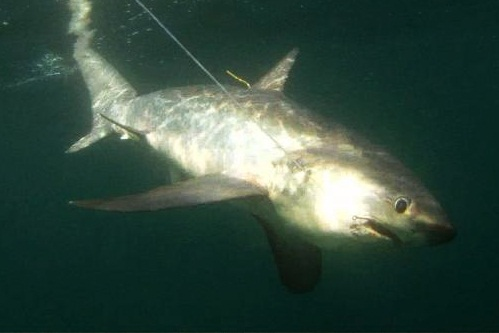
The thresher shark's most striking feature is its upper tail lobe, which is drawn out into a long, scythe-like whip that can be almost as long as the rest of the body. Counting the tail, an adult can measure around 5 m from nose to tip. Far from being decorative, this tail is a precision hunting tool honed for a single, remarkable technique. It gives the thresher a silhouette unlike any other shark in the open ocean.
Tail-slap hunting
Thresher sharks hunt in a way seen in almost no other fish: they use the tail as a weapon. Swimming into a school of small fish, the shark throws its long tail forward over its head like a whip, striking and stunning several prey at once. It then circles back to swallow the dazed fish before they can recover. This overhead tail-slap is fast enough to create a crack in the water and lets a single shark disable many fish in one pass.
Diet and open-ocean life
Thresher sharks are carnivores that feed mainly on small schooling fish such as mackerel, herring, and sardines, along with squid. They roam the temperate and tropical open oceans worldwide, often far from land, and can swim at speeds of up to 48 km/h in pursuit of prey. Powerful, warm-muscled swimmers, they sometimes leap clear of the surface. They tend to follow the movements of the baitfish schools on which they depend.
Slow growth and reproduction
Like many large sharks, threshers grow slowly, mature late, and produce few young, which makes their populations slow to recover. Females give birth to a small litter of well-developed live pups rather than laying eggs. Unusually, the developing embryos practise oophagy, feeding on unfertilised eggs inside the mother before they are born. This life history means a thresher may live up to 25 years but replaces its numbers only gradually.
Why it is vulnerable
The thresher shark is listed as Vulnerable by the IUCN because its numbers have declined across much of its range. It is caught both deliberately and as bycatch in commercial fisheries, valued for its meat, fins, and liver oil. Its distinctive long tail also makes it a target for sport fishing. Because threshers breed so slowly, populations struggle to rebuild once they have been overfished.
Threshers and people
Despite their size and speed, thresher sharks pose very little danger to people and are considered timid, rarely approaching divers. They are far more threatened by humans than the other way around. Anglers prize them for their leaping fights when hooked, and they are an important food and fin species in many fisheries. Encouraging sustainable fishing and reducing bycatch are the key steps to safeguarding them.
Dig deeper into the Thresher Shark
- Are Thresher Sharks Endangered?
Are thresher sharks endangered? Status Vulnerable, main threats, and what protection means.
- How Long Do Thresher Sharks Live?
Thresher Shark lifespan is typically 19–25 years in the wild. What shortens or extends life, life stages, and status (Vulnerable).
- Thresher Shark: Key Facts
Thresher sharks wield an elongated tail up to half total body length to slap and herd schooling fish, weighing about 200 kg and living 25 years.
- What Do Thresher Sharks Eat?
What thresher sharks eat: Carnivore — small fish and squid, foraging style, and seasonal shifts in Temperate and tropical open oceans worldwide.
- Where Do Thresher Sharks Live?
Where thresher sharks live: Temperate and tropical open oceans worldwide, native range cues, and human overlap. Status Vulnerable.
Explore the Thresher Shark
Close relatives
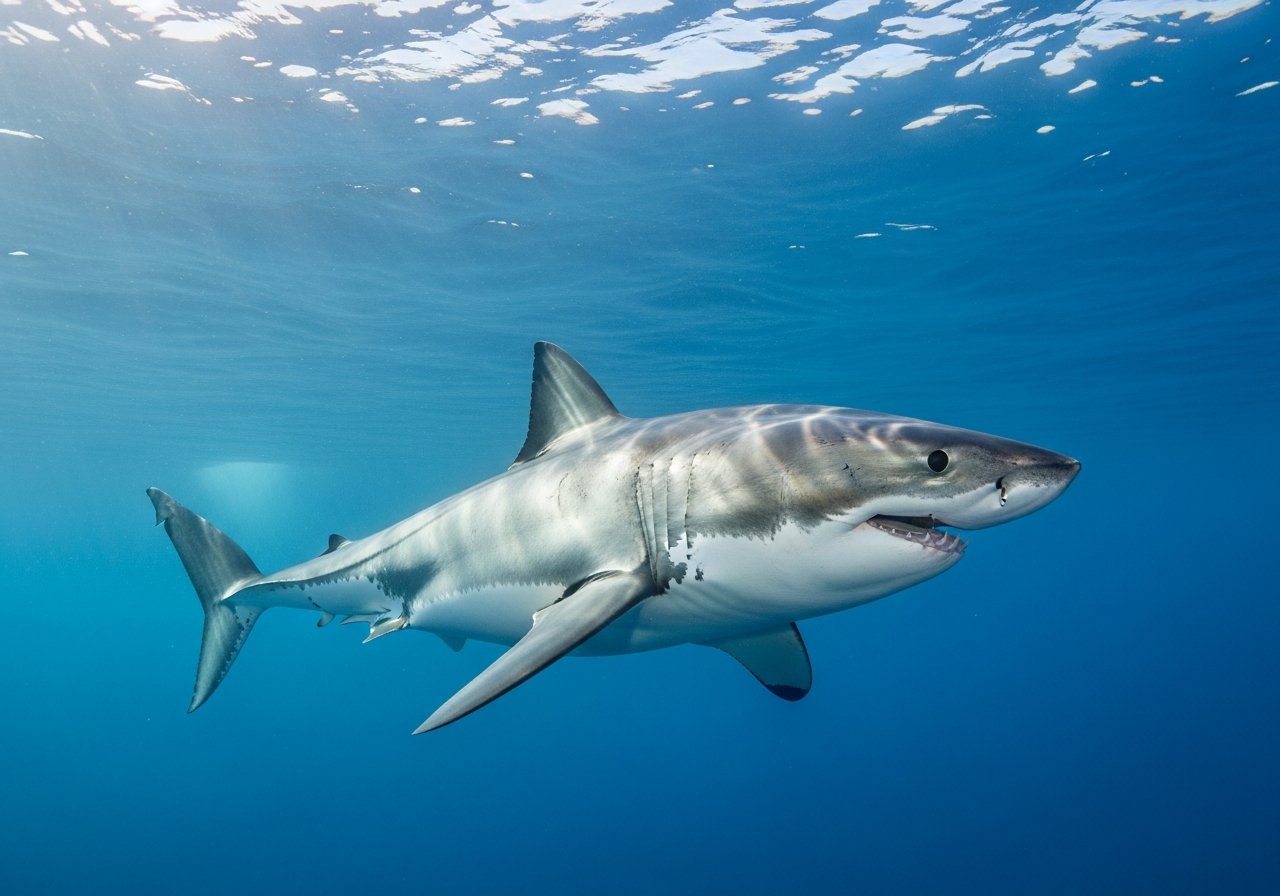
- Great White Shark Same order
- Basking Shark Same order
- Sand Tiger Shark Same order
- Goblin Shark Same order
Collections
Did you know? Thresher Shark facts
- Thresher sharks use their enormously elongated tail to slap and herd schooling fish.
- No confirmed unprovoked fatalities — they flee divers.
- A hunting tool, not decoration — unique among sharks.
- Conservation: Vulnerable.
Diet & feeding
Thresher Shark feeds primarily as a small fish and squid. Slapping the tail stuns prey fish, which the shark then eats.
Adaptations
- Slapping the tail stuns prey fish, which the shark then eats.
- Long tails made threshers targets for fin trade — populations declined.
Behaviour & ecology
- Slapping the tail stuns prey fish, which the shark then eats.
- Long tails made threshers targets for fin trade — populations declined.
Communication
- Lateral-line and visual cues coordinate schooling, courtship, or territorial behaviour.
- Some species produce low-frequency sounds or drumming for spawning or defence.
Habitat & range
Temperate and tropical oceans worldwide
Ecological role
Thresher Shark occupies a defined trophic level in aquatic food webs, linking plankton or smaller fish to larger predators.
Conservation status of the Thresher Shark
The thresher shark (Alopias vulpinus) is listed as Vulnerable on the IUCN Red List. Vulnerable (VU) means a species faces a high risk of extinction in the medium-term future. It is the lowest-risk of the three 'threatened' IUCN categories — one step below Endangered, which is itself below Critically Endangered — and is often an early warning that a population is in trouble.
Main threats to the thresher shark
- Targeted and incidental capture in fisheries
- Demand for fins and meat
- Slow reproductive rate
- Inadequate fisheries management in parts of the range
Thresher Shark (Alopias vulpinus) was most recently assessed for the IUCN Red List in 2019. View the full IUCN assessment .
Frequently asked questions about the Thresher Shark
Why does the thresher shark have such a long tail?
The thresher shark uses its long, whip-like tail to hunt. It swings the tail overhead to strike and stun schools of small fish, then circles back to eat the dazed prey, making the tail a specialised feeding tool rather than just a means of swimming.
How big do thresher sharks get?
Thresher sharks can reach about 5 m in total length, with the tail making up roughly half of that. They typically weigh between 150 and 250 kg (330 to 550 lb).
What do thresher sharks eat?
They are carnivores that feed mainly on small schooling fish such as mackerel, herring, and sardines, as well as squid. They stun their prey with a whip of the tail before swallowing them.
How fast can a thresher shark swim?
Thresher sharks can swim at speeds of up to 48 km/h (30 mph). They are powerful, warm-muscled swimmers that sometimes leap clear of the water when hunting.
Are thresher sharks dangerous to humans?
No. Thresher sharks are timid and pose very little threat to people, rarely approaching divers. They are far more endangered by human fishing than they are a danger to us.
Are thresher sharks endangered?
Thresher sharks are listed as Vulnerable by the IUCN. They are slow to breed and are caught for their meat, fins, and liver oil, so their populations recover slowly once overfished.
What is a group of thresher sharks called?
A group of Thresher Sharks is called a shiver.
What is a baby thresher shark called?
A baby Thresher Shark is called a pup.
Sources & references
This guide is compiled and reviewed against established zoological and conservation references. Key sources for the Thresher Shark:
-
IUCN Red List of Threatened Species
Conservation status (Vulnerable) reflects the IUCN Red List category for Alopias vulpinus, most recently assessed in 2019.
-
iNaturalist — observations & photos
Search citizen-science observations and community IDs for Alopias vulpinus. Useful for range checks and recent sightings — not a substitute for formal Red List status.
-
GBIF — occurrence data
Global Biodiversity Information Facility species search for Alopias vulpinus. Explore published occurrence records used in range research.
- IUCN Red List — Alopias vulpinus.
Conservation status (Vulnerable) and population trends.
- Animal Diversity Web — Alopias vulpinus. University of Michigan Museum of Zoology.
Life history, morphology, and range.
-
Global Animal Guide editorial standards
How we research, source, review, and update every guide for accuracy.