Quick answer
Fennec Foxs feed on insects, small animals and plants, adjusting with season, age, and what is abundant in Sandy deserts of North Africa and the Sahara. That label is a preferred pattern, not every item an individual might sample.
Key takeaway
Fennec Foxs feed on insects, small animals and plants, adjusting with season, age, and what is abundant in Sandy deserts of North Africa and the Sahara. That label is a preferred pattern, not every item an individual might sample.
Fennec Fox diet overview
Fennec Foxs (Vulpes zerda) are best summarised as Omnivore (insects, small animals, plants). Anatomy and habitat (Sandy deserts of North Africa and the Sahara) decide whether they hunt, graze, filter, scavenge, or mix strategies across the year.
How fennec foxs find food
Energy-rich foods are prioritised when available; lean seasons force broader diets or longer travel. Young animals may eat different items or receive food from parents.
Fennec Fox role in the food web
As consumers in their food web, fennec foxs move nutrients and influence prey or vegetation.
Feeding and human conflict
Never feed wild fennec foxs. Habituation raises injury risk and can lead to lethal management. Captive diets must match species needs, not generic pet food rules.
Ears built for the desert
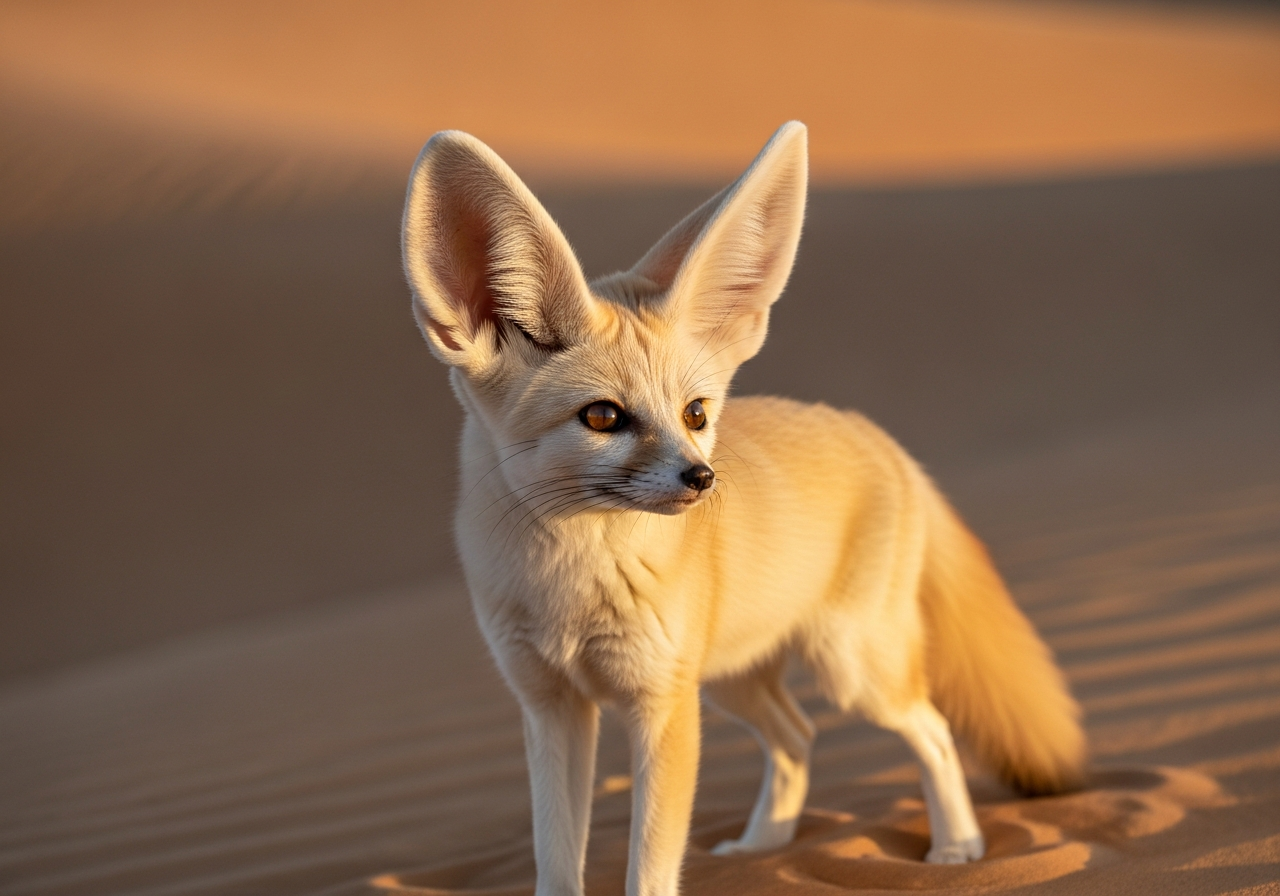
Relative to its body, the fennec fox has the largest ears of any carnivore — up to 15 cm (6 in) long. They serve two jobs: the wide surface radiates excess body heat to keep the fox cool, and the sensitive hearing lets it locate insects and small animals moving beneath the sand. Few features illustrate desert adaptation more clearly.
Surviving extreme heat
The fennec fox is superbly adapted to one of the harshest habitats on Earth. Thick fur even covers the soles of its feet, protecting them from hot sand and improving grip. It can go for long periods without drinking, taking most of its water from food, and shelters in cool underground dens by day, emerging to hunt in the cool of night.
Sources
Fennec Fox FAQs
What do fennec foxs eat?
Fennec Foxs feed on insects, small animals and plants, adjusting with season, age, and what is abundant in Sandy deserts of North Africa and the Sahara. That label is a preferred pattern, not every item an individual might sample.
What is the scientific name of the fennec fox?
Vulpes zerda — used in research and conservation listings for fennec foxs.
Where do fennec foxs live?
They are associated with Sandy deserts of North Africa and the Sahara. Local presence depends on food, cover, and human land use.
What is the conservation status of fennec foxs?
Listed in our guides as Least Concern. Check the IUCN Red List and national assessments for the latest formal category.
Who this page is for.This page is about wild diet. Skip it if you need a captive feeding plan from a veterinarian.