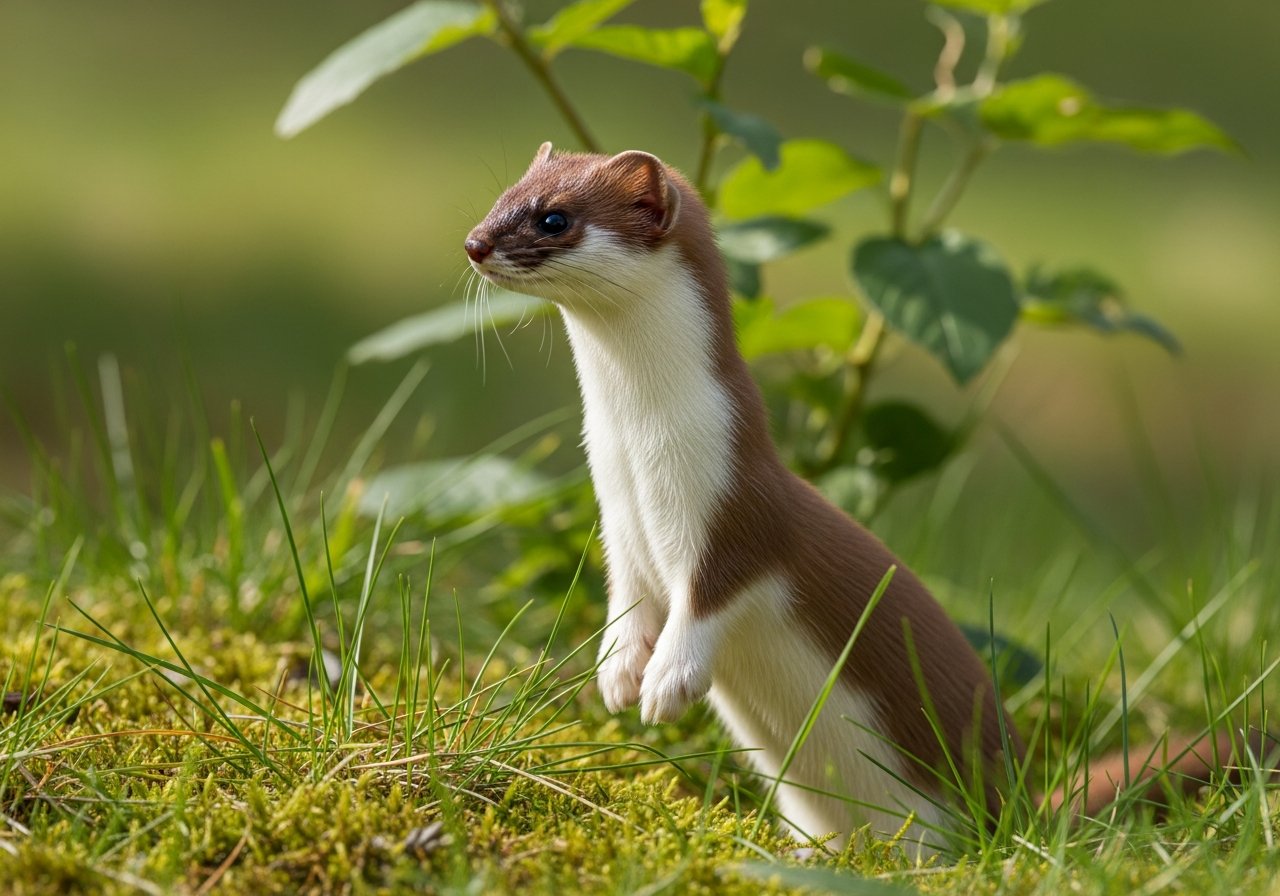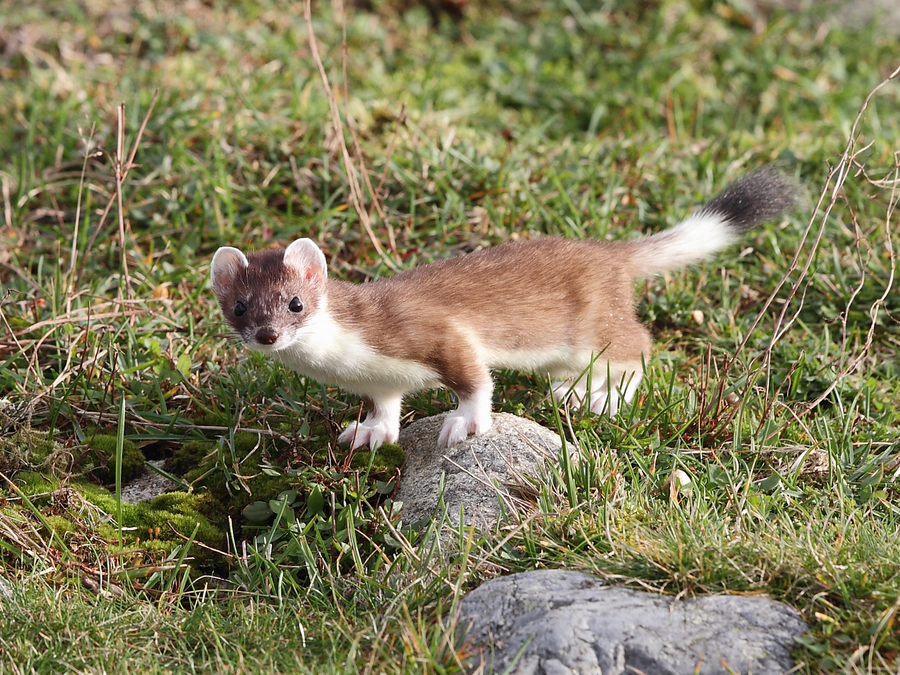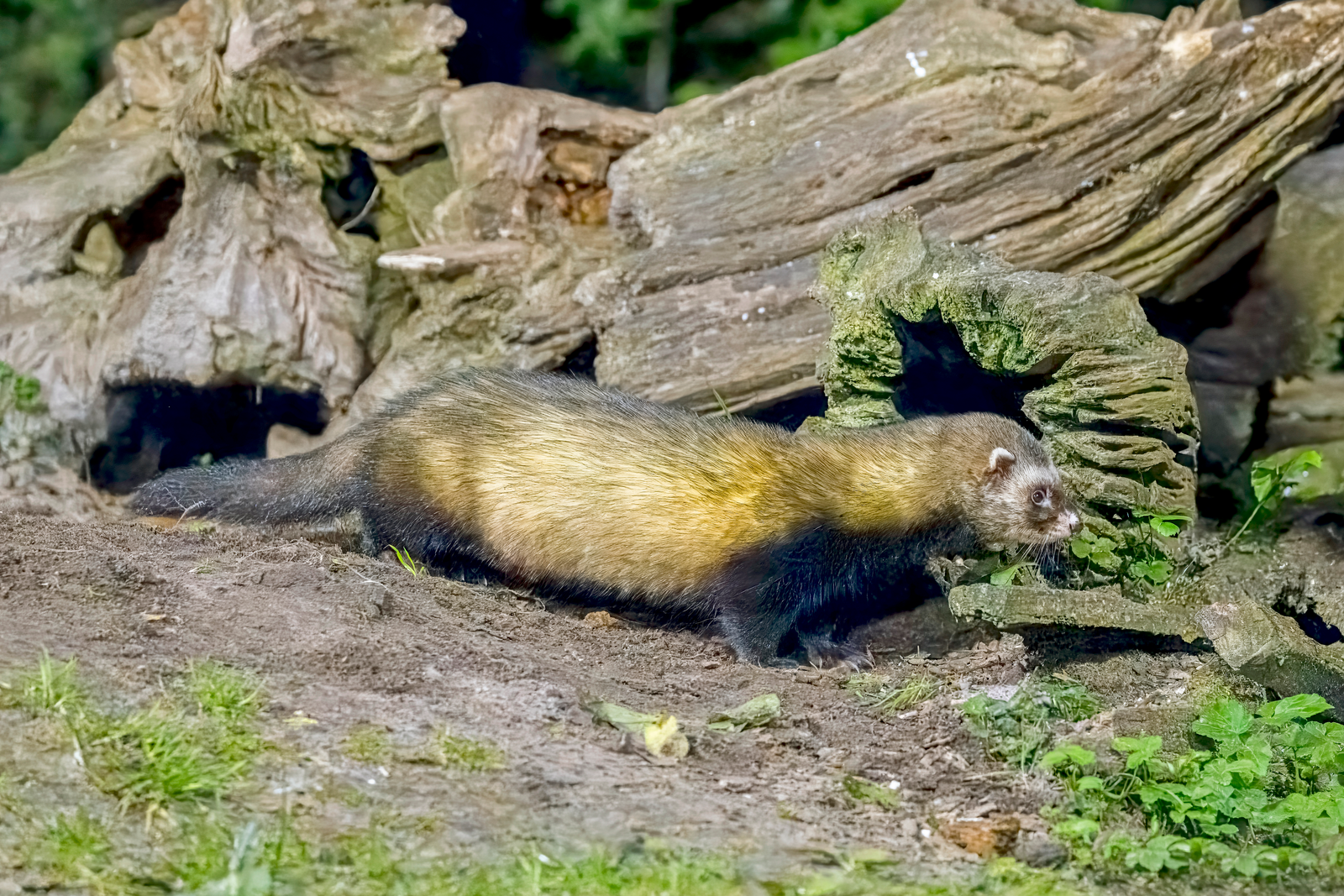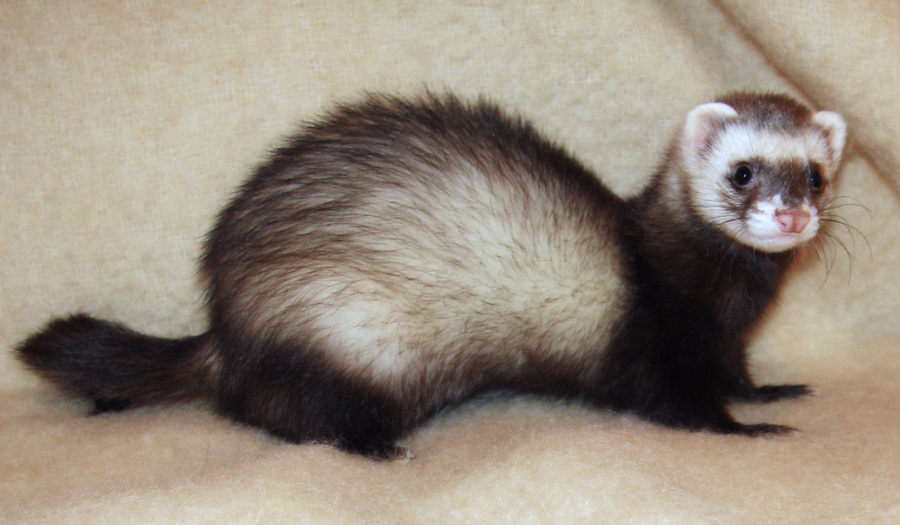
The ferret (Mustela putorius furo) is a mammal of the weasel family, Mustelidae, in the order Carnivora.
Quick answer
The ferret is a small domesticated carnivore descended from the European polecat, kept for centuries as a working and companion animal. Slender and long-bodied, it typically weighs 0.7 to 2 kg and measures around half a metre including the tail, with males (hobs) noticeably larger than females (jills). Ferrets are famously playful and inquisitive, sleep much of the day, and live for about 6 to 10 years with good veterinary care.
Top questions about the Ferret
Also available in Español (Hurón)
Ferret facts at a glance
- Weight 1.5 kg
- Length 50 cm
- Top speed 25 km/h
- Lifespan 8 years
| Scientific name | Mustela putorius furo |
|---|---|
| Diet | Carnivore — meat-based diet; whole prey or high-protein kibble |
| Habitat | Domestic worldwide; descended from European polecats |
| Lifespan | 6–10 years with good veterinary care |
| Weight | 0.7–2 kg (1.5–4.4 lb); males (hobs) larger than jills |
| Top speed | Up to 25 km/h (16 mph) in short playful bursts |
| Conservation status | Domesticated (IUCN) |
| Kingdom | Animalia |
|---|---|
| Phylum | Chordata |
| Class | Mammalia |
| Order | Carnivora |
| Family | Mustelidae |
| Genus | Mustela |
Where it lives
The ferret (Mustela putorius furo) is native to Domestic worldwide; descended from European polecat (Mustela putorius) of western Eurasia. — recorded across Africa, Asia, Europe, North America, Oceania, South America in this guide’s range summary.
For occurrence records, see GBIF species search and sources below.
How big is a ferret?
An adult ferret measures 50 cm long — about 29% of the height of an average adult person (1.73 m) — and weighs around 1.5 kg, about 2% of an average adult’s body weight (70 kg).
Length vs an average adult’s height (to scale)
What is a group of ferrets called?
Group name (collective noun)
A group of Ferrets is called a business.
Baby name
A baby Ferret is called a kit.
Explore more animal collective nouns and baby animal names .
Origins and domestication
Ferrets are the domesticated form of the European polecat and have been kept by people for well over two thousand years. They were bred chiefly to bolt rabbits and rats from their burrows, a practice known as ferreting that is still carried out in parts of Britain today. Unlike wild mustelids, ferrets cannot survive well on their own and depend entirely on human care. Their scientific name, Mustela putorius furo, reflects this ancestry, with furo meaning 'thief' in Latin.
Body and physical traits
A ferret has a long, tubular body, short legs, and a flexible spine that lets it squeeze through tight spaces and turn almost back on itself. Adults usually weigh between 0.7 and 2 kg, with hobs considerably heavier and longer than jills. Their coats come in a range of colours and patterns, from sable and albino to silver and cinnamon. Well-developed scent glands give ferrets a distinctive musky odour that many owners reduce through neutering and regular bathing.
Temperament and behaviour
Ferrets are intensely curious, social, and playful, and are best known for the 'weasel war dance', a frenzied hopping display they perform when excited. They sleep for as much as 14 to 18 hours a day but are lively and energetic during their waking hours. Most enjoy the company of other ferrets and form strong bonds with their owners. Their inquisitive nature means they will investigate and often steal small objects, tucking them away in hidden caches.
Diet and feeding
As obligate carnivores, ferrets need a meat-based diet rich in animal protein and fat, with very little carbohydrate or fibre. In practice this means whole prey, high-quality ferret kibble, or specially formulated raw diets. Their digestive systems are short and process food quickly, so they eat little and often throughout the day. Foods high in sugar or plant matter can cause serious health problems and should be avoided.
Care and lifespan
With attentive care, ferrets live around 6 to 10 years. They need a secure enclosure, daily supervised exercise, and mental stimulation to stay healthy and content. Because they are prone to conditions such as adrenal disease and insulinoma, regular checks with a vet experienced in exotic pets are important. In many places ferrets are also given vaccinations against canine distemper and rabies, both of which can be fatal to them.
Dig deeper into the Ferret
- Ferret Domestication History
The ferret is a domesticated mustelid descended from the European polecat, kept worldwide as a pet and historically used for rabbit hunting (ferreting).
- Ferret Pet Care Essentials
The ferret is a domesticated mustelid descended from the European polecat, kept worldwide as a pet and historically used for rabbit hunting (ferreting).
- How Long Do Ferrets Live?
Ferret lifespan is typically 6–10 years with good veterinary care. What shortens or extends life, life stages, and status (Domesticated).
- What Do Ferrets Eat?
What ferrets eat: Carnivore — meat-based diet; whole prey or high-protein kibble, foraging style, and seasonal shifts in Domestic worldwide; descended from European polecats.
- Where Do Ferrets Live?
Where ferrets live: Domestic worldwide; descended from European polecats, native range cues, and human overlap. Status Domesticated.
Explore the Ferret
Compare
Close relatives
- Stoat Same genus
- European Polecat Same genus
- Weasel Same genus
- Honey Badger Same family
Did you know? Ferret facts
- Ferrets are domesticated mustelids descended from European polecats, kept as pets and historically used for rabbit hunting.
- Typically 6–10 years with good veterinary care.
- No — they are carnivorous mustelids related to weasels and otters.
- Conservation: Domesticated.
Diet & feeding
Ferret feeds primarily as a carnivore — meat-based diet. Ferrets need spacious cages, daily play, and a high-protein diet without sugary treats.
Adaptations
- Ferrets need spacious cages, daily play, and a high-protein diet without sugary treats.
- Most pet ferrets are descented; they still have a mild musky odour.
Behaviour & ecology
- Ferrets need spacious cages, daily play, and a high-protein diet without sugary treats.
- Most pet ferrets are descented; they still have a mild musky odour.
Communication
- Ferret uses scent, posture, and vocal signals to mark territory and coordinate social behaviour.
- Communication intensity often peaks during breeding seasons and territorial disputes.
Habitat & range
Domestic worldwide
Ecological role
Ferret acts as a predator that helps regulate prey populations and maintain balance in domestic worldwide.
Conservation status of the Ferret
The ferret (Mustela putorius furo) is listed as Domesticated on the IUCN Red List. Domesticated animals are species kept and selectively bred by humans over many generations, such as dogs, cats, and livestock. They are not assessed for extinction risk in the wild by the IUCN, because their populations are managed by people rather than subject to natural pressures.
The ferret (Mustela putorius furo) is assessed on the IUCN Red List. Look up on the IUCN Red List .
Frequently asked questions about the Ferret
Are ferrets wild or domesticated animals?
Ferrets are fully domesticated animals, bred from the European polecat over more than two thousand years. They are not a wild species and generally cannot survive without human care, which is why they are kept as pets and working animals rather than living in the wild.
How long do ferrets live?
Pet ferrets typically live about 6 to 10 years with good veterinary care. Lifespan depends heavily on diet, housing, and access to a vet experienced with exotic pets, since ferrets are prone to several age-related illnesses.
What do ferrets eat?
Ferrets are obligate carnivores and need a meat-based diet high in animal protein and fat. This usually means high-quality ferret kibble, whole prey, or a properly balanced raw diet. Sugary treats and foods high in plant fibre should be avoided because ferrets cannot digest them well.
Why do ferrets smell musky?
Ferrets have scent glands in their skin that produce a natural musky odour. Neutering greatly reduces the smell, and regular cleaning of their bedding and enclosure keeps it manageable. Frequent bathing is not recommended, as it can actually make the odour worse by stimulating the glands.
Do ferrets get along with other pets?
Ferrets are very social and usually thrive in the company of other ferrets. They can sometimes live alongside dogs and cats with careful introductions, but their strong prey drive makes them a danger to rabbits, rodents, and birds, which should always be kept well away from them.
How big do ferrets get?
Adult ferrets usually weigh between 0.7 and 2 kg and measure around half a metre from nose to tail tip. Males, called hobs, are noticeably larger and heavier than females, known as jills.
What is a group of ferrets called?
A group of Ferrets is called a business.
What is a baby ferret called?
A baby Ferret is called a kit.
Sources & references
This guide is compiled and reviewed against established zoological and conservation references. Key sources for the Ferret:
-
IUCN Red List of Threatened Species
Conservation status (Domesticated) reflects the IUCN Red List category for Mustela putorius furo.
-
iNaturalist — observations & photos
Search citizen-science observations and community IDs for Mustela putorius furo. Useful for range checks and recent sightings — not a substitute for formal Red List status.
-
GBIF — occurrence data
Global Biodiversity Information Facility species search for Mustela putorius furo. Explore published occurrence records used in range research.
- IUCN Red List — Mustela putorius furo.
Conservation status (Domesticated) and population trends.
- Animal Diversity Web — Mustela putorius furo. University of Michigan Museum of Zoology.
Life history, morphology, and range.
-
Global Animal Guide editorial standards
How we research, source, review, and update every guide for accuracy.