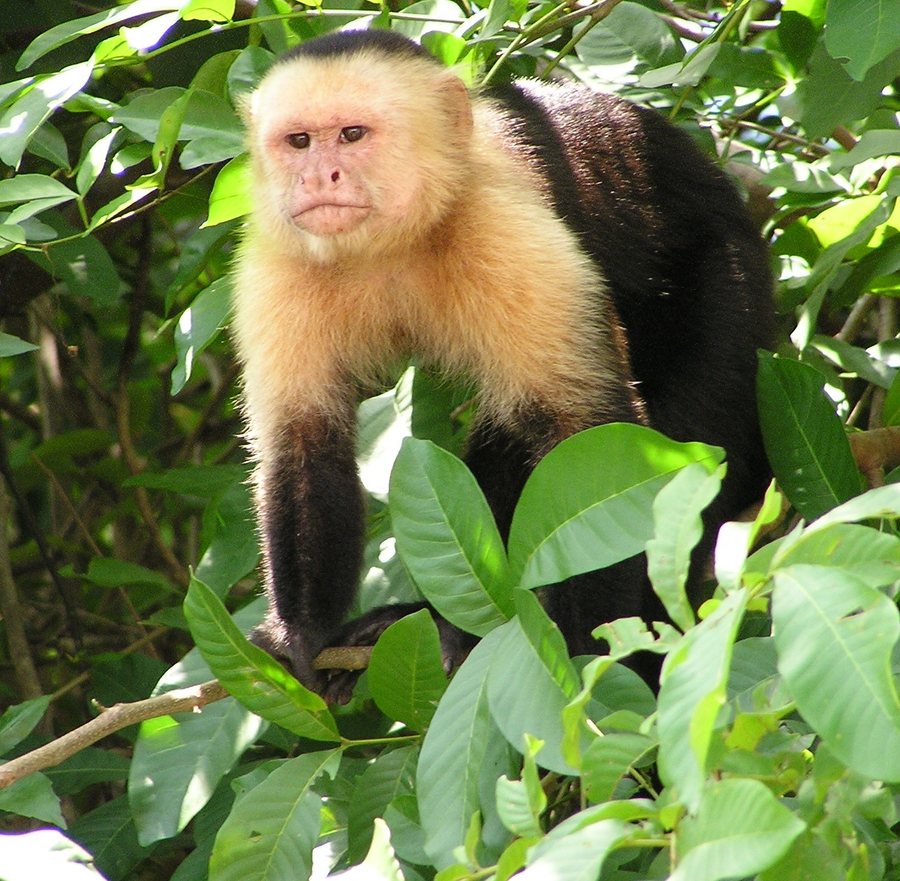
The capuchin monkey (Cebus capucinus) is a mammal of the family Cebidae, in the order Primates.
Quick answer
The capuchin is a small, highly intelligent New World monkey found in the tropical forests of Central America and northwest South America. Weighing about 3 to 4 kg and measuring roughly half a metre in body length, it is an agile tree-dweller that uses its prehensile tail for balance. Capuchins are famous for their problem-solving and use of simple tools, and they can live for 20 to 25 years in the wild. The IUCN lists them as Least Concern.
Top questions about the Capuchin Monkey
Also available in Español (Mono capuchino)
Capuchin Monkey facts at a glance
- Weight 4 kg
- Length 55 cm
- Top speed 24 km/h
- Lifespan 25 years
| Scientific name | Cebus capucinus |
|---|---|
| Diet | Omnivore — fruit, insects, small vertebrates, and nuts |
| Habitat | Tropical forests of Central America and northwest South America |
| Lifespan | 20–25 years in the wild (longer in captivity) |
| Weight | 3–4 kg (6.6–8.8 lb) |
| Top speed | Up to 24 km/h (15 mph) in trees |
| Conservation status | Least Concern (IUCN) |
| Kingdom | Animalia |
|---|---|
| Phylum | Chordata |
| Class | Mammalia |
| Order | Primates |
| Family | Cebidae |
| Genus | Cebus |
Where it lives
The capuchin monkey (Cebus capucinus) is native to White-faced capuchin from Honduras through Costa Rica, Panama, Colombia, and northwest Ecuador. — recorded across North America, South America in this guide’s range summary.
For occurrence records, see GBIF species search and sources below.
How big is a capuchin monkey?
An adult capuchin monkey measures 55 cm long — about 32% of the height of an average adult person (1.73 m) — and weighs around 4.0 kg, about 6% of an average adult’s body weight (70 kg).
Length vs an average adult’s height (to scale)
What is a group of capuchin monkeys called?
Group name (collective noun)
A group of Capuchin Monkeys is called a troop.
Baby name
A baby Capuchin Monkey is called an infant.
Explore more animal collective nouns and baby animal names .
Range and habitat
White-faced capuchins live across the tropical forests of Central America and the north-western fringe of South America, from Honduras down to Colombia and Ecuador. They occupy a wide variety of woodland, from lowland rainforest to dry and mangrove forest, and are highly adaptable. Most of their lives are spent in the canopy and mid-levels of the forest, though they will descend to lower branches and occasionally the ground to forage. This flexibility has helped keep them widespread and common across their range.
Intelligence and tool use
Capuchins are among the most intelligent of the New World monkeys, with large brains relative to their body size. They are well documented using simple tools, such as stones to crack open nuts and shellfish, and they rub crushed plants and insects into their fur, which may deter parasites. Their dexterity and learning ability have long made them a focus of scientific study into primate cognition. In captivity, this same cleverness has seen them trained to assist people with disabilities.
Diet and foraging
As omnivores, capuchins eat a broad and opportunistic diet of fruit, insects, small vertebrates, and nuts. They are inventive foragers, tearing apart bark, prising open pods, and searching leaf litter for hidden prey. Their strong hands and problem-solving skills let them reach foods that many other monkeys cannot. By carrying and dropping seeds as they feed, capuchins help spread the plants of the forest they live in.
Movement through the trees
Capuchins are agile, quadrupedal climbers that run and leap through the branches, reaching speeds of up to 24 km/h in the trees. Their semi-prehensile tail acts as a fifth limb, curling around branches to steady them and free their hands for feeding. They rarely make the long, arm-swinging leaps of larger primates, instead moving in quick, controlled bounds. On the ground they move less confidently and prefer to stay aloft where they are safer from predators.
Reproduction and lifespan
Females usually give birth to a single infant after a gestation of about five to six months. The newborn clings to its mother's back and is cared for by her and, at times, other members of the troop. Capuchins mature slowly for a small monkey, reflecting their long lives of 20 to 25 years in the wild and often longer in captivity. This slow pace of life is closely tied to their large brains and lengthy learning period.
Dig deeper into the Capuchin Monkey
- Capuchin Social Intelligence
Capuchin monkeys are intelligent New World primates that use stones to crack nuts and solve complex foraging problems in the wild.
- Capuchin Stone Tool Use
Capuchin monkeys are intelligent New World primates that use stones to crack nuts and solve complex foraging problems in the wild.
- How Long Do Capuchin Monkeys Live?
Capuchin Monkey lifespan is typically 20–25 years in the wild (longer in captivity). What shortens or extends life, life stages, and status (Least Concern).
- What Do Capuchin Monkeys Eat?
What capuchin monkeys eat: Omnivore — fruit, insects, small vertebrates, and nuts, foraging style, and seasonal shifts in Tropical forests of Central America and northwest South America.
- Where Do Capuchin Monkeys Live?
Where capuchin monkeys live: Tropical forests of Central America and northwest South America, native range cues, and human overlap. Status Least Concern.
Explore the Capuchin Monkey
Close relatives
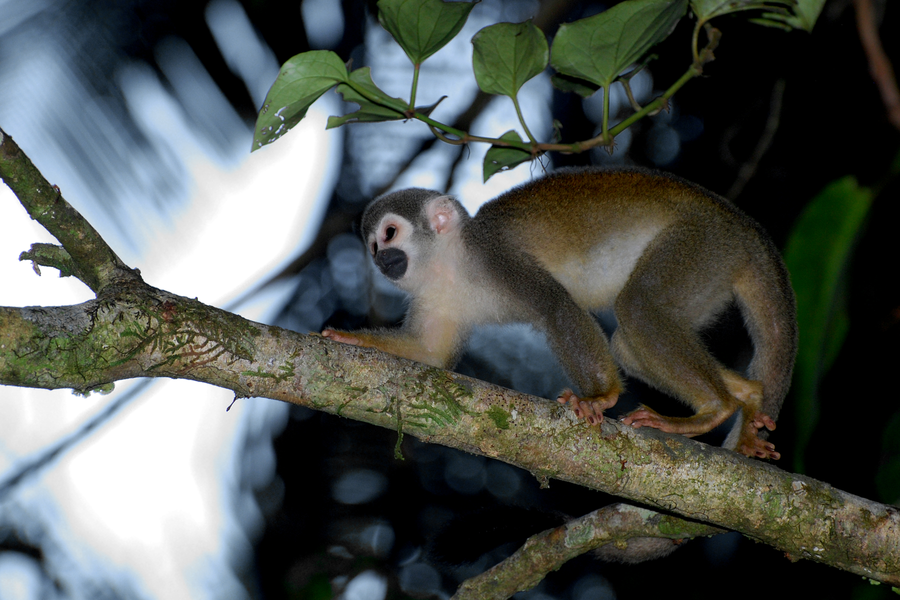
- Common Squirrel Monkey Same family
- Mountain Gorilla Same order
- Aye-aye Same order
- Japanese Macaque Same order
Did you know? Capuchin Monkey facts
- Capuchins are intelligent New World monkeys that use stones to crack nuts and have learned tool use in the wild.
- Among the most tool-proficient monkeys — problem-solving rivals great apes on some tasks.
- Capuchins are larger, more tool-oriented, with a cap-like head pattern.
- Conservation: Least Concern.
Diet & feeding
Capuchin Monkey feeds primarily as a fruit, insects, small vertebrates.
Adaptations
- Wild capuchins select hammer stones and anvils to open hard palm nuts.
- Capuchins sold as pets often become aggressive adults with complex needs.
Behaviour & ecology
- Wild capuchins select hammer stones and anvils to open hard palm nuts.
- Capuchins sold as pets often become aggressive adults with complex needs.
Communication
- Capuchin Monkey uses scent, posture, and vocal signals to mark territory and coordinate social behaviour.
- Communication intensity often peaks during breeding seasons and territorial disputes.
Habitat & range
Central and South American forests
Ecological role
Capuchin Monkey plays a recognised ecological role in central and south american forests.
Conservation status of the Capuchin Monkey
The capuchin monkey (Cebus capucinus) is listed as Least Concern on the IUCN Red List. Least Concern (LC) is the IUCN's lowest-risk category, assigned to widespread, abundant species that have been evaluated and found not to be threatened. It does not mean a species faces no pressures — only that it is not currently at risk of extinction.
The capuchin monkey (Cebus capucinus) is assessed on the IUCN Red List. Look up on the IUCN Red List .
Frequently asked questions about the Capuchin Monkey
Why are capuchin monkeys considered so intelligent?
Capuchins have unusually large brains for their body size and are among the few primates that use tools in the wild, such as stones to crack nuts. They learn quickly, solve novel problems, and pass foraging techniques between generations, which is why they feature so often in studies of primate cognition.
What do capuchin monkeys eat?
Capuchins are omnivores with a varied diet of fruit, insects, small vertebrates, and nuts. They are resourceful foragers that tear open bark and pods and search leaf litter for hidden prey, adjusting their diet to whatever is available in their forest.
Where do capuchin monkeys live?
The white-faced capuchin lives in the tropical forests of Central America and the north-west of South America, ranging from Honduras to Colombia and Ecuador. They occupy many forest types, from lowland rainforest to dry and mangrove woodland, spending most of their time in the canopy.
How long do capuchin monkeys live?
Capuchins live around 20 to 25 years in the wild and often longer in captivity. This is a long lifespan for such a small monkey and is linked to their large brains and slow development.
Do capuchin monkeys make good pets?
Capuchins are wild animals and generally make poor pets. They are long-lived, highly intelligent, and social, and in captivity they often become destructive or aggressive when their complex needs are not met. Their care is demanding and, in many places, keeping one is legally restricted.
Are capuchin monkeys endangered?
The white-faced capuchin is listed as Least Concern by the IUCN, meaning it is not currently at high risk of extinction. It remains widespread and adaptable, though like most rainforest animals it is affected by habitat loss and the pet trade in parts of its range.
What is a group of capuchin monkeys called?
A group of Capuchin Monkeys is called a troop.
What is a baby capuchin monkey called?
A baby Capuchin Monkey is called an infant.
Sources & references
This guide is compiled and reviewed against established zoological and conservation references. Key sources for the Capuchin Monkey:
-
IUCN Red List of Threatened Species
Conservation status (Least Concern) reflects the IUCN Red List category for Cebus capucinus.
-
iNaturalist — observations & photos
Search citizen-science observations and community IDs for Cebus capucinus. Useful for range checks and recent sightings — not a substitute for formal Red List status.
-
GBIF — occurrence data
Global Biodiversity Information Facility species search for Cebus capucinus. Explore published occurrence records used in range research.
- IUCN Red List — Cebus capucinus.
Conservation status (Least Concern) and population trends.
- Animal Diversity Web — Cebus capucinus. University of Michigan Museum of Zoology.
Life history, morphology, and range.
-
Global Animal Guide editorial standards
How we research, source, review, and update every guide for accuracy.

Social life
Capuchins live in groups of around 10 to 35 individuals, led by a dominant male and female. These troops are noisy and cooperative, grooming one another and joining together to mob predators such as snakes and birds of prey. Communication relies on a rich mix of calls, facial expressions, and body postures. Young capuchins learn foraging techniques and social rules by closely watching the adults around them.