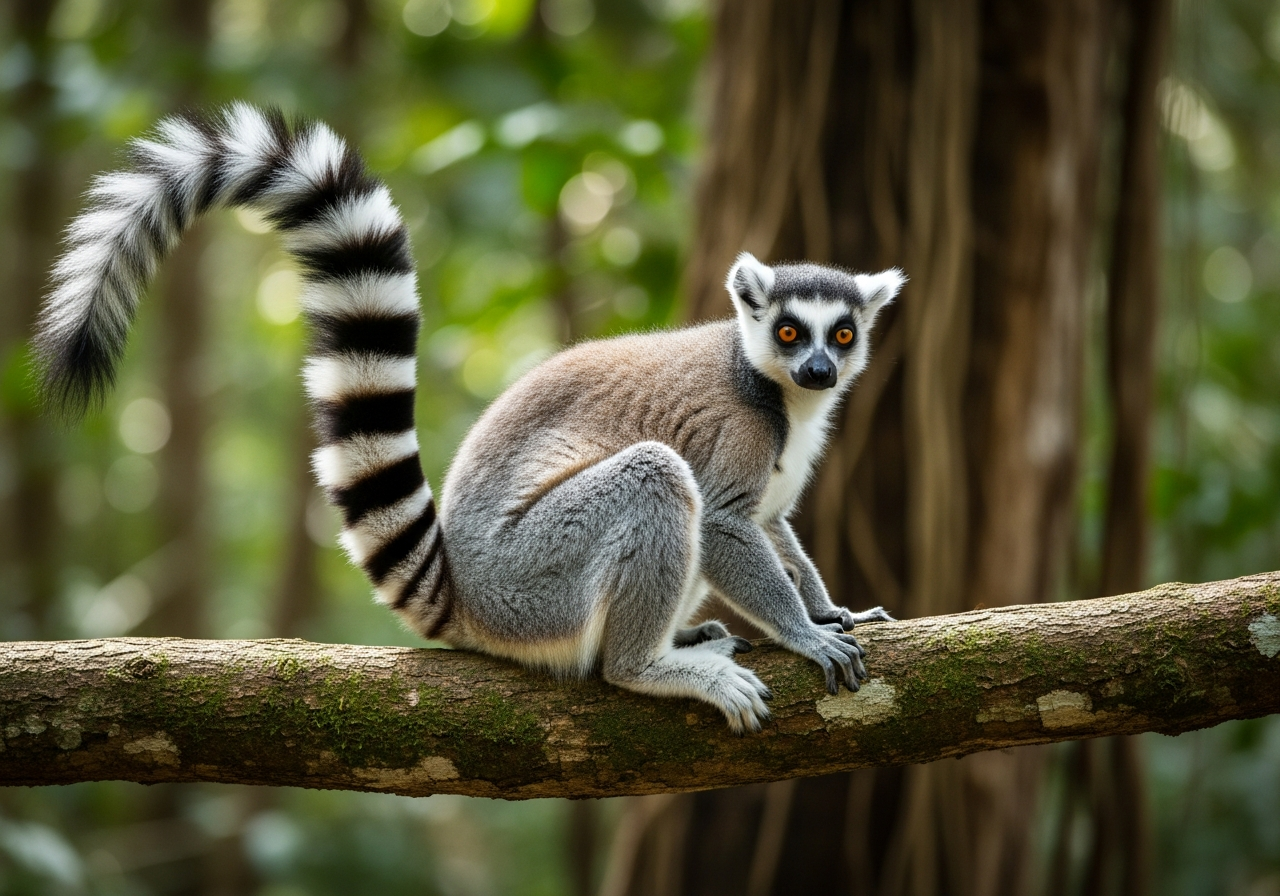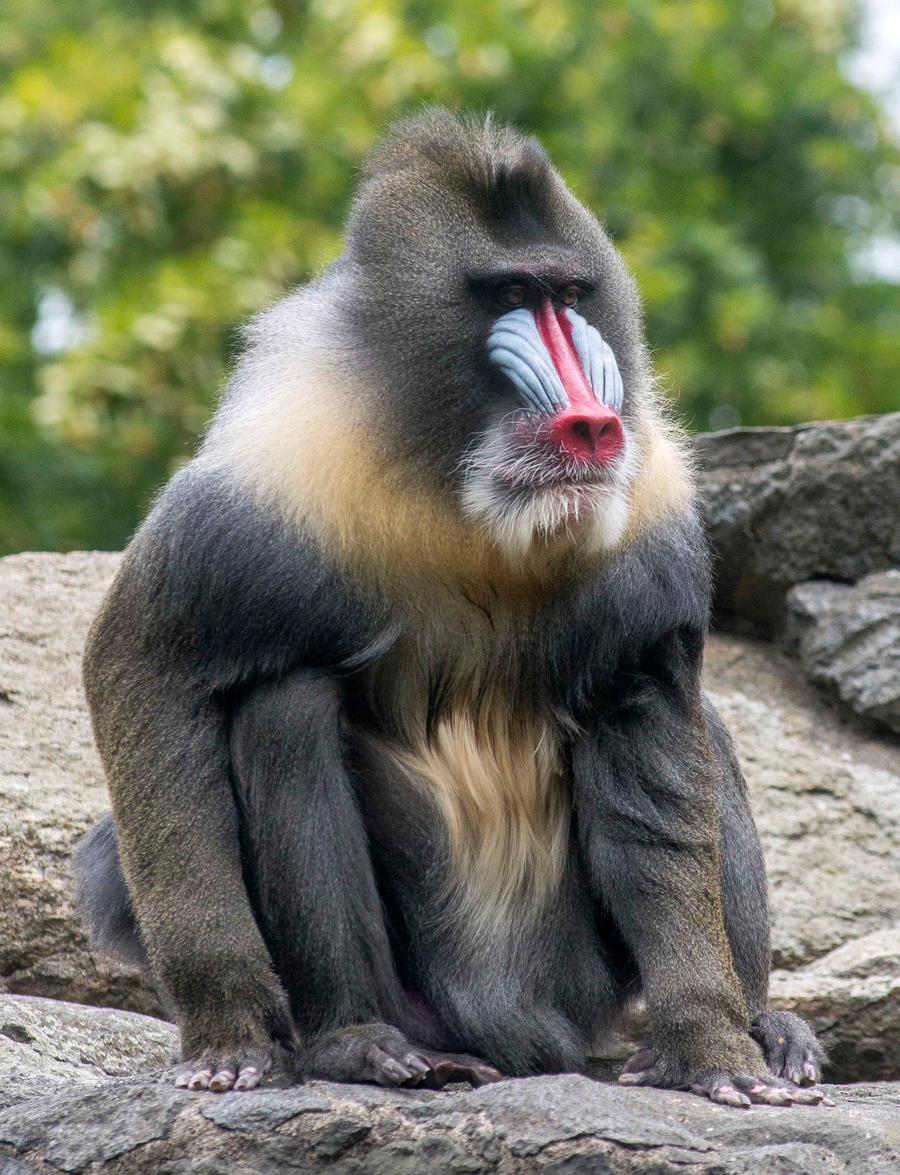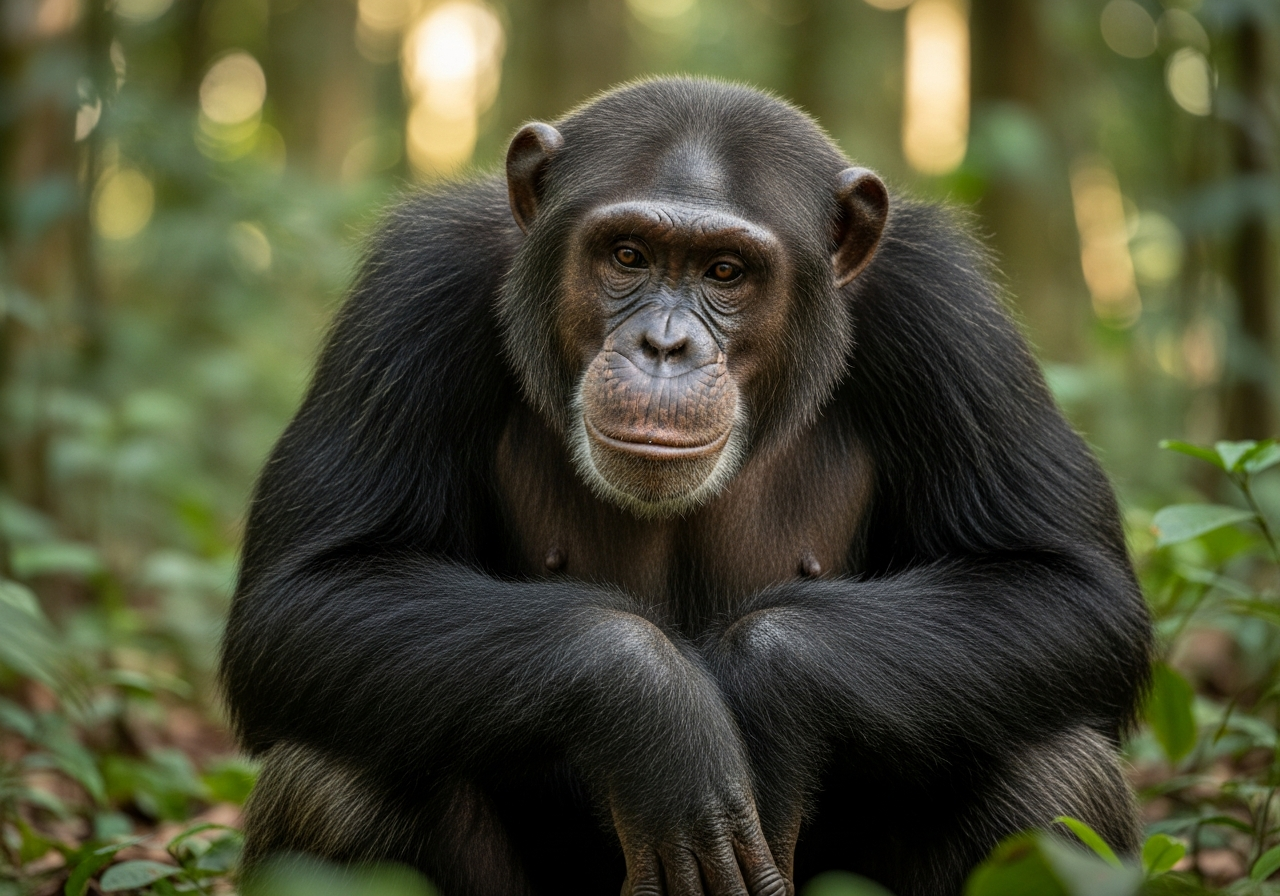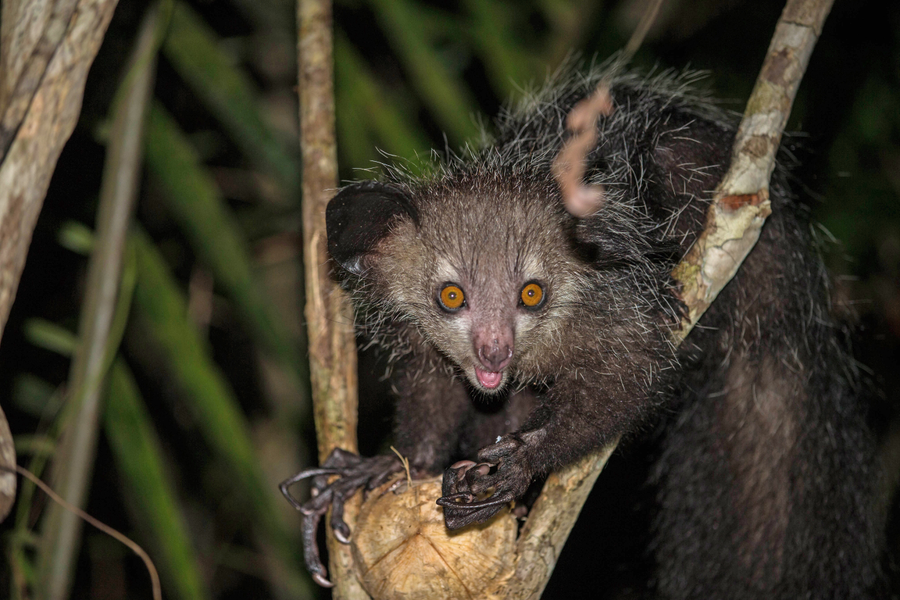
The aye-aye (Daubentonia madagascariensis) is a mammal of the family Daubentoniidae, in the order Primates.
Quick answer
The aye-aye is a large nocturnal lemur found only in Madagascar, easily recognised by its bushy tail, rodent-like teeth and long, spindly middle finger. It weighs 2 to 3 kg (4.4 to 6.6 lb) and forages alone at night for insect larvae, fruit, nectar and fungi. Long-lived for a lemur, it can survive 20 to 23 years in the wild. The IUCN lists it as Endangered.
Top questions about the Aye-aye
Also available in Español (Aye-aye)
Aye-aye facts at a glance
- Weight 3 kg
- Length 90 cm
- Top speed 8 km/h
- Lifespan 23 years
| Scientific name | Daubentonia madagascariensis |
|---|---|
| Diet | Omnivore — insect larvae, fruit, nectar, and fungi |
| Habitat | Rainforests and coconut plantations of Madagascar |
| Lifespan | 20–23 years in the wild (long-lived for a lemur) |
| Weight | 2–3 kg (4.4–6.6 lb) |
| Top speed | Slow arboreal locomotion; leaps between branches at night |
| Conservation status | Endangered (IUCN) |
| Kingdom | Animalia |
|---|---|
| Phylum | Chordata |
| Class | Mammalia |
| Order | Primates |
| Family | Daubentoniidae |
| Genus | Daubentonia |
Where it lives
The aye-aye (Daubentonia madagascariensis) is native to Endemic to Madagascar — eastern and northern rainforests and plantations with remaining native trees. — recorded across Africa in this guide’s range summary.
For occurrence records, see GBIF species search and sources below.
How big is a aye-aye?
An adult aye-aye measures 90 cm long — about 52% of the height of an average adult person (1.73 m) — and weighs around 3.0 kg, about 4% of an average adult’s body weight (70 kg).
Length vs an average adult’s height (to scale)
What is a group of aye-ayes called?
Group name (collective noun)
A group of Aye-ayes is called a troop.
Baby name
A baby Aye-aye is called an infant.
Explore more animal collective nouns and baby animal names .
A unique way of finding food
The aye-aye feeds using a method found in no other primate, sometimes called percussive foraging. It taps rapidly along a branch with its slender middle finger and listens for the hollow echo of a tunnel left by wood-boring grubs. Once it locates a cavity, it gnaws a hole with its ever-growing incisors and hooks the larva out with that same thin finger. This tap-and-listen technique fills the same ecological niche that woodpeckers occupy elsewhere in the world.
Diet beyond insects
Although insect larvae are a signature food, the aye-aye is an omnivore with a varied menu. It also eats fruit, nectar and fungi, and is fond of the seeds inside ripe coconuts and ramy nuts, which it opens with its powerful teeth. This flexible diet allows it to survive in both native rainforest and human-planted coconut groves. Its taste for cultivated crops occasionally brings it into conflict with farmers.
Anatomy and senses
The aye-aye grows to around 0.9 m (3 ft) including its long, bushy tail, which is often longer than its body. Its most extraordinary feature is the elongated, almost skeletal middle finger, fitted with a ball-and-socket joint that lets it swivel freely. Large, sensitive ears give it acute hearing for detecting grubs beneath bark, and its huge eyes are adapted to gathering light on moonlit nights. Unusually among primates, its front teeth never stop growing, like a rodent's.
Behaviour and lifestyle
Aye-ayes are strictly nocturnal and spend the daylight hours asleep in a spherical nest of leaves and twigs high in the canopy. They are largely solitary, moving slowly through the trees and leaping between branches to cover their large home ranges. Males range more widely than females and their territories often overlap, though individuals usually forage alone. They are surprisingly long-lived for a lemur, reaching over two decades in the wild.
Why it is endangered
The aye-aye is listed as Endangered by the IUCN, threatened chiefly by the clearing of Madagascar's forests for farming and timber. It also suffers from direct persecution, because some local traditions regard the animal as an omen of bad luck and kill it on sight. Its slow reproduction, with females raising a single infant every two to three years, makes it hard for populations to recover. Protected reserves and captive-breeding programmes now play a key role in safeguarding the species.
Dig deeper into the Aye-aye
- Are Aye-ayes Endangered?
Are aye-ayes endangered? Status Endangered, main threats, and what protection means.
- Aye-aye: Key Facts
The aye-aye is Madagascar's largest nocturnal lemur, with rodent-like ever-growing teeth, huge ears, and a skeletal middle finger for tapping wood to…
- How Long Do Aye-ayes Live?
Aye-aye lifespan is typically 20–23 years in the wild (long-lived for a lemur). What shortens or extends life, life stages, and status (Endangered).
- What Do Aye-ayes Eat?
What aye-ayes eat: Omnivore — insect larvae, fruit, nectar, and fungi, foraging style, and seasonal shifts in Rainforests and coconut plantations of Madagascar.
- Where Do Aye-ayes Live?
Where aye-ayes live: Rainforests and coconut plantations of Madagascar, native range cues, and human overlap. Status Endangered.
Explore the Aye-aye
Compare
Close relatives
- Mountain Gorilla Same order
- Japanese Macaque Same order
- Gorilla Same order
- Philippine Tarsier Same order
Collections
Range & geography
Did you know? Aye-aye facts
- The aye-aye is a lemur with rodent-like teeth, a skeletal middle finger for tapping wood, and large ears for locating grubs.
- It evolved convergent traits to a woodpecker — specialized finger, ever-growing teeth.
- They are shy and harmless — folklore wrongly labels them as evil.
- Conservation: Endangered.
Diet & feeding
Aye-aye feeds primarily as a insect larvae, fruit, nectar. Habitat loss and persecution threaten this unique primate.
Adaptations
- The aye-aye taps branches, listens for hollow sounds, then gnaws and extracts larvae.
- Habitat loss and persecution threaten this unique primate.
Behaviour & ecology
- The aye-aye taps branches, listens for hollow sounds, then gnaws and extracts larvae.
- Habitat loss and persecution threaten this unique primate.
Communication
- Aye-aye uses scent, posture, and vocal signals to mark territory and coordinate social behaviour.
- Communication intensity often peaks during breeding seasons and territorial disputes.
Habitat & range
Madagascar rainforests
Ecological role
Aye-aye plays a recognised ecological role in madagascar rainforests.
Conservation status of the Aye-aye
The aye-aye (Daubentonia madagascariensis) is listed as Endangered on the IUCN Red List. Endangered (EN) means a species faces a very high risk of extinction in the wild. Populations are usually declining sharply due to habitat loss, hunting, disease, or climate pressure. It sits one level below Critically Endangered on the IUCN Red List.
Main threats to the aye-aye
- Deforestation in Madagascar
- Persecution due to cultural beliefs
- Hunting
- Habitat fragmentation
Aye-aye (Daubentonia madagascariensis) was most recently assessed for the IUCN Red List in 2020. View the full IUCN assessment .
Frequently asked questions about the Aye-aye
What is an aye-aye?
The aye-aye is a nocturnal lemur native to Madagascar and the world's largest nocturnal primate. It is famous for its long, thin middle finger, which it uses to fish grubs out of tree bark.
Why does the aye-aye have such a long finger?
Its elongated middle finger is a specialised feeding tool. The aye-aye taps on branches to find hollow tunnels made by insect larvae, gnaws a hole in the wood, then uses the thin finger to hook the grubs out.
What do aye-ayes eat?
Aye-ayes are omnivores. They eat insect larvae, fruit, nectar and fungi, and are especially fond of coconut flesh and the seeds inside hard nuts, which they crack open with their strong, ever-growing teeth.
How long do aye-ayes live?
Aye-ayes can live 20 to 23 years in the wild, which is unusually long for a lemur. In captivity, well-cared-for individuals may live even longer.
Are aye-ayes endangered?
Yes. The aye-aye is classified as Endangered by the IUCN. Habitat loss across Madagascar and killing driven by local superstition are the main threats to its survival.
Where do aye-ayes live?
Aye-ayes live only on the island of Madagascar. They inhabit rainforests and, increasingly, coconut plantations, where they spend the day sleeping in leaf nests high in the trees.
What is a group of aye-ayes called?
A group of Aye-ayes is called a troop.
What is a baby aye-aye called?
A baby Aye-aye is called an infant.
Sources & references
This guide is compiled and reviewed against established zoological and conservation references. Key sources for the Aye-aye:
-
IUCN Red List of Threatened Species
Conservation status (Endangered) reflects the IUCN Red List category for Daubentonia madagascariensis, most recently assessed in 2020.
-
iNaturalist — observations & photos
Search citizen-science observations and community IDs for Daubentonia madagascariensis. Useful for range checks and recent sightings — not a substitute for formal Red List status.
-
GBIF — occurrence data
Global Biodiversity Information Facility species search for Daubentonia madagascariensis. Explore published occurrence records used in range research.
- IUCN Red List — Daubentonia madagascariensis.
Conservation status (Endangered) and population trends.
- Animal Diversity Web — Daubentonia madagascariensis. University of Michigan Museum of Zoology.
Life history, morphology, and range.
-
Global Animal Guide editorial standards
How we research, source, review, and update every guide for accuracy.