Image sourcing: see credits & licences
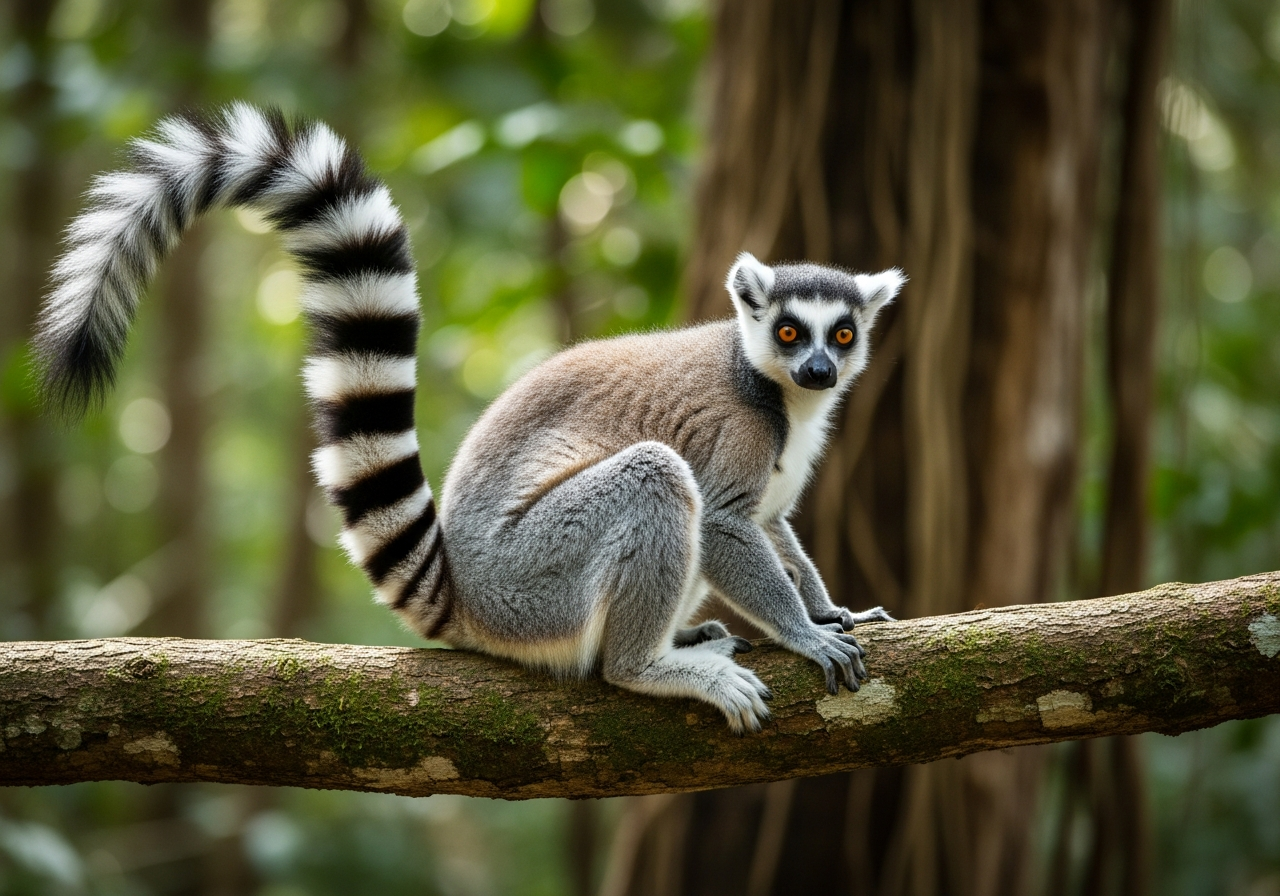
The ring-tailed lemur (Lemur catta) is a mammal of the family Lemuridae, in the order Primates.
Quick answer
The ring-tailed lemur is a primate found only on the island of Madagascar, instantly recognizable by its long black-and-white striped tail. It lives in female-led troops, spends more time on the ground than other lemurs, and loves to sunbathe. Wild ring-tailed lemurs usually live around 16 years.
Top questions about the Ring-Tailed Lemur
Ring-Tailed Lemur facts at a glance
- Weight 2.2 kg
- Length 95 cm
- Top speed 20 km/h
- Lifespan 16 years
| Scientific name | Lemur catta |
|---|---|
| Diet | Omnivore (fruit, leaves, flowers, insects) |
| Habitat | Forests and scrub of southern Madagascar |
| Lifespan | Around 16 years in the wild |
| Weight | 2.2 kg (5 lb) |
| Length | Around 95 cm (37 in) including the tail |
| Conservation status | Endangered (IUCN) |
| Kingdom | Animalia |
|---|---|
| Phylum | Chordata |
| Class | Mammalia |
| Order | Primates |
| Family | Lemuridae |
| Genus | Lemur |
Where it lives
The ring-tailed lemur (Lemur catta) is native to Southern and southwestern Madagascar, in dry forests, spiny scrub, and rocky canyons. — recorded across Africa in this guide’s range summary.
For occurrence records, see GBIF species search and sources below.
How big is a ring-tailed lemur?
An adult ring-tailed lemur measures 95 cm long — about 55% of the height of an average adult person (1.73 m) — and weighs around 2.2 kg, about 3% of an average adult’s body weight (70 kg).
Length vs an average adult’s height (to scale)
What is a group of ring-tailed lemurs called?
Group name (collective noun)
A group of Ring-Tailed Lemurs is called a troop. It is also known as a conspiracy.
Baby name
A baby Ring-Tailed Lemur is called an infant.
Explore more animal collective nouns and baby animal names .
The famous striped tail
The ring-tailed lemur's tail is longer than its body and marked with 13 alternating black and white bands. The tail is not used for gripping; instead it works as a flag that keeps the troop together as they move through forest and as a signal during disputes. It also stars in stink fights, when males rub scent onto their tails and waft it at rivals.
Female-led troops
Ring-tailed lemurs live in troops of around 6 to 30 animals in which females are dominant — they get first choice of food and lead the group's movements, which is unusual among primates. Troops keep in touch with a wide range of calls, from soft purrs to loud alarm barks that warn of hawks and other predators.
Sunbathing on the ground
Ring-tailed lemurs are the most terrestrial of all lemurs, spending much of the day foraging on the ground. On cool mornings they sit upright with arms outstretched and pale bellies turned to the sun, an unmistakable sunbathing pose that helps them warm up before the day's activity begins.
Found only in Madagascar
Like all lemurs, the ring-tailed lemur lives nowhere else on Earth but Madagascar, where it occupies the dry forests, scrub, and rocky canyons of the island's south and southwest. Lemurs are a striking example of evolution in isolation, having diversified into around a hundred species after their ancestors reached the island millions of years ago.
Conservation
The ring-tailed lemur is listed as Endangered, and wild numbers have fallen sharply. The main threats are habitat loss from logging, charcoal production, and farming, along with hunting and the illegal pet trade. Protected reserves and community-based conservation in Madagascar are essential to the species' future.
Dig deeper into the Ring-Tailed Lemur
- Are Ring-Tailed Lemurs Endangered?
Are ring-tailed lemurs endangered? Status Endangered, main threats, and what protection means.
- How Long Do Ring-Tailed Lemurs Live?
Ring-Tailed Lemur lifespan is typically Around 16 years in the wild. What shortens or extends life, life stages, and status (Endangered).
- Ring-Tailed Lemur: Key Facts
The ring-tailed lemur is a primate found only on the island of Madagascar, instantly recognizable by its long black-and-white striped tail.
- What Do Ring-Tailed Lemurs Eat?
What ring-tailed lemurs eat: Omnivore (fruit, leaves, flowers, insects), foraging style, and seasonal shifts in Forests and scrub of southern Madagascar.
- Where Do Ring-Tailed Lemurs Live?
Where ring-tailed lemurs live: Forests and scrub of southern Madagascar, native range cues, and human overlap. Status Endangered.
Explore the Ring-Tailed Lemur
Close relatives
- Mountain Gorilla Same order
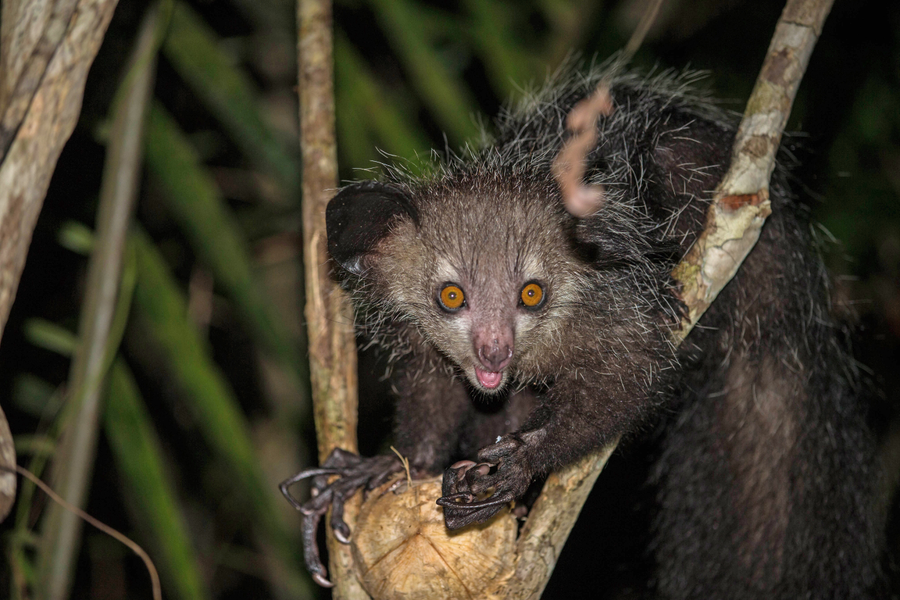
- Aye-aye Same order
- Japanese Macaque Same order
- Gorilla Same order
Collections
Range & geography
Did you know? Ring-Tailed Lemur facts
- The ring-tailed lemur is a primate found only on the island of Madagascar, instantly recognizable by its long black-and-white striped tail.
- Ring-tailed lemurs are found only in Madagascar, in the dry forests, scrub, and rocky canyons of the island's south and southwest. Like all lemurs, they exist nowhere else in the wild.
- No. Lemurs are primates, but they belong to a separate, more ancient group called prosimians, not the monkeys and apes. They evolved in isolation on Madagascar.
- During disputes, male ring-tailed lemurs coat their long tails with smelly secretions from scent glands, then wave them at rivals — a contest of odor rather than force.
- They are omnivores, eating mostly fruit along with leaves, flowers, sap, and the occasional insect. The tamarind tree is an especially important food source.
- Conservation: Endangered (IUCN).
Diet & feeding
Ring-Tailed Lemur feeds primarily as a omnivore (fruit, leaves, flowers, insects). The ring-tailed lemur is listed as Endangered, and wild numbers have fallen sharply. The main threats are habitat loss from logging, charcoal production, and farming, along with hunting and the illegal pet trade. Protected reserves and c
Adaptations
- The ring-tailed lemur's tail is longer than its body and marked with 13 alternating black and white bands. The tail is not used for gripping; instead it works as a flag that keeps the troop together as they move through forest and as a signal during disputes. It also stars in stink fights, when males rub scent onto their tails and waft it at rivals.
- Ring-tailed lemurs live in troops of around 6 to 30 animals in which females are dominant — they get first choice of food and lead the group's movements, which is unusual among primates. Troops keep in touch with a wide range of calls, from soft purrs to loud alarm barks that warn of hawks and other predators.
Behaviour & ecology
- The ring-tailed lemur's tail is longer than its body and marked with 13 alternating black and white bands. The tail is not used for gripping; instead it works as a flag that keeps the troop together as they move through forest and as a signal during disputes. It also stars in stink fights, when males rub scent onto their tails and waft it at rivals.
- Ring-tailed lemurs live in troops of around 6 to 30 animals in which females are dominant — they get first choice of food and lead the group's movements, which is unusual among primates. Troops keep in touch with a wide range of calls, from soft purrs to loud alarm barks that warn of hawks and other predators.
- Ring-tailed lemurs are the most terrestrial of all lemurs, spending much of the day foraging on the ground. On cool mornings they sit upright with arms outstretched and pale bellies turned to the sun, an unmistakable sunbathing pose that helps them warm up before the day's activity begins.
Communication
- Ring-Tailed Lemur uses scent, posture, and vocal signals to mark territory and coordinate social behaviour.
- Communication intensity often peaks during breeding seasons and territorial disputes.
Habitat & range
Forests and scrub of southern Madagascar
Ecological role
Ring-Tailed Lemur plays a recognised ecological role in forests and scrub of southern madagascar.
Conservation status of the Ring-Tailed Lemur
The ring-tailed lemur (Lemur catta) is listed as Endangered on the IUCN Red List. Endangered (EN) means a species faces a very high risk of extinction in the wild. Populations are usually declining sharply due to habitat loss, hunting, disease, or climate pressure. It sits one level below Critically Endangered on the IUCN Red List.
The ring-tailed lemur (Lemur catta) is assessed on the IUCN Red List. Look up on the IUCN Red List .
Frequently asked questions about the Ring-Tailed Lemur
Where do ring-tailed lemurs live?
Ring-tailed lemurs are found only in Madagascar, in the dry forests, scrub, and rocky canyons of the island's south and southwest. Like all lemurs, they exist nowhere else in the wild.
Are lemurs monkeys?
No. Lemurs are primates, but they belong to a separate, more ancient group called prosimians, not the monkeys and apes. They evolved in isolation on Madagascar.
What is a stink fight?
During disputes, male ring-tailed lemurs coat their long tails with smelly secretions from scent glands, then wave them at rivals — a contest of odor rather than force.
What do ring-tailed lemurs eat?
They are omnivores, eating mostly fruit along with leaves, flowers, sap, and the occasional insect. The tamarind tree is an especially important food source.
Are ring-tailed lemurs endangered?
Yes. The IUCN lists them as Endangered, mainly because of habitat loss, hunting, and the illegal pet trade across their small range in southern Madagascar.
What is a group of ring-tailed lemurs called?
A group of Ring-Tailed Lemurs is called a troop. It is also known as a conspiracy.
What is a baby ring-tailed lemur called?
A baby Ring-Tailed Lemur is called an infant.
Sources & references
This guide is compiled and reviewed against established zoological and conservation references. Key sources for the Ring-Tailed Lemur:
-
IUCN Red List of Threatened Species
Conservation status (Endangered) reflects the IUCN Red List category for Lemur catta.
-
iNaturalist — observations & photos
Search citizen-science observations and community IDs for Lemur catta. Useful for range checks and recent sightings — not a substitute for formal Red List status.
-
GBIF — occurrence data
Global Biodiversity Information Facility species search for Lemur catta. Explore published occurrence records used in range research.
- IUCN Red List — Lemur catta.
Conservation status (Endangered) and population trends.
- Animal Diversity Web — Lemur catta. University of Michigan Museum of Zoology.
Life history, morphology, and range.
- Wikipedia — Ring-Tailed Lemur.
General taxonomy and overview (cross-check primary sources).
-
Global Animal Guide editorial standards
How we research, source, review, and update every guide for accuracy.