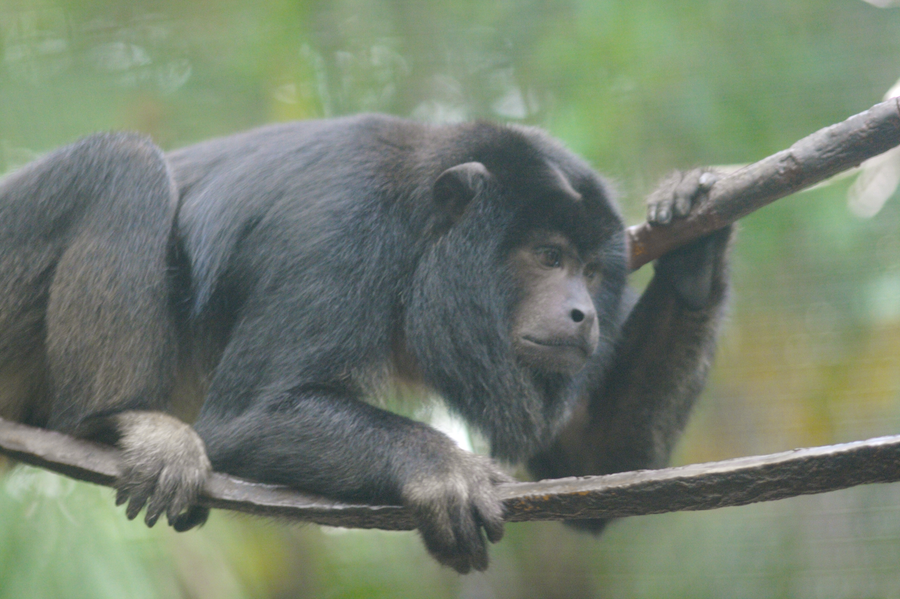
Quick answer
The howler monkey is a large, leaf-eating New World primate famous for having one of the loudest calls of any land animal in the Americas. Living in the tropical forests of Central and South America, it weighs around 5 to 10 kg and spends almost its whole life high in the canopy. Its booming dawn chorus, produced with the help of a specialised throat bone, can carry for several kilometres. Howlers live 15 to 20 years in the wild and are listed as Least Concern.
Top questions about the Howler Monkey
Also available in Español (Mono aullador)
Howler Monkey facts at a glance
- Weight 8 kg
- Length 90 cm
- Top speed 16 km/h
- Lifespan 20 years
| Scientific name | Alouatta spp. |
|---|---|
| Diet | Folivore — leaves, fruit, flowers, and buds |
| Habitat | Tropical forests of Central and South America |
| Lifespan | 15–20 years in the wild |
| Weight | 5–10 kg (11–22 lb); males larger |
| Top speed | Up to 16 km/h (10 mph); mostly slow arboreal movement |
| Conservation status | Least Concern (IUCN) |
| Kingdom | Animalia |
|---|---|
| Phylum | Chordata |
| Class | Mammalia |
| Order | Primates |
| Family | Atelidae |
| Genus | Alouatta |
Where it lives
The howler monkey (Alouatta spp.) is native to Tropical forests from southern Mexico through Central America to Brazil, Bolivia, and Paraguay. — recorded across North America, South America in this guide’s range summary.
For occurrence records, see GBIF species search and sources below.
How big is a howler monkey?
An adult howler monkey measures 90 cm long — about 52% of the height of an average adult person (1.73 m) — and weighs around 8.0 kg, about 11% of an average adult’s body weight (70 kg).
Length vs an average adult’s height (to scale)
What is a group of howler monkeys called?
Group name (collective noun)
A group of Howler Monkeys is called a troop.
Baby name
A baby Howler Monkey is called an infant.
Explore more animal collective nouns and baby animal names .
The famous howl
Howler monkeys are named for the deep, roaring calls that make them one of the loudest land animals in the Americas. Males produce these booming howls using an enlarged hyoid bone in the throat that acts as a resonating chamber. The calls carry for several kilometres through dense forest and are used to space out rival troops without the need to fight. Choruses are most striking at dawn and dusk, when neighbouring groups answer one another across the canopy.
Range and habitat
Howler monkeys, of the genus Alouatta, live throughout the tropical forests of Central and South America, from southern Mexico to northern Argentina. They inhabit a range of woodland, including rainforest, dry forest, and mangrove, wherever there are enough tall trees. Almost their entire life is spent in the canopy, where they find food, sleep, and travel. They are among the most widespread of the New World monkeys.
Diet and slow metabolism
Howlers are folivores, feeding mainly on leaves along with fruit, flowers, and buds. Leaves are low in energy and slow to digest, so the monkeys have an enlarged gut where bacteria ferment the tough plant material. To cope with this low-energy diet they rest for much of the day, sometimes for 15 hours or more. When fruit and young leaves are plentiful they take advantage of the richer food.
Movement through the canopy
Howler monkeys move slowly and deliberately through the trees, rarely leaping and instead climbing carefully from branch to branch. Their strong, fully prehensile tail acts as a fifth limb, gripping branches and even supporting the animal's full weight while it reaches for food. Top speeds of around 16 km/h are reached only in short bursts, as their leaf-based diet leaves little energy to spare. They almost never come down to the ground, staying safe among the high branches.
Reproduction and lifespan
Females give birth to a single infant after a gestation of around six months, and the newborn clings to its mother as she moves through the trees. Young howlers are weaned gradually and learn which leaves and fruit are safe to eat by watching the adults. In the wild, howler monkeys live around 15 to 20 years. Their slow, energy-conserving lifestyle is reflected in their unhurried pace of breeding and growth.
Dig deeper into the Howler Monkey
- How Long Do Howler Monkeys Live?
Howler Monkey lifespan is typically 15–20 years in the wild. What shortens or extends life, life stages, and status (Least Concern).
- Howler Monkey Leaf Digestion
Howler monkeys produce deep roars audible up to 5 km away thanks to an enlarged hyoid bone — among the loudest calls of any land animal.
- Howler Monkey Vocal Anatomy
Howler monkeys produce deep roars audible up to 5 km away thanks to an enlarged hyoid bone — among the loudest calls of any land animal.
- What Do Howler Monkeys Eat?
What howler monkeys eat: Folivore — leaves, fruit, flowers, and buds, foraging style, and seasonal shifts in Tropical forests of Central and South America.
- Where Do Howler Monkeys Live?
Where howler monkeys live: Tropical forests of Central and South America, native range cues, and human overlap. Status Least Concern.
Explore the Howler Monkey
Compare
Close relatives
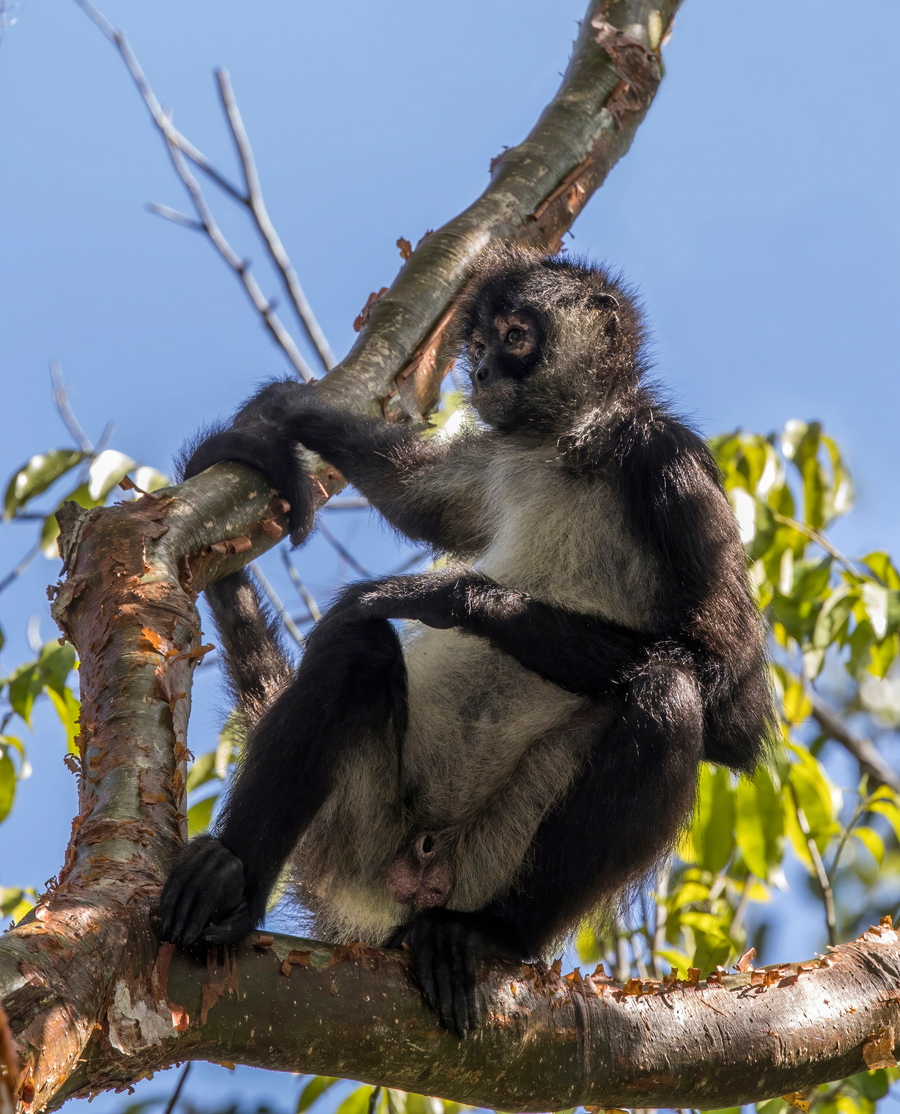
- Geoffroy's Spider Monkey Same family
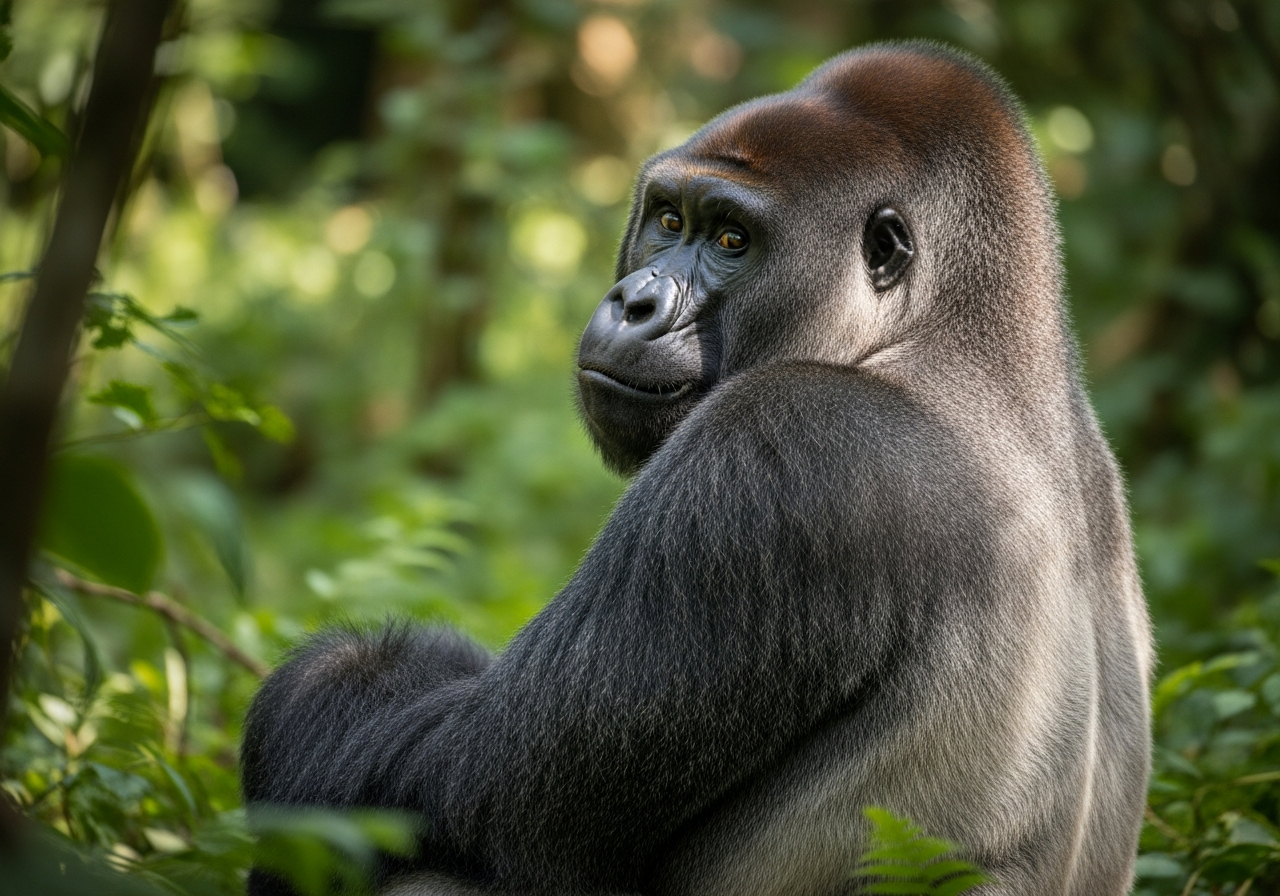
- Mountain Gorilla Same order
- Aye-aye Same order
- Japanese Macaque Same order
Range & geography
Did you know? Howler Monkey facts
- Howler monkeys produce deep roars audible up to 5 km away thanks to an enlarged hyoid bone.
- Territory announcements between rival troops without physical fights.
- They usually flee; males may throw branches if approached closely.
- Conservation: Least Concern.
Diet & feeding
Howler Monkey feeds primarily as a leaves, fruit, flowers.
Adaptations
- The hyoid bone acts like a resonating chamber for territorial calls at dawn.
- Slow digestion limits activity — howlers rest up to 80% of daylight hours.
Behaviour & ecology
- The hyoid bone acts like a resonating chamber for territorial calls at dawn.
- Slow digestion limits activity — howlers rest up to 80% of daylight hours.
Communication
- Howler Monkey uses scent, posture, and vocal signals to mark territory and coordinate social behaviour.
- Communication intensity often peaks during breeding seasons and territorial disputes.
Habitat & range
Central and South American forests
Ecological role
Howler Monkey plays a recognised ecological role in central and south american forests.
Conservation status of the Howler Monkey
The howler monkey (Alouatta spp.) is listed as Least Concern on the IUCN Red List. Least Concern (LC) is the IUCN's lowest-risk category, assigned to widespread, abundant species that have been evaluated and found not to be threatened. It does not mean a species faces no pressures — only that it is not currently at risk of extinction.
The howler monkey (Alouatta spp.) is assessed on the IUCN Red List. Look up on the IUCN Red List .
Frequently asked questions about the Howler Monkey
Why are howler monkeys so loud?
Male howler monkeys have an enlarged hyoid bone in the throat that acts as a resonating chamber, letting them produce deep, booming calls. These howls can carry for several kilometres and are used to advertise a troop's presence so that rival groups keep their distance without fighting.
What do howler monkeys eat?
Howler monkeys are folivores, feeding mainly on leaves along with fruit, flowers, and buds. Leaves provide little energy and are slow to digest, so howlers have an enlarged gut to ferment them and spend much of the day resting to conserve energy.
Where do howler monkeys live?
Howler monkeys live in the tropical forests of Central and South America, ranging from southern Mexico to northern Argentina. They occupy rainforest, dry forest, and mangroves, spending almost their entire lives high in the canopy.
How loud is a howler monkey's call?
A howler monkey's call is among the loudest of any land animal in the Americas and can be heard several kilometres away through dense forest. The calls are loudest at dawn and dusk, when neighbouring troops answer one another across the canopy.
How long do howler monkeys live?
Howler monkeys live around 15 to 20 years in the wild. Their slow, energy-conserving lifestyle, driven by a low-energy diet of leaves, is reflected in their unhurried pace of growth and breeding.
Are howler monkeys endangered?
Howler monkeys are listed as Least Concern by the IUCN, meaning they are not currently at high risk of extinction. They remain widespread across the Americas, though habitat loss and hunting affect some populations more than others.
What is a group of howler monkeys called?
A group of Howler Monkeys is called a troop.
What is a baby howler monkey called?
A baby Howler Monkey is called an infant.
Sources & references
This guide is compiled and reviewed against established zoological and conservation references. Key sources for the Howler Monkey:
-
IUCN Red List of Threatened Species
Conservation status (Least Concern) reflects the IUCN Red List category for Alouatta spp..
-
iNaturalist — observations & photos
Search citizen-science observations and community IDs for Alouatta spp.. Useful for range checks and recent sightings — not a substitute for formal Red List status.
-
GBIF — occurrence data
Global Biodiversity Information Facility species search for Alouatta spp.. Explore published occurrence records used in range research.
- IUCN Red List — Alouatta spp..
Conservation status (Least Concern) and population trends.
- Animal Diversity Web — Alouatta spp.. University of Michigan Museum of Zoology.
Life history, morphology, and range.
-
Global Animal Guide editorial standards
How we research, source, review, and update every guide for accuracy.
Social structure
Howlers live in troops of around 6 to 15 individuals, usually including several adults of both sexes along with juveniles and infants. Rather than fighting over territory, neighbouring groups rely on their loud calls to keep their distance. Within the troop, grooming and vocal exchanges help maintain social bonds. Males are larger than females and take the lead in the roaring contests that define howler society.