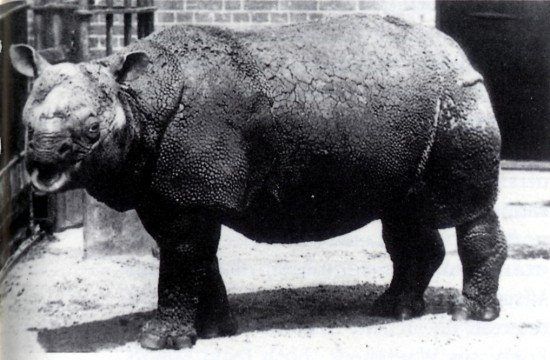
The Javan rhino (Rhinoceros sondaicus) is a mammal of the rhinoceros family, Rhinocerotidae, in the order Perissodactyla.
Quick answer
The Javan rhinoceros is the rarest of all rhino species, with roughly 70 individuals surviving in a single national park on Java, Indonesia. Smaller than the Indian rhino at 900–2,300 kg (2,000–5,000 lb), it has a single horn and nearly hairless grey skin, and is Critically Endangered from historic hunting and tiny range.
Top questions about the Javan Rhino
Also available in Español (Rinoceronte de Java)
Javan Rhino facts at a glance
- Weight 1500 kg
- Length 3.2 m
- Top speed 30 km/h
- Lifespan 40 years
| Scientific name | Rhinoceros sondaicus |
|---|---|
| Diet | Herbivore — shoots, twigs, fallen fruit, and leaves |
| Habitat | Dense tropical rainforest and tall grass in lowland Java |
| Lifespan | 30–45 years in the wild |
| Weight | 900–2,300 kg (2,000–5,000 lb); males larger |
| Top speed | Up to 30 km/h (19 mph) in short charge |
| Conservation status | Critically Endangered (IUCN) |
| Kingdom | Animalia |
|---|---|
| Phylum | Chordata |
| Class | Mammalia |
| Order | Perissodactyla |
| Family | Rhinocerotidae |
| Genus | Rhinoceros |
Where it lives
The javan rhino (Rhinoceros sondaicus) is native to Critically endangered remnant population in Ujung Kulon National Park at the western tip of Java, Indonesia — extinct in its former range across Southeast Asia, India, and Vietnam. — recorded across Asia in this guide’s range summary.
For occurrence records, see GBIF species search and sources below.
How big is a javan rhino?
An adult javan rhino measures 3.2 m long — about 1.8× the height of an average adult person (1.73 m) — and weighs around 1500 kg, about 21× an average adult’s body weight (70 kg).
Length vs an average adult’s height (to scale)
What is a group of javan rhinos called?
Group name (collective noun)
A group of Javan Rhinos is called a crash.
Baby name
A baby Javan Rhino is called a calf.
Explore more animal collective nouns and baby animal names .
Last population on Java
All surviving Javan rhinos live in Ujung Kulon National Park at the western tip of Java — a peninsula isolated by the 1883 Krakatau eruption and tsunami. No Javan rhinos remain in their former range across Southeast Asia, Vietnam, or India.
Forest browser
Unlike grass-grazing white rhinos, Javan rhinos browse woody vegetation in dense rainforest, using a pointed upper lip to strip shoots and fallen fruit. They follow regular trails through undergrowth and wallow in mud to cool and deter insects.
Extreme rarity
With fewer than 80 individuals, the Javan rhino is the rarest large mammal on Earth. The last Javan rhino in Vietnam was poached in 2010. Every birth in Ujung Kulon is monitored by camera traps — the population is too small to survive a disease outbreak or natural disaster.
Recovery challenges
Plans to establish a second population on Java or elsewhere have progressed slowly due to habitat requirements, tsunami risk at Ujung Kulon, and the invasive Arenga palm crowding out rhino food plants. Anti-poaching success means natural threats now dominate.
Dig deeper into the Javan Rhino
- Are Javan Rhinos Endangered?
Javan rhinos are IUCN Critically Endangered (2020, Stable). One population in Ujung Kulon, Java — on the order of 50–80, not a weekly census.
- How Long Do Javan Rhinos Live?
Wild Javan rhinos often live about 30–45 years; one-park risk, disease and poaching cut the average. IUCN Critically Endangered.
- Javan Rhino: Key Facts
The Javan rhinoceros is the rarest of all rhino species, with roughly 70 individuals surviving in a single national park on Java, Indonesia.
- What Do Javan Rhinos Eat?
Javan rhinos browse shoots, twigs, leaves and fruit in Ujung Kulon forest — not white-rhino grass. Never feed them.
- Where Do Javan Rhinos Live?
Javan rhinos survive only in Ujung Kulon National Park, Java — not African savanna. IUCN Critically Endangered.
Explore the Javan Rhino
Close relatives
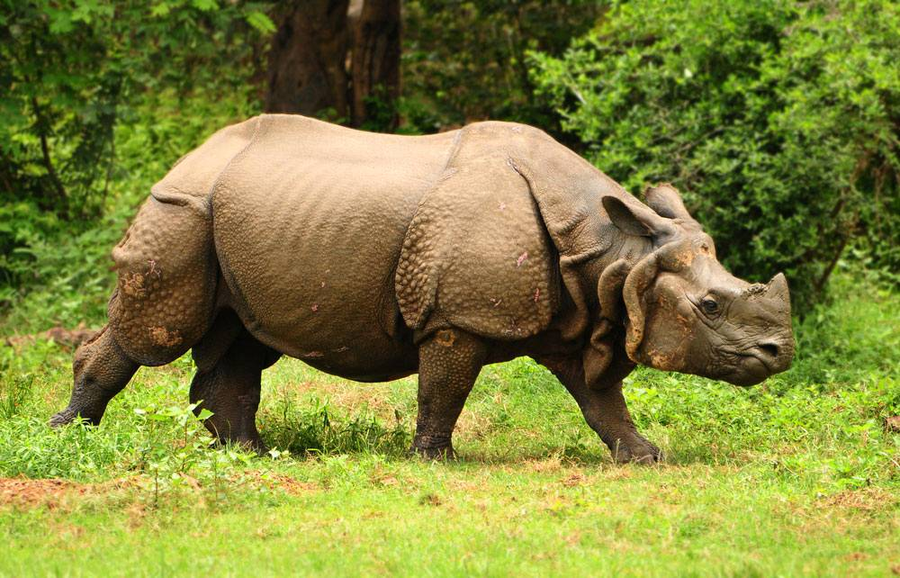
- Indian Rhinoceros Same genus
- Rhinoceros Same family
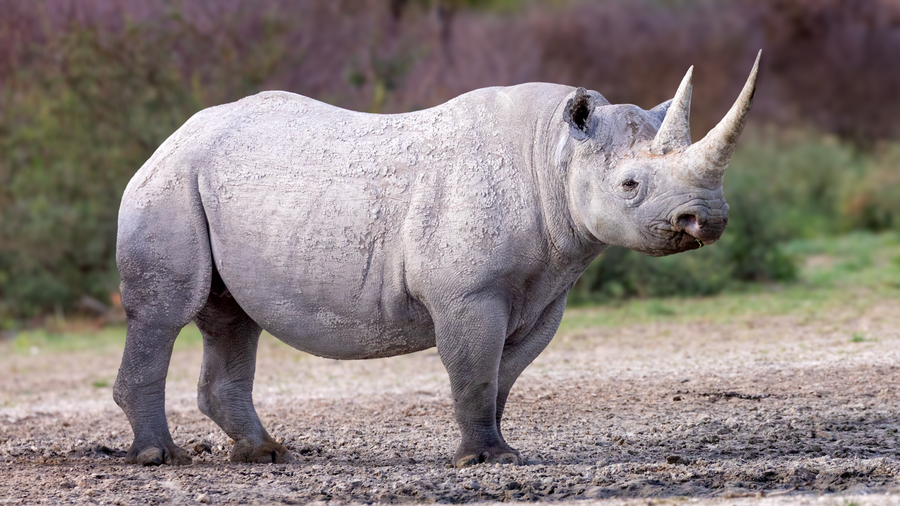
- Black Rhinoceros Same family
- White Rhinoceros Same family
Collections
Range & geography
Did you know? Javan Rhino facts
- The Javan rhinoceros is the rarest of all rhino species, with roughly 70 individuals surviving in a single national park on Java, Indonesia.
- Roughly 70–75 individuals, all in Ujung Kulon National Park on Java, Indonesia — the rarest rhino species and one of the rarest mammals on Earth.
- Javan rhinos are smaller, nearly hairless, and have a single horn. Indian (greater one-horned) rhinos are larger with armour-like skin folds and number over 4,000 in India and Nepal.
- Historic hunting for horn and habitat loss eliminated them across Asia. The entire species now depends on one small park vulnerable to tsunami, disease, and invasive plants.
- Usually one horn, rarely two — unlike African rhinos which typically have two horns (though black rhinos also have one primary horn).
- Conservation: Critically Endangered (IUCN).
Diet & feeding
Javan Rhino feeds primarily as a herbivore — shoots, twigs, fallen fruit, and leaves. Unlike grass-grazing white rhinos, Javan rhinos browse woody vegetation in dense rainforest, using a pointed upper lip to strip shoots and fallen fruit. They follow regular trails through undergrowth and wallow in mud to cool and dete
Adaptations
- All surviving Javan rhinos live in Ujung Kulon National Park at the western tip of Java — a peninsula isolated by the 1883 Krakatau eruption and tsunami. No Javan rhinos remain in their former range across Southeast Asia, Vietnam, or India.
- Unlike grass-grazing white rhinos, Javan rhinos browse woody vegetation in dense rainforest, using a pointed upper lip to strip shoots and fallen fruit. They follow regular trails through undergrowth and wallow in mud to cool and deter insects.
Behaviour & ecology
- All surviving Javan rhinos live in Ujung Kulon National Park at the western tip of Java — a peninsula isolated by the 1883 Krakatau eruption and tsunami. No Javan rhinos remain in their former range across Southeast Asia, Vietnam, or India.
- Unlike grass-grazing white rhinos, Javan rhinos browse woody vegetation in dense rainforest, using a pointed upper lip to strip shoots and fallen fruit. They follow regular trails through undergrowth and wallow in mud to cool and deter insects.
- With fewer than 80 individuals, the Javan rhino is the rarest large mammal on Earth. The last Javan rhino in Vietnam was poached in 2010. Every birth in Ujung Kulon is monitored by camera traps — the population is too small to survive a disease outbreak or natural disaster.
Communication
- Javan Rhino uses scent, posture, and vocal signals to mark territory and coordinate social behaviour.
- Communication intensity often peaks during breeding seasons and territorial disputes.
Habitat & range
Dense tropical rainforest and tall grass in lowland Java
Ecological role
Javan Rhino shapes vegetation through grazing or browsing and serves as prey for larger predators where ranges overlap.
Conservation status of the Javan Rhino
The javan rhino (Rhinoceros sondaicus) is listed as Critically Endangered on the IUCN Red List. Critically Endangered (CR) is the highest-risk category the IUCN Red List assigns to a wild species before Extinct in the Wild. It means a species faces an extremely high probability of extinction — usually because its population has collapsed, its range has shrunk drastically, or very few mature individuals remain. Species at this level typically depend on active conservation to survive.
Main threats to the javan rhino
- Poaching for horn
- A single, tiny isolated population
- Vulnerability to disease and natural disasters
- Invasive Arenga palm reducing habitat
Javan Rhino (Rhinoceros sondaicus) was most recently assessed for the IUCN Red List in 2020. View the full IUCN assessment .
Frequently asked questions about the Javan Rhino
How many Javan rhinos are left?
Roughly 70–75 individuals, all in Ujung Kulon National Park on Java, Indonesia — the rarest rhino species and one of the rarest mammals on Earth.
Javan rhino vs Indian rhino?
Javan rhinos are smaller, nearly hairless, and have a single horn. Indian (greater one-horned) rhinos are larger with armour-like skin folds and number over 4,000 in India and Nepal.
Why are Javan rhinos Critically Endangered?
Historic hunting for horn and habitat loss eliminated them across Asia. The entire species now depends on one small park vulnerable to tsunami, disease, and invasive plants.
Do Javan rhinos have two horns?
Usually one horn, rarely two — unlike African rhinos which typically have two horns (though black rhinos also have one primary horn).
Can you see Javan rhinos?
No public tourism is permitted — the population is too fragile. Researchers rely on camera traps and footprints for monitoring.
What is a group of javan rhinos called?
A group of Javan Rhinos is called a crash.
What is a baby javan rhino called?
A baby Javan Rhino is called a calf.
Sources & references
This guide is compiled and reviewed against established zoological and conservation references. Key sources for the Javan Rhino:
-
IUCN Red List of Threatened Species
Conservation status (Critically Endangered) reflects the IUCN Red List category for Rhinoceros sondaicus, most recently assessed in 2020.
-
iNaturalist — observations & photos
Search citizen-science observations and community IDs for Rhinoceros sondaicus. Useful for range checks and recent sightings — not a substitute for formal Red List status.
-
GBIF — occurrence data
Global Biodiversity Information Facility species search for Rhinoceros sondaicus. Explore published occurrence records used in range research.
- IUCN Red List — Rhinoceros sondaicus.
Conservation status (Critically Endangered) and population trends.
- Animal Diversity Web — Rhinoceros sondaicus. University of Michigan Museum of Zoology.
Life history, morphology, and range.
- Wikipedia — Javan Rhino.
General taxonomy and overview (cross-check primary sources).
-
Global Animal Guide editorial standards
How we research, source, review, and update every guide for accuracy.