Image sourcing: see credits & licences
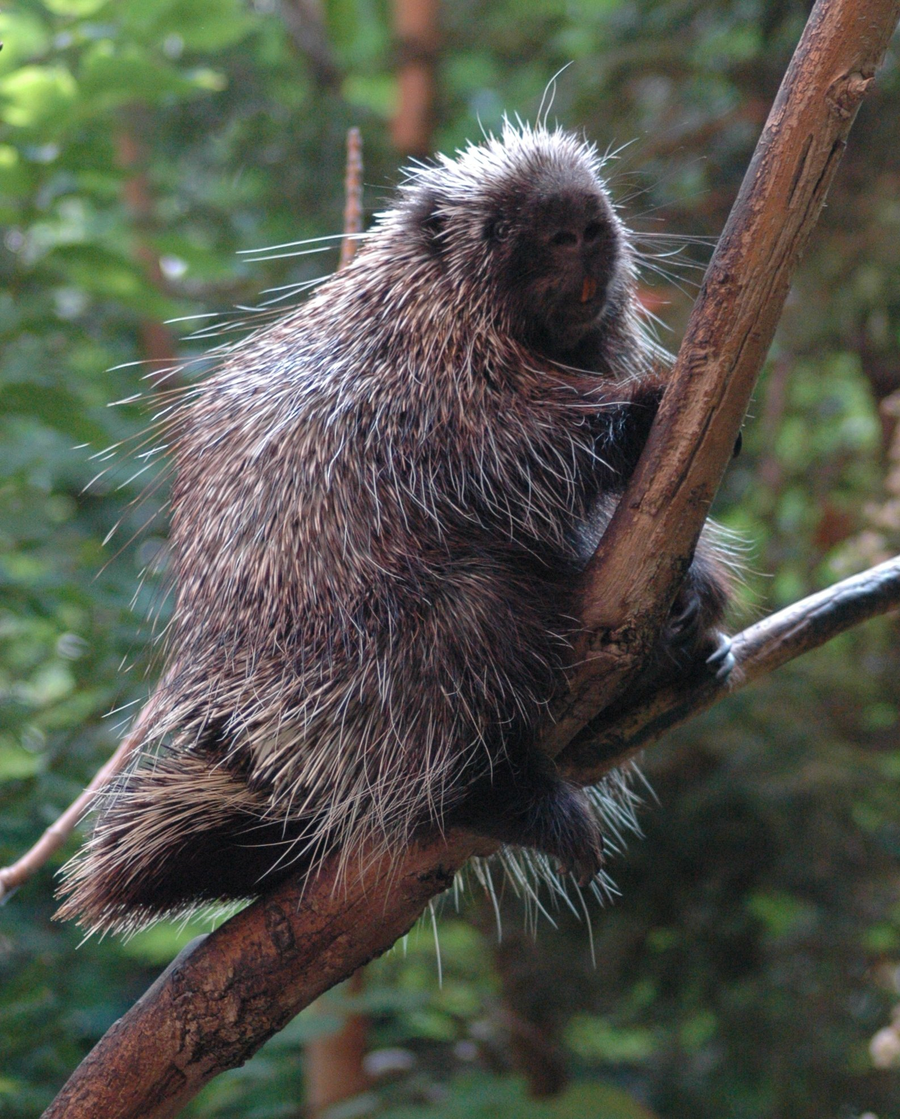
The North American porcupine (Erethizon dorsatum) is a mammal of the family Erethizontidae, in the order Rodentia.
Quick answer
The North American porcupine is a slow, nearsighted rodent armed with roughly 30,000 barbed quills covering its back and tail. It climbs trees to eat bark and leaves, defends by backing into predators, and lives across forests and tundra from Alaska to Mexico.
Top questions about the North American Porcupine
North American Porcupine facts at a glance
- Weight 9 kg
- Length 80 cm
- Top speed 3 km/h
- Lifespan 18 years
| Scientific name | Erethizon dorsatum |
|---|---|
| Diet | Herbivore — tree bark, leaves, buds, and green plants |
| Habitat | Forests, shrublands, and tundra across North America |
| Lifespan | 15–18 years in the wild |
| Weight | 5–14 kg (11–31 lb) |
| Top speed | Up to 3 km/h (2 mph) on ground; agile in trees |
| Conservation status | Least Concern (IUCN) |
| Kingdom | Animalia |
|---|---|
| Phylum | Chordata |
| Class | Mammalia |
| Order | Rodentia |
| Family | Erethizontidae |
| Genus | Erethizon |
Where it lives
The north american porcupine (Erethizon dorsatum) is native to Forests, shrublands, and tundra from Alaska and Canada through the western and northeastern United States to northern Mexico. — recorded across North America in this guide’s range summary.
For occurrence records, see GBIF species search and sources below.
How big is a north american porcupine?
An adult north american porcupine measures 80 cm long — about 46% of the height of an average adult person (1.73 m) — and weighs around 9.0 kg, about 13% of an average adult’s body weight (70 kg).
Length vs an average adult’s height (to scale)
What is a group of north american porcupines called?
Group name (collective noun)
A group of North American Porcupines is called a prickle.
Baby name
A baby North American Porcupine is called a porcupette.
Explore more animal collective nouns and baby animal names .
Quill defence
Quills are modified hairs with barbed tips that embed and migrate in attackers — painful and difficult to remove. Porcupines cannot shoot quills; predators must contact the raised tail. Fishers are skilled porcupine hunters, attacking the unquilled face.
Arboreal herbivore
Strong claws and rough soles let porcupines spend days in trees eating inner bark, especially in winter. Their salt craving draws them to road salt, tool handles, and plywood glue — sometimes bringing them near human structures.
Slow reproduction
Females bear a single precocial young after seven months gestation — long for a rodent. Baby porcupines ('porcupettes') have soft quills that harden within hours. Adults are solitary except during breeding.
Forest role and conflict
Porcupines girdle trees, sometimes damaging timber operations, but also create habitat for other species through bark stripping. Least Concern globally, they remain common across Canada and the western United States.
Dig deeper into the North American Porcupine
- How Long Do North American Porcupines Live?
North American Porcupine lifespan is typically 15–18 years in the wild. What shortens or extends life, life stages, and status (Least Concern).
- Porcupine Arboreal Herbivore
The North American porcupine is a slow, nearsighted rodent armed with roughly 30,000 barbed quills covering its back and tail.
- Porcupine Quill Defence
The North American porcupine is a slow, nearsighted rodent armed with roughly 30,000 barbed quills covering its back and tail.
- What Do North American Porcupines Eat?
What North American porcupines eat: Herbivore — tree bark, leaves, buds, and green plants, foraging style, and seasonal shifts in Forests, shrublands, and tundra across North America.
- Where Do North American Porcupines Live?
Where North American porcupines live: Forests, shrublands, and tundra across North America, native range cues, and human overlap. Status Least Concern.
Explore the North American Porcupine
Close relatives
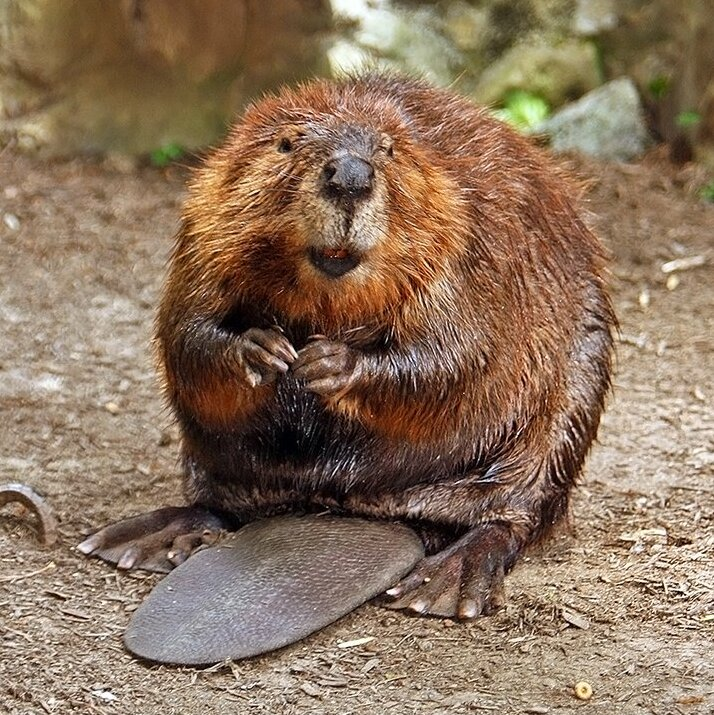
- North American Beaver Same order
- Hamster Same order
- Guinea Pig Same order
- Chinchilla Same order
Range & geography
Did you know? North American Porcupine facts
- The North American porcupine is a slow, nearsighted rodent armed with roughly 30,000 barbed quills covering its back and tail.
- No — quills detach when touched. The porcupine swings its tail at predators, and barbed tips embed on contact.
- Fishers are the main specialist predators, attacking the face where quills are sparse. Cougars, wolves, and bobcats occasionally succeed.
- Yes — among the largest rodents in North America, in the family Erethizontidae, separate from Old World porcupines.
- To feed on bark, leaves, and buds — especially in winter when ground forage is scarce.
- Conservation: Least Concern (IUCN).
Diet & feeding
North American Porcupine feeds primarily as a herbivore — tree bark, leaves, buds, and green plants. Strong claws and rough soles let porcupines spend days in trees eating inner bark, especially in winter. Their salt craving draws them to road salt, tool handles, and plywood glue — sometimes bringing them near human st
Adaptations
- Quills are modified hairs with barbed tips that embed and migrate in attackers — painful and difficult to remove. Porcupines cannot shoot quills; predators must contact the raised tail. Fishers are skilled porcupine hunters, attacking the unquilled face.
- Strong claws and rough soles let porcupines spend days in trees eating inner bark, especially in winter. Their salt craving draws them to road salt, tool handles, and plywood glue — sometimes bringing them near human structures.
Behaviour & ecology
- Quills are modified hairs with barbed tips that embed and migrate in attackers — painful and difficult to remove. Porcupines cannot shoot quills; predators must contact the raised tail. Fishers are skilled porcupine hunters, attacking the unquilled face.
- Strong claws and rough soles let porcupines spend days in trees eating inner bark, especially in winter. Their salt craving draws them to road salt, tool handles, and plywood glue — sometimes bringing them near human structures.
- Females bear a single precocial young after seven months gestation — long for a rodent. Baby porcupines ('porcupettes') have soft quills that harden within hours. Adults are solitary except during breeding.
Communication
- North American Porcupine uses scent, posture, and vocal signals to mark territory and coordinate social behaviour.
- Communication intensity often peaks during breeding seasons and territorial disputes.
Habitat & range
Forests, shrublands, and tundra across North America
Ecological role
North American Porcupine shapes vegetation through grazing or browsing and serves as prey for larger predators where ranges overlap.
Conservation status of the North American Porcupine
The north american porcupine (Erethizon dorsatum) is listed as Least Concern on the IUCN Red List. Least Concern (LC) is the IUCN's lowest-risk category, assigned to widespread, abundant species that have been evaluated and found not to be threatened. It does not mean a species faces no pressures — only that it is not currently at risk of extinction.
The north american porcupine (Erethizon dorsatum) is assessed on the IUCN Red List. Look up on the IUCN Red List .
Frequently asked questions about the North American Porcupine
Can porcupines shoot quills?
No — quills detach when touched. The porcupine swings its tail at predators, and barbed tips embed on contact.
What eats porcupines?
Fishers are the main specialist predators, attacking the face where quills are sparse. Cougars, wolves, and bobcats occasionally succeed.
Are porcupines rodents?
Yes — among the largest rodents in North America, in the family Erethizontidae, separate from Old World porcupines.
Why do porcupines climb trees?
To feed on bark, leaves, and buds — especially in winter when ground forage is scarce.
Are porcupines dangerous to dogs?
Very — curious dogs often receive quills in the face and mouth. Veterinary removal is usually required; quills do not dissolve.
What is a group of north american porcupines called?
A group of North American Porcupines is called a prickle.
What is a baby north american porcupine called?
A baby North American Porcupine is called a porcupette.
Sources & references
This guide is compiled and reviewed against established zoological and conservation references. Key sources for the North American Porcupine:
-
IUCN Red List of Threatened Species
Conservation status (Least Concern) reflects the IUCN Red List category for Erethizon dorsatum.
-
iNaturalist — observations & photos
Search citizen-science observations and community IDs for Erethizon dorsatum. Useful for range checks and recent sightings — not a substitute for formal Red List status.
-
GBIF — occurrence data
Global Biodiversity Information Facility species search for Erethizon dorsatum. Explore published occurrence records used in range research.
- IUCN Red List — Erethizon dorsatum.
Conservation status (Least Concern) and population trends.
- Animal Diversity Web — Erethizon dorsatum. University of Michigan Museum of Zoology.
Life history, morphology, and range.
-
Global Animal Guide editorial standards
How we research, source, review, and update every guide for accuracy.