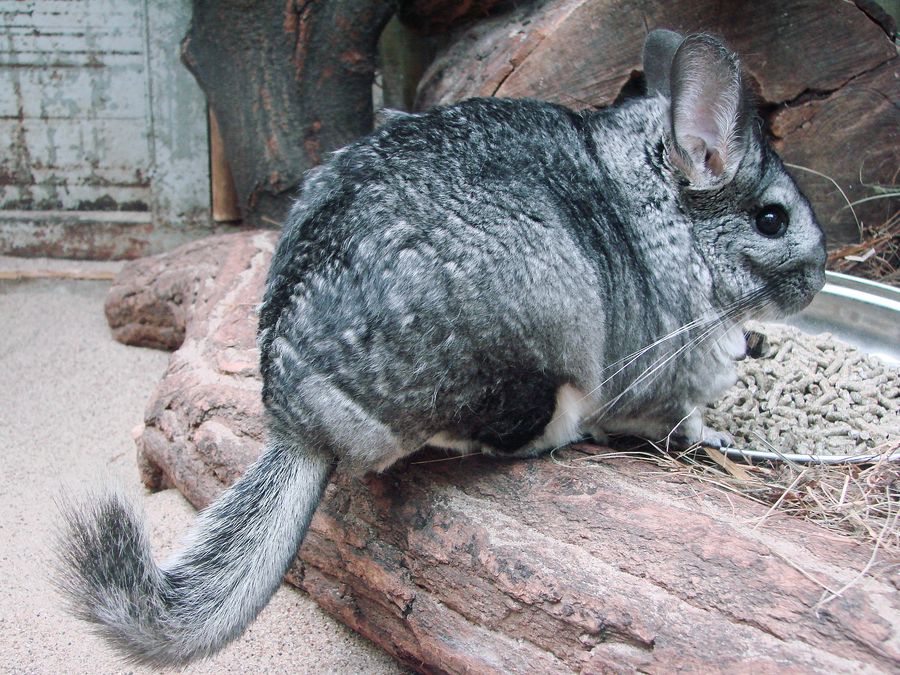
The chinchilla (Chinchilla lanigera) is a mammal of the family Chinchillidae, in the order Rodentia.
Quick answer
Chinchillas are small rodents from the high Andes, famed for the densest fur of any land mammal — up to 80 hairs per follicle. Wild populations are endangered from historic over-trapping; domestic chinchillas are popular pets that need dust baths, cool dry housing, and gentle handling.
Top questions about the Chinchilla
Chinchilla facts at a glance
- Weight 500 g
- Length 30 cm
- Top speed 15 km/h
- Lifespan 15 years
| Scientific name | Chinchilla lanigera |
|---|---|
| Diet | Herbivore — hay, chinchilla pellets, and limited treats |
| Habitat | High-altitude rocky slopes of the Andes; domestic worldwide |
| Lifespan | 10–15 years in captivity (shorter in the wild) |
| Weight | 400–600 g (14–21 oz) |
| Top speed | Agile leaper; can jump 1.8 m vertically |
| Conservation status | Endangered (IUCN) |
| Kingdom | Animalia |
|---|---|
| Phylum | Chordata |
| Class | Mammalia |
| Order | Rodentia |
| Family | Chinchillidae |
| Genus | Chinchilla |
Where it lives
The chinchilla (Chinchilla lanigera) is native to High-altitude rocky slopes of the Andes in Chile; wild populations are fragmented and Endangered, while pets come from captive breeding. — recorded across South America in this guide’s range summary.
For occurrence records, see GBIF species search and sources below.
How big is a chinchilla?
An adult chinchilla measures 30 cm long — about 17% of the height of an average adult person (1.73 m) — and weighs around 500 g, about 1% of an average adult’s body weight (70 kg).
Length vs an average adult’s height (to scale)
What is a group of chinchillas called?
Group name (collective noun)
A group of Chinchillas is called a herd.
Baby name
A baby Chinchilla is called a kit.
Explore more animal collective nouns and baby animal names .
Extraordinary fur
Chinchilla fur is so dense that fleas and parasites struggle to penetrate it. Native people and later fur traders valued pelts so highly that wild chinchillas were trapped nearly to extinction by the early 1900s. Today international trade in wild chinchilla fur is restricted.
Dust baths and grooming
Instead of water, chinchillas clean themselves in fine volcanic dust that absorbs oil and dirt from the coat. Pet chinchillas need regular dust baths and must never be bathed in water, which can cause fungal problems in their dense fur.
Wild conservation
Chinchilla lanigera is Endangered in the wild, surviving in fragmented populations in Chile. Habitat loss, drought, and historic trapping reduced numbers to a few thousand. Captive breeding supplies the pet trade and conservation programmes.
Pet care essentials
Chinchillas need spacious multi-level cages, temperatures below 25 °C, unlimited hay, and companionship or daily interaction. They are crepuscular, chew constantly to wear teeth, and can shed fur when grabbed — a defence called fur slip.
Dig deeper into the Chinchilla
- Are Chinchillas Endangered?
Are chinchillas endangered? Status Endangered, main threats, and what protection means.
- Chinchilla: Key Facts
Chinchillas are small rodents from the high Andes, famed for the densest fur of any land mammal — up to 80 hairs per follicle.
- How Long Do Chinchillas Live?
Chinchilla lifespan is typically 10–15 years in captivity (shorter in the wild). What shortens or extends life, life stages, and status (Endangered).
- What Do Chinchillas Eat?
What chinchillas eat: Herbivore — hay, chinchilla pellets, and limited treats, foraging style, and seasonal shifts in High-altitude rocky slopes of the Andes; domestic worldwide.
- Where Do Chinchillas Live?
Where chinchillas live: High-altitude rocky slopes of the Andes; domestic worldwide, native range cues, and human overlap. Status Endangered.
Explore the Chinchilla
Close relatives
- North American Beaver Same order
- Hamster Same order
- Guinea Pig Same order
- Brown Lemming Same order
Collections
Range & geography
Did you know? Chinchilla facts
- Chinchillas are small rodents from the high Andes, famed for the densest fur of any land mammal — up to 80 hairs per follicle.
- Wild long-tailed chinchillas are Endangered. The pet trade relies on captive-bred animals, not wild trapping.
- Fine dust removes oil and moisture from their exceptionally dense fur without the matting risk of water bathing.
- Pet chinchillas often live 10–15 years, sometimes longer with excellent care — much longer than hamsters or gerbils.
- They are social and do best in same-sex pairs or groups if introduced carefully, or with daily human interaction if kept singly.
- Conservation: Endangered (IUCN).
Diet & feeding
Chinchilla feeds primarily as a herbivore — hay, chinchilla pellets, and limited treats.
Adaptations
- Chinchilla fur is so dense that fleas and parasites struggle to penetrate it. Native people and later fur traders valued pelts so highly that wild chinchillas were trapped nearly to extinction by the early 1900s. Today international trade in wild chinchilla fur is restricted.
- Instead of water, chinchillas clean themselves in fine volcanic dust that absorbs oil and dirt from the coat. Pet chinchillas need regular dust baths and must never be bathed in water, which can cause fungal problems in their dense fur.
Behaviour & ecology
- Chinchilla fur is so dense that fleas and parasites struggle to penetrate it. Native people and later fur traders valued pelts so highly that wild chinchillas were trapped nearly to extinction by the early 1900s. Today international trade in wild chinchilla fur is restricted.
- Instead of water, chinchillas clean themselves in fine volcanic dust that absorbs oil and dirt from the coat. Pet chinchillas need regular dust baths and must never be bathed in water, which can cause fungal problems in their dense fur.
- Chinchilla lanigera is Endangered in the wild, surviving in fragmented populations in Chile. Habitat loss, drought, and historic trapping reduced numbers to a few thousand. Captive breeding supplies the pet trade and conservation programmes.
Communication
- Chinchilla uses scent, posture, and vocal signals to mark territory and coordinate social behaviour.
- Communication intensity often peaks during breeding seasons and territorial disputes.
Habitat & range
High-altitude rocky slopes of the Andes; domestic worldwide
Ecological role
Chinchilla shapes vegetation through grazing or browsing and serves as prey for larger predators where ranges overlap.
Conservation status of the Chinchilla
The chinchilla (Chinchilla lanigera) is listed as Endangered on the IUCN Red List. Endangered (EN) means a species faces a very high risk of extinction in the wild. Populations are usually declining sharply due to habitat loss, hunting, disease, or climate pressure. It sits one level below Critically Endangered on the IUCN Red List.
The chinchilla (Chinchilla lanigera) is assessed on the IUCN Red List. Look up on the IUCN Red List .
Frequently asked questions about the Chinchilla
Are chinchillas endangered?
Wild long-tailed chinchillas are Endangered. The pet trade relies on captive-bred animals, not wild trapping.
Why do chinchillas take dust baths?
Fine dust removes oil and moisture from their exceptionally dense fur without the matting risk of water bathing.
How long do chinchillas live?
Pet chinchillas often live 10–15 years, sometimes longer with excellent care — much longer than hamsters or gerbils.
Can chinchillas live alone?
They are social and do best in same-sex pairs or groups if introduced carefully, or with daily human interaction if kept singly.
Are chinchillas good pets?
They suit owners who can provide cool, quiet housing, dust baths, and gentle handling. They are not ideal for young children because they are fragile and easily stressed.
What is a group of chinchillas called?
A group of Chinchillas is called a herd.
What is a baby chinchilla called?
A baby Chinchilla is called a kit.
Sources & references
This guide is compiled and reviewed against established zoological and conservation references. Key sources for the Chinchilla:
-
IUCN Red List of Threatened Species
Conservation status (Endangered) reflects the IUCN Red List category for Chinchilla lanigera.
-
iNaturalist — observations & photos
Search citizen-science observations and community IDs for Chinchilla lanigera. Useful for range checks and recent sightings — not a substitute for formal Red List status.
-
GBIF — occurrence data
Global Biodiversity Information Facility species search for Chinchilla lanigera. Explore published occurrence records used in range research.
- IUCN Red List — Chinchilla lanigera.
Conservation status (Endangered) and population trends.
- Animal Diversity Web — Chinchilla lanigera. University of Michigan Museum of Zoology.
Life history, morphology, and range.
-
Global Animal Guide editorial standards
How we research, source, review, and update every guide for accuracy.