Image sourcing: see credits & licences
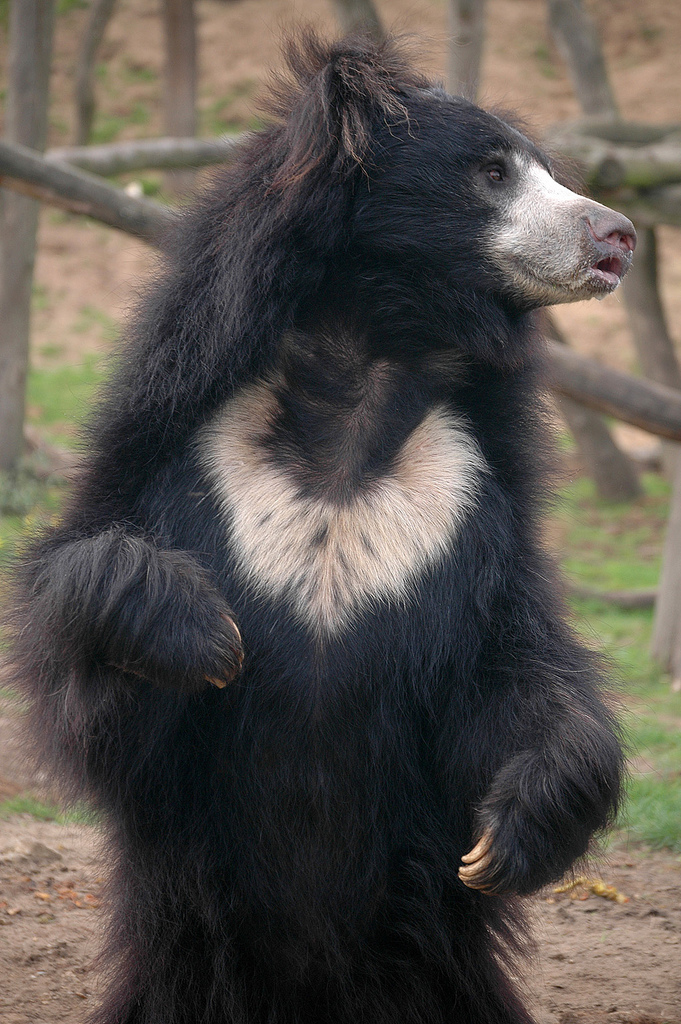
The sloth bear (Melursus ursinus) is a mammal of the bear family, Ursidae, in the order Carnivora.
Quick answer
The sloth bear is a shaggy, long-snouted bear of the Indian subcontinent that feeds mainly on termites and ants, sucking them up with a gap-toothed jaw and mobile lips. Adults weigh 55–145 kg (120–320 lb), carry cubs on their backs, and are listed Vulnerable from habitat loss and conflict.
Top questions about the Sloth Bear
Also available in Español (Oso perezoso)
Sloth Bear facts at a glance
- Weight 90 kg
- Length 1.7 m
- Top speed 40 km/h
- Lifespan 25 years
| Scientific name | Melursus ursinus |
|---|---|
| Diet | Omnivore — termites, ants, fruit, and honey |
| Habitat | Dry and moist forests, grasslands, and scrub of the Indian subcontinent |
| Lifespan | 20–25 years in the wild |
| Weight | 55–145 kg (120–320 lb); males heavier |
| Top speed | Up to 40 km/h (25 mph) in short bursts |
| Conservation status | Vulnerable (IUCN) |
| Kingdom | Animalia |
|---|---|
| Phylum | Chordata |
| Class | Mammalia |
| Order | Carnivora |
| Family | Ursidae |
| Genus | Melursus |
Where it lives
The sloth bear (Melursus ursinus) is native to Dry and moist forests, grasslands, and scrub of India, Sri Lanka, Nepal, and Bhutan, with strongholds in central and western India. — recorded across Asia in this guide’s range summary.
For occurrence records, see GBIF species search and sources below.
How big is a sloth bear?
An adult sloth bear measures 1.7 m long — about 98% of the height of an average adult person (1.73 m) — and weighs around 90 kg, about 1.3× an average adult’s body weight (70 kg).
Length vs an average adult’s height (to scale)
What is a group of sloth bears called?
Group name (collective noun)
A group of Sloth Bears is called a sleuth.
Baby name
A baby Sloth Bear is called a cub.
Explore more animal collective nouns and baby animal names .
Termite specialist
Sloth bears lack upper incisors, creating a gap that lets them suck insects efficiently. They rip open termite mounds with long claws and blow away dirt before vacuuming up colonies. During fruiting season they also eat figs, mangoes, and flowers.
Cub riding and family life
Sloth bear mothers are known for carrying cubs on their backs for several months — unusual among bears. Cubs are born in an underground den and emerge to ride the mother through territory where tigers and leopards pose threats.
Nocturnal forager
Sloth bears are largely nocturnal in areas with human activity, foraging alone except when females travel with cubs. They communicate with snorts, screams, and lip-popping sounds when feeding on insects across forests from Sri Lanka to the Himalayan foothills.
Conservation and conflict
Habitat fragmentation and retaliation for crop raiding threaten sloth bears across India, Nepal, and Sri Lanka. 'Dancing bear' traditions that exploited cubs have been largely banned, but road kills, poaching, and forest loss continue to reduce populations.
Dig deeper into the Sloth Bear
- Are Sloth Bears Endangered?
Are sloth bears endangered? Status Vulnerable, main threats, and what protection means.
- How Long Do Sloth Bears Live?
Sloth Bear lifespan is typically 20–25 years in the wild. What shortens or extends life, life stages, and status (Vulnerable).
- Sloth Bear: Key Facts
The sloth bear is a shaggy, long-snouted bear of the Indian subcontinent that feeds mainly on termites and ants, sucking them up with a gap-toothed jaw…
- What Do Sloth Bears Eat?
What sloth bears eat: Omnivore — termites, ants, fruit, and honey, foraging style, and seasonal shifts in Dry and moist forests, grasslands, and scrub of the Indian subcontinent.
- Where Do Sloth Bears Live?
Where sloth bears live: Dry and moist forests, grasslands, and scrub of the Indian subcontinent, native range cues, and human overlap. Status Vulnerable.
Explore the Sloth Bear
Compare
Close relatives
- Giant Panda Same family
- Brown Bear Same family
- Polar Bear Same family
- Grizzly Bear Same family
Collections
Range & geography
Did you know? Sloth Bear facts
- The sloth bear is a shaggy, long-snouted bear of the Indian subcontinent that feeds mainly on termites and ants, sucking them up with a gap-toothed jaw and mobile lips.
- Early European naturalists thought its long claws and shaggy coat resembled a sloth. It is a true bear, not related to sloths.
- Yes — mothers often carry cubs on their backs for several months, one of the few bear species known for this behaviour.
- They can be unpredictable when surprised and have injured people who stumble upon them in forests. Most attacks occur during accidental encounters, not predation.
- Mainly termites and ants, plus fruit, honey, and occasionally carrion. Their diet shifts with seasonal fruit availability.
- Conservation: Vulnerable (IUCN).
Diet & feeding
Sloth Bear feeds primarily as a omnivore — termites, ants, fruit, and honey. Sloth bears lack upper incisors, creating a gap that lets them suck insects efficiently. They rip open termite mounds with long claws and blow away dirt before vacuuming up colonies. During fruiting season they also eat figs, mangoes, and flow
Adaptations
- Sloth bears lack upper incisors, creating a gap that lets them suck insects efficiently. They rip open termite mounds with long claws and blow away dirt before vacuuming up colonies. During fruiting season they also eat figs, mangoes, and flowers.
- Sloth bear mothers are known for carrying cubs on their backs for several months — unusual among bears. Cubs are born in an underground den and emerge to ride the mother through territory where tigers and leopards pose threats.
Behaviour & ecology
- Sloth bears lack upper incisors, creating a gap that lets them suck insects efficiently. They rip open termite mounds with long claws and blow away dirt before vacuuming up colonies. During fruiting season they also eat figs, mangoes, and flowers.
- Sloth bear mothers are known for carrying cubs on their backs for several months — unusual among bears. Cubs are born in an underground den and emerge to ride the mother through territory where tigers and leopards pose threats.
- Sloth bears are largely nocturnal in areas with human activity, foraging alone except when females travel with cubs. They communicate with snorts, screams, and lip-popping sounds when feeding on insects across forests from Sri Lanka to the Himalayan foothills.
Communication
- Sloth Bear uses scent, posture, and vocal signals to mark territory and coordinate social behaviour.
- Communication intensity often peaks during breeding seasons and territorial disputes.
Habitat & range
Dry and moist forests, grasslands, and scrub of the Indian subcontinent
Ecological role
Sloth Bear plays a recognised ecological role in dry and moist forests, grasslands, and scrub of the indian subcontinent.
Conservation status of the Sloth Bear
The sloth bear (Melursus ursinus) is listed as Vulnerable on the IUCN Red List. Vulnerable (VU) means a species faces a high risk of extinction in the medium-term future. It is the lowest-risk of the three 'threatened' IUCN categories — one step below Endangered, which is itself below Critically Endangered — and is often an early warning that a population is in trouble.
The sloth bear (Melursus ursinus) is assessed on the IUCN Red List. Look up on the IUCN Red List .
Frequently asked questions about the Sloth Bear
Why is it called a sloth bear?
Early European naturalists thought its long claws and shaggy coat resembled a sloth. It is a true bear, not related to sloths.
Do sloth bears carry babies on their back?
Yes — mothers often carry cubs on their backs for several months, one of the few bear species known for this behaviour.
Are sloth bears aggressive?
They can be unpredictable when surprised and have injured people who stumble upon them in forests. Most attacks occur during accidental encounters, not predation.
What do sloth bears eat?
Mainly termites and ants, plus fruit, honey, and occasionally carrion. Their diet shifts with seasonal fruit availability.
Where do sloth bears live?
Forests and scrublands of India, Sri Lanka, Nepal, and Bhutan, with the largest numbers in protected areas of central and western India.
What is a group of sloth bears called?
A group of Sloth Bears is called a sleuth.
What is a baby sloth bear called?
A baby Sloth Bear is called a cub.
Sources & references
This guide is compiled and reviewed against established zoological and conservation references. Key sources for the Sloth Bear:
-
IUCN Red List of Threatened Species
Conservation status (Vulnerable) reflects the IUCN Red List category for Melursus ursinus.
-
iNaturalist — observations & photos
Search citizen-science observations and community IDs for Melursus ursinus. Useful for range checks and recent sightings — not a substitute for formal Red List status.
-
GBIF — occurrence data
Global Biodiversity Information Facility species search for Melursus ursinus. Explore published occurrence records used in range research.
- IUCN Red List — Melursus ursinus.
Conservation status (Vulnerable) and population trends.
- Animal Diversity Web — Melursus ursinus. University of Michigan Museum of Zoology.
Life history, morphology, and range.
- Wikipedia — Sloth Bear.
General taxonomy and overview (cross-check primary sources).
-
Global Animal Guide editorial standards
How we research, source, review, and update every guide for accuracy.