Image sourcing: see credits & licences
The sun bear (Helarctos malayanus) is a mammal of the bear family, Ursidae, in the order Carnivora.
Quick answer
The sun bear is the smallest bear species, weighing 25–65 kg (55–145 lb) with a distinctive golden chest patch and long tongue for reaching honey and insects. Found in tropical forests of Southeast Asia, it is listed Vulnerable due to deforestation and the illegal pet and bile trade.
Top questions about the Sun Bear
Also available in Español (Oso malayo)
Sun Bear facts at a glance
- Weight 45 kg
- Length 1.4 m
- Top speed 30 km/h
- Lifespan 25 years
| Scientific name | Helarctos malayanus |
|---|---|
| Diet | Omnivore — fruit, honey, insects, small vertebrates, and palm hearts |
| Habitat | Lowland and montane tropical rainforests of Southeast Asia |
| Lifespan | 20–25 years in the wild (longer in captivity) |
| Weight | 25–65 kg (55–145 lb); males larger than females |
| Top speed | Agile climber; short ground sprints to escape threats |
| Conservation status | Vulnerable (IUCN) |
| Kingdom | Animalia |
|---|---|
| Phylum | Chordata |
| Class | Mammalia |
| Order | Carnivora |
| Family | Ursidae |
| Genus | Helarctos |
Where it lives
The sun bear (Helarctos malayanus) is native to Lowland and montane tropical rainforests of Borneo, Sumatra, peninsular Malaysia, Thailand, Myanmar, Laos, Cambodia, and Vietnam. — recorded across Asia in this guide’s range summary.
For occurrence records, see GBIF species search and sources below.
How big is a sun bear?
An adult sun bear measures 1.4 m long — about 81% of the height of an average adult person (1.73 m) — and weighs around 45 kg, about 64% of an average adult’s body weight (70 kg).
Length vs an average adult’s height (to scale)
What is a group of sun bears called?
Group name (collective noun)
A group of Sun Bears is called a sleuth.
Baby name
A baby Sun Bear is called a cub.
Explore more animal collective nouns and baby animal names .
Chest patch and tree life
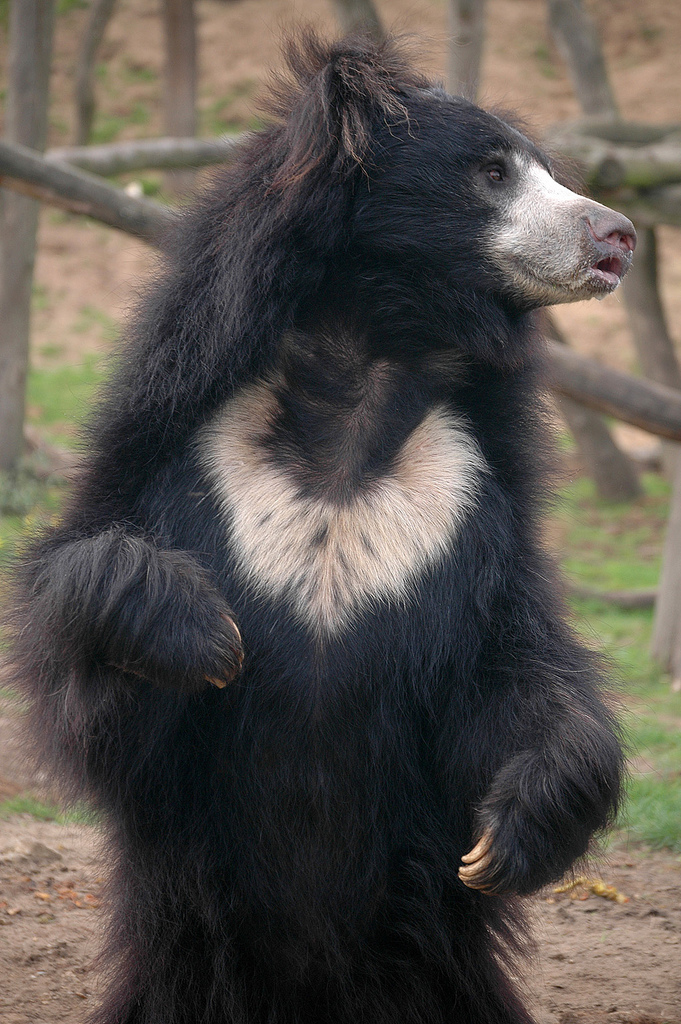
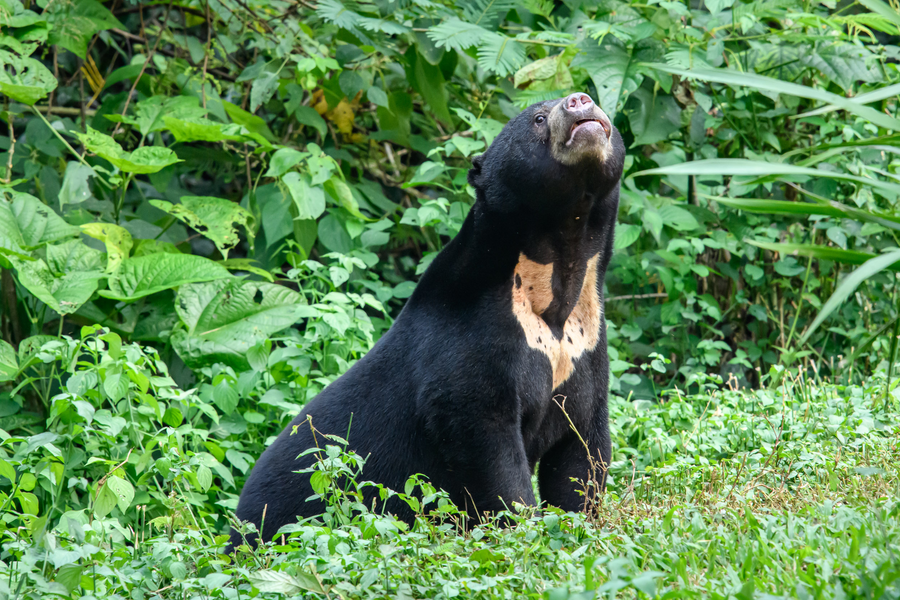
The sun bear's U- or crescent-shaped chest mark varies from pale yellow to orange and may help with individual recognition. Unlike larger bears, sun bears spend much of their time in trees, using long curved claws and bare-soled feet to climb in search of fruit, honey, and insects.
Diet and the honey bear
Sun bears are opportunistic omnivores with an exceptionally long tongue — up to 25 cm — used to extract honey, termites, and beetle larvae from nests. Fig trees and oil-palm fruit draw them to forest edges, where conflict with plantations and poaching increase.
Solitary habits and reproduction
Adults are largely solitary outside the breeding season. Females typically produce one or two cubs after a gestation of about three months. Cubs stay with the mother for up to three years, learning to climb and forage in dense canopy.
Conservation threats
Listed Vulnerable, sun bears face rapid habitat loss from logging and palm-oil expansion, plus poaching for gall bladders, paws, and the pet trade. Cubs are often taken after mothers are killed. Protected areas and anti-poaching patrols are critical across Malaysia, Indonesia, and Thailand.
Dig deeper into the Sun Bear
- Are Sun Bears Endangered?
Are sun bears endangered? Status Vulnerable, main threats, and what protection means.
- How Long Do Sun Bears Live?
Sun Bear lifespan is typically 20–25 years in the wild (longer in captivity). What shortens or extends life, life stages, and status (Vulnerable).
- Sun Bear: Key Facts
The sun bear is the smallest bear species, weighing 25–65 kg (55–145 lb) with a distinctive golden chest patch and long tongue for reaching honey and…
- What Do Sun Bears Eat?
What sun bears eat: Omnivore — fruit, honey, insects, small vertebrates, and palm hearts, foraging style, and seasonal shifts in Lowland and montane tropical rainforests of Southeast Asia.
- Where Do Sun Bears Live?
Where sun bears live: Lowland and montane tropical rainforests of Southeast Asia, native range cues, and human overlap. Status Vulnerable.
Explore the Sun Bear
Close relatives
- Giant Panda Same family
- Brown Bear Same family
- Polar Bear Same family
- Grizzly Bear Same family
Collections
Did you know? Sun Bear facts
- The sun bear is the smallest bear species, weighing 25–65 kg (55–145 lb) with a distinctive golden chest patch and long tongue for reaching honey and insects.
- Sun bears are the smallest bear species — adults typically weigh 25–65 kg, about the size of a large dog, with males larger than females.
- The name comes from the pale golden or orange patch on the chest, said to resemble the rising or setting sun.
- They generally avoid people but have strong claws and can defend themselves if cornered. Like all bears, mothers with cubs are more defensive.
- Tropical rainforests of Southeast Asia, including Borneo, Sumatra, peninsular Malaysia, Thailand, Myanmar, Laos, Cambodia, and Vietnam.
- Conservation: Vulnerable (IUCN).
Diet & feeding
Sun Bear feeds primarily as a omnivore — fruit, honey, insects, small vertebrates, and palm hearts.
Adaptations
- The sun bear's U- or crescent-shaped chest mark varies from pale yellow to orange and may help with individual recognition. Unlike larger bears, sun bears spend much of their time in trees, using long curved claws and bare-soled feet to climb in search of fruit, honey, and insects.
- Sun bears are opportunistic omnivores with an exceptionally long tongue — up to 25 cm — used to extract honey, termites, and beetle larvae from nests. Fig trees and oil-palm fruit draw them to forest edges, where conflict with plantations and poaching increase.
Behaviour & ecology
- The sun bear's U- or crescent-shaped chest mark varies from pale yellow to orange and may help with individual recognition. Unlike larger bears, sun bears spend much of their time in trees, using long curved claws and bare-soled feet to climb in search of fruit, honey, and insects.
- Sun bears are opportunistic omnivores with an exceptionally long tongue — up to 25 cm — used to extract honey, termites, and beetle larvae from nests. Fig trees and oil-palm fruit draw them to forest edges, where conflict with plantations and poaching increase.
- Adults are largely solitary outside the breeding season. Females typically produce one or two cubs after a gestation of about three months. Cubs stay with the mother for up to three years, learning to climb and forage in dense canopy.
Communication
- Sun Bear uses scent, posture, and vocal signals to mark territory and coordinate social behaviour.
- Communication intensity often peaks during breeding seasons and territorial disputes.
Habitat & range
Lowland and montane tropical rainforests of Southeast Asia
Ecological role
Sun Bear plays a recognised ecological role in lowland and montane tropical rainforests of southeast asia.
Conservation status of the Sun Bear
The sun bear (Helarctos malayanus) is listed as Vulnerable on the IUCN Red List. Vulnerable (VU) means a species faces a high risk of extinction in the medium-term future. It is the lowest-risk of the three 'threatened' IUCN categories — one step below Endangered, which is itself below Critically Endangered — and is often an early warning that a population is in trouble.
The sun bear (Helarctos malayanus) is assessed on the IUCN Red List. Look up on the IUCN Red List .
Frequently asked questions about the Sun Bear
How big is a sun bear?
Sun bears are the smallest bear species — adults typically weigh 25–65 kg, about the size of a large dog, with males larger than females.
Why is it called a sun bear?
The name comes from the pale golden or orange patch on the chest, said to resemble the rising or setting sun.
Are sun bears dangerous?
They generally avoid people but have strong claws and can defend themselves if cornered. Like all bears, mothers with cubs are more defensive.
Where do sun bears live?
Tropical rainforests of Southeast Asia, including Borneo, Sumatra, peninsular Malaysia, Thailand, Myanmar, Laos, Cambodia, and Vietnam.
Are sun bears endangered?
They are listed Vulnerable on the IUCN Red List, with populations declining from habitat loss and illegal trade rather than natural causes.
What is a group of sun bears called?
A group of Sun Bears is called a sleuth.
What is a baby sun bear called?
A baby Sun Bear is called a cub.
Sources & references
This guide is compiled and reviewed against established zoological and conservation references. Key sources for the Sun Bear:
-
IUCN Red List of Threatened Species
Conservation status (Vulnerable) reflects the IUCN Red List category for Helarctos malayanus.
-
iNaturalist — observations & photos
Search citizen-science observations and community IDs for Helarctos malayanus. Useful for range checks and recent sightings — not a substitute for formal Red List status.
-
GBIF — occurrence data
Global Biodiversity Information Facility species search for Helarctos malayanus. Explore published occurrence records used in range research.
- IUCN Red List — Helarctos malayanus.
Conservation status (Vulnerable) and population trends.
- Animal Diversity Web — Helarctos malayanus. University of Michigan Museum of Zoology.
Life history, morphology, and range.
- Wikipedia — Sun Bear.
General taxonomy and overview (cross-check primary sources).
-
Global Animal Guide editorial standards
How we research, source, review, and update every guide for accuracy.