What Is the Most Dangerous Animal to Humans?
Mosquitoes kill more people than any other animal by spreading malaria and other diseases. Among large wildlife, hippos, crocodiles, and venomous snakes cause the most direct fatalities.
Global Animal Guide · June 28, 2026
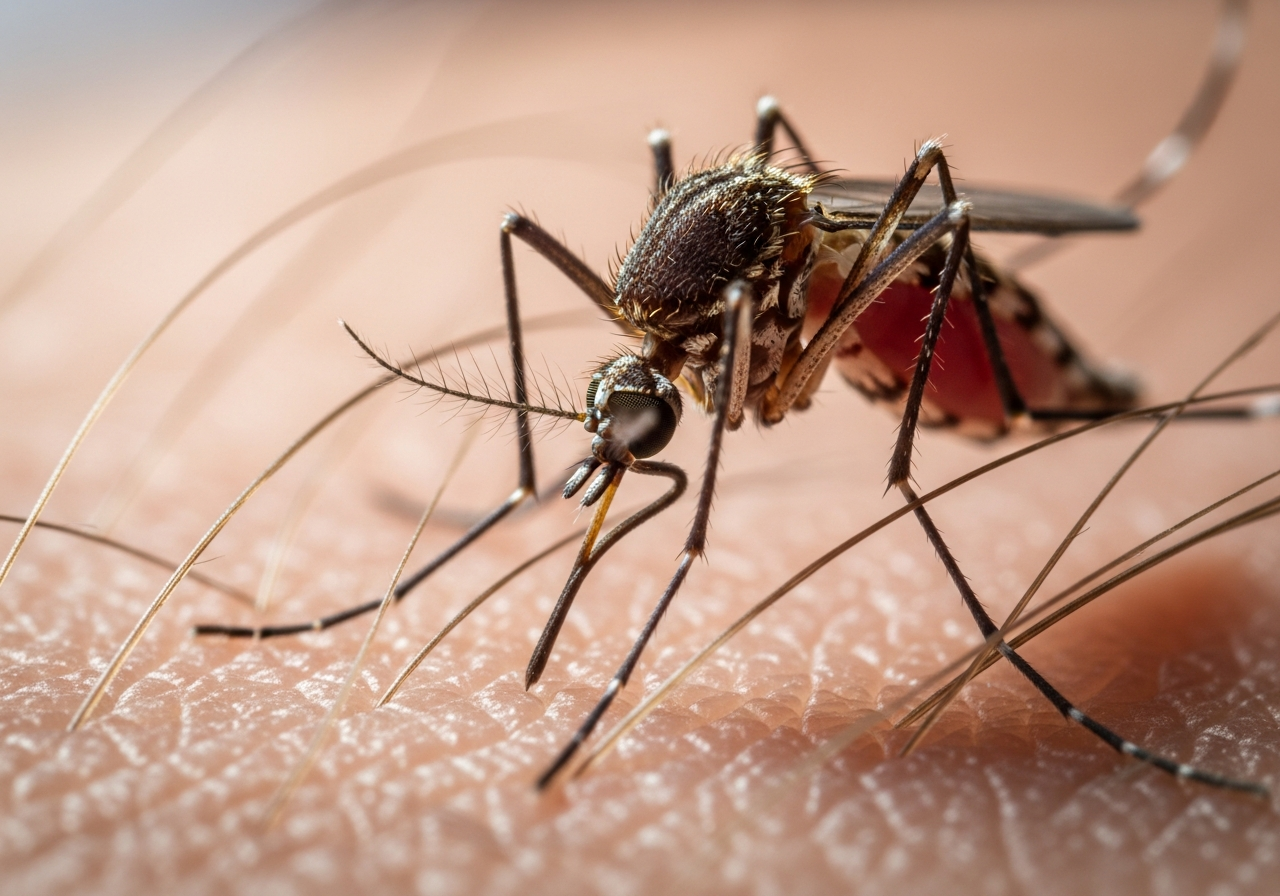
Image sourcing: see credits & licences
Quick answer
Mosquitoes are the deadliest animals to humans through disease transmission. Among large animals, hippos, crocodiles, and venomous snakes cause the most direct fatalities each year.
Last updated: June 2026 — figures reflect widely cited scientific estimates.
The answer is an insect that weighs almost nothing
The deadliest animal on Earth is the mosquito, and it is not close. Mosquitoes kill more people every year than every large predator combined, and they do it without any of the equipment we associate with danger — no venom potent enough to matter, no claws, no size. A mosquito’s bite is a rounding error in itself. What makes it lethal is what travels inside it.
Malaria alone accounts for several hundred thousand deaths a year, the large majority of them children under five in sub-Saharan Africa. Add dengue, yellow fever, Zika, chikungunya, West Nile virus and lymphatic filariasis, and the mosquito’s annual toll runs to a scale no other animal approaches.
This is the first thing that makes “most dangerous animal” a slippery question. The honest answer depends entirely on whether you count the animal that kills you or the animal that merely delivers the thing that kills you.
Vector, not predator: why the mosquito wins
A mosquito is a syringe with wings. Only females bite, and they do it not for food but for protein to develop eggs — both sexes live on nectar. To feed, she injects saliva containing anticoagulants and immune-suppressing compounds, and that saliva is the delivery route for whatever pathogen she is carrying.
The pathogen is the actual killer. Plasmodium, the malaria parasite, uses the mosquito as a mobile nursery, completing part of its life cycle inside her before migrating to her salivary glands. The mosquito is transport, not toxin — which is why some argue the parasite deserves the title, and why others cut the argument off by pointing out that humans, through violence, would top any list that counts intent.
Mosquitoes are also not unique in this role, merely the most efficient. Ticks spread Lyme disease and encephalitis; fleas carried the plague that reshaped medieval Europe; tsetse flies transmit sleeping sickness; freshwater snails host the schistosomiasis parasite; rats sustain the reservoirs many of these diseases depend on. Small animals with vast populations and intimate contact with humans are simply better at killing us than anything with teeth.
The deadliest large animals
Strip out disease and the ranking changes completely, and it still surprises people. The hippopotamus is widely regarded as Africa’s most dangerous large animal — a several-tonne herbivore that is territorial in water, aggressive when a route to deep water is blocked, faster on land than it looks, and equipped with enormous canines it uses in combat rather than feeding. Precise annual death tolls are poorly documented and the commonly repeated figures should be treated with caution, but hippos routinely kill more people than lions or leopards.
Crocodilians are the other serious contender. The nile crocodile and the saltwater crocodile are genuine ambush predators that do, unlike almost every other large animal, sometimes hunt humans deliberately. Attacks concentrate where people must enter the water daily to wash, fish or collect water — the risk is a function of overlap, not of the animal’s temperament.
Snakebite is the quietly enormous one. The World Health Organization estimates snakebite envenoming kills roughly 81,000 to 138,000 people a year, with several times that number left permanently disabled by amputation or tissue loss. It is classified as a neglected tropical disease, and the deaths cluster among agricultural workers in rural South Asia and Africa with poor access to antivenom.
Reputation versus arithmetic
Public fear tracks drama, not risk. Great white sharks kill a handful of people worldwide in a typical year, and most shark bites are exploratory rather than predatory — humans are neither the right shape nor the right fat content to be worth eating. Wolves are close to statistically irrelevant. Tarantulas have never been the danger films implied.
Meanwhile the genuinely dangerous animals are mostly familiar. Dogs kill tens of thousands of people annually — almost entirely via rabies, another vector story. In parts of Asia, Asian elephants kill hundreds of people each year in crop-raiding conflicts. Bee, wasp and hornet stings kill people through anaphylaxis in countries where no large predator exists at all. Deer cause deaths through vehicle collisions. Nothing about a white-tailed deer is dangerous; the road is.
Why “dangerous” needs defining before it can be answered
Every credible version of this question forces a choice between different measures, and the champion changes with each:
- Total human deaths per year — the mosquito, overwhelmingly.
- Deaths caused directly, without a pathogen — venomous snakes, then hippos and crocodiles.
- Danger per encounter — animals like the box jellyfish or the inland taipan, whose toxins are extraordinary but which almost never meet anyone.
- Willingness to attack a human as prey — a very short list: large crocodilians, and rare individual lions, tigers and polar bears.
Toxicity is the most misused of these. The inland taipan has the most toxic venom of any snake by laboratory measure and has essentially never killed anyone, because it lives in remote country and is not aggressive. Lethality in the real world is toxicity multiplied by opportunity, and opportunity usually dominates.
The pattern behind the numbers
Almost every top entry is really a story about proximity and infrastructure rather than ferocity. Mosquito deaths concentrate where bed nets, drainage and treatment are scarce. Snakebite deaths concentrate where antivenom and transport are absent — the same bite is survivable in one country and fatal in another. Crocodile and hippo deaths concentrate where people have no alternative to the river.
That has an uncomfortable corollary: the deadliest animals are largely defeated by money and logistics, not by killing the animals. It also cuts against the reflex to eradicate. Mosquitoes are pollinators and a food source for bats, dragonflies, swifts and countless fish. Hippos shape river channels and fertilise aquatic food webs. Crocodilians are apex predators whose removal restructures wetlands. Several of the animals on this list are declining, and some — including many vipers and crocodilians — are threatened. Being dangerous to humans has never made a species expendable, or safe.
Sources
Related reading: Animal profiles · Fastest animals on Earth · Support wildlife protection
Frequently asked questions
What Is the Most Dangerous Animal to Humans
Mosquitoes are the deadliest animals to humans through disease transmission. Among large animals, hippos, crocodiles, and venomous snakes cause the most direct fatalities each year.
How do scientists measure this record?
Records come from peer-reviewed studies, GPS tracking, high-speed video, toxicology assays, and acoustic meters — field conditions always add variation.
Can the record holder change?
Yes — new measurements, species reclassification, or better technology can update rankings. Always check whether speed, venom, or size is measured differently.