Quick answer
A chipmunk can reach about 33 km/h (21 mph) in short bursts. Terrain, motivation, and body condition (70–140 g (2.5–5 oz)) all change the number you would measure.
Key takeaway
A chipmunk can reach about 33 km/h (21 mph) in short bursts. Terrain, motivation, and body condition (70–140 g (2.5–5 oz)) all change the number you would measure.
Chipmunk top speed
Published estimates put chipmunk speed near 33 km/h (21 mph). These are usually peak sprint figures, not cruising speeds held for long distances across Deciduous forest, woodland edges, suburbs.
Sprint versus endurance
Most animals accelerate hard for capture or escape, then recover. Open ground favours higher recorded speeds; dense cover favours agility over raw pace.
Anatomy behind chipmunk speed
Limb proportions, muscle fibre mix, and mass (70–140 g (2.5–5 oz)) shape acceleration and top end. Heavier individuals may hit hard but tire sooner.
Reading speed claims
Methods differ (radar, filming, anecdote). Prefer ranges from recent field studies over viral single numbers, and never try to outrun wildlife.
Range and role
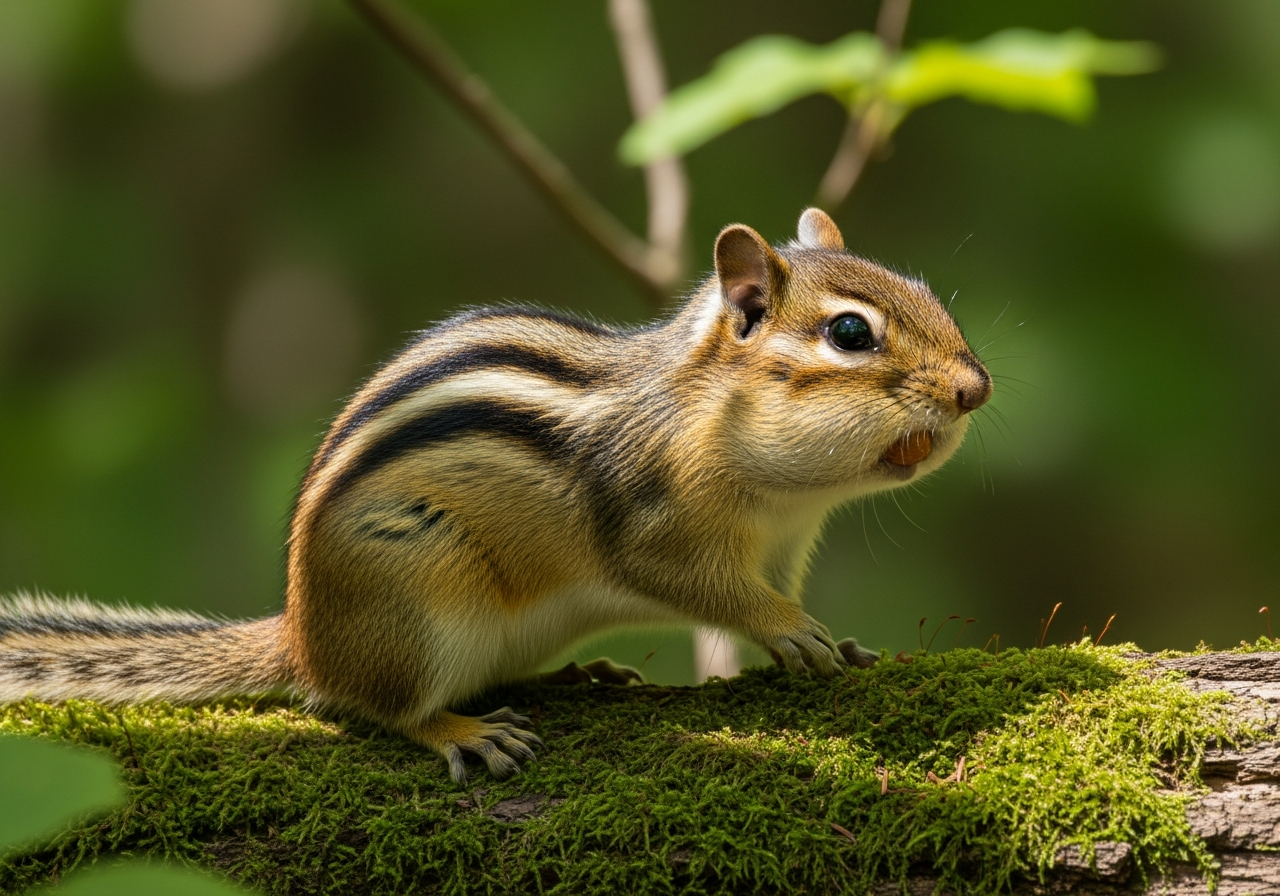
The eastern chipmunk lives across eastern North America in deciduous forests, woodland edges, parks, and suburban gardens, while many other chipmunk species live in western North America and one in Asia. By burying and forgetting some of their seed caches, chipmunks help plant new trees, making them important seed dispersers in forest ecosystems.
Cheek pouches and hoarding
A chipmunk's most useful tool is its pair of stretchy cheek pouches, which can expand to carry surprising quantities of seeds and nuts back to the burrow — a single chipmunk can stash thousands of food items over a season. Rather than building up body fat like a true hibernator, it relies on these underground larders to survive winter, waking periodically to eat from its stored supplies.
Sources
Chipmunk FAQs
How fast is a chipmunk?
A chipmunk can reach about 33 km/h (21 mph) in short bursts. Terrain, motivation, and body condition (70–140 g (2.5–5 oz)) all change the number you would measure.
What is the scientific name of the chipmunk?
Tamias striatus — used in research and conservation listings for chipmunks.
What do chipmunks eat?
Chipmunks eat seeds, nuts, fruit and insects, with seasonal and regional variation in Deciduous forest, woodland edges, suburbs.
Where do chipmunks live?
They are associated with Deciduous forest, woodland edges, suburbs. Local presence depends on food, cover, and human land use.
What is the conservation status of chipmunks?
Listed in our guides as Least Concern. Check the IUCN Red List and national assessments for the latest formal category.
Who this page is for.Read the chipmunk profile if you want the full biology; this page answers one question.