Quick answer
Chipmunks feed on seeds, nuts, fruit and insects, adjusting with season, age, and what is abundant in Deciduous forest, woodland edges, suburbs. That label is a preferred pattern, not every item an individual might sample.
Key takeaway
Chipmunks feed on seeds, nuts, fruit and insects, adjusting with season, age, and what is abundant in Deciduous forest, woodland edges, suburbs. That label is a preferred pattern, not every item an individual might sample.
Chipmunk diet overview
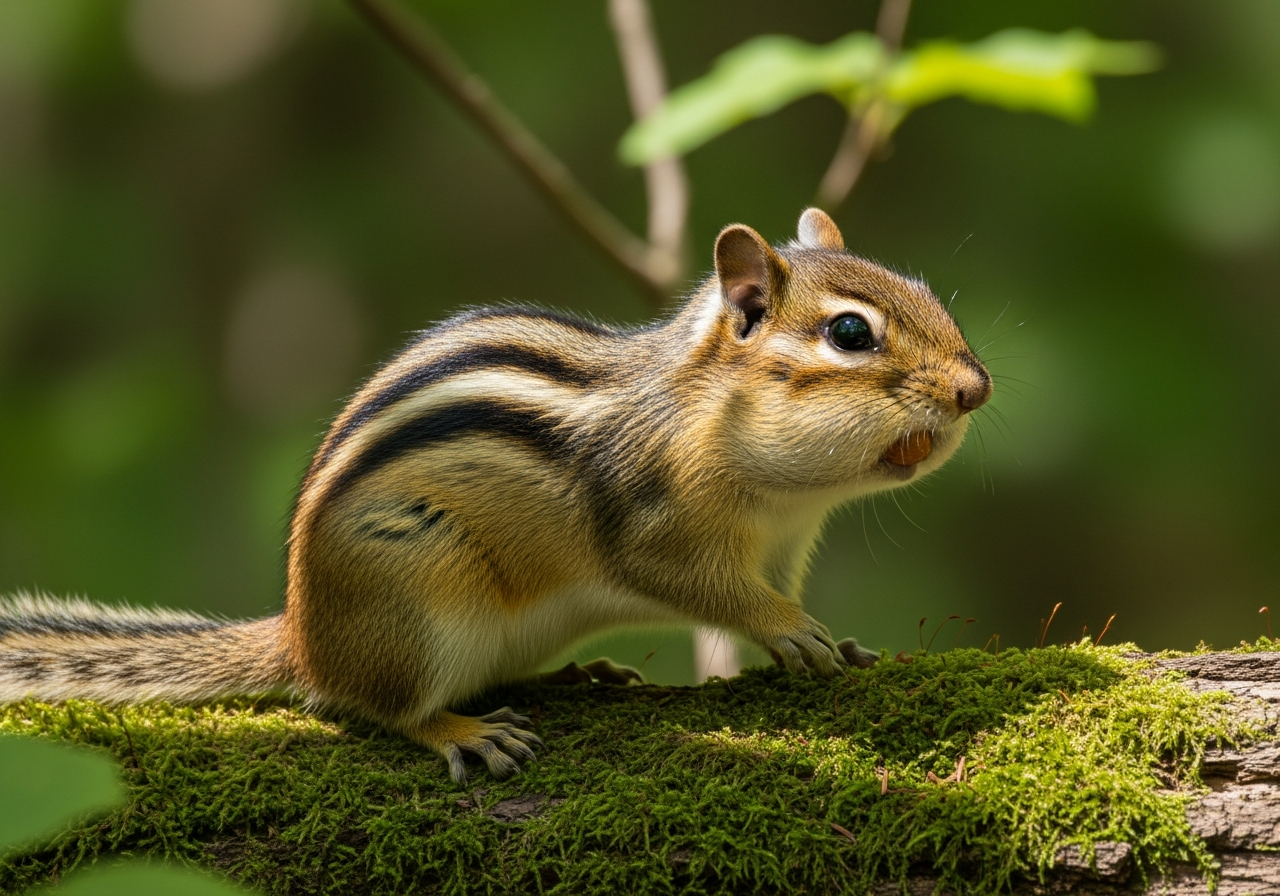
Chipmunks (Tamias striatus) are best summarised as Omnivore (seeds, nuts, fruit, insects). Anatomy and habitat (Deciduous forest, woodland edges, suburbs) decide whether they hunt, graze, filter, scavenge, or mix strategies across the year.
How chipmunks find food
Energy-rich foods are prioritised when available; lean seasons force broader diets or longer travel. Young animals may eat different items or receive food from parents.
Chipmunk role in the food web
As consumers in their food web, chipmunks move nutrients and influence prey or vegetation.
Feeding and human conflict
Never feed wild chipmunks. Habituation raises injury risk and can lead to lethal management. Captive diets must match species needs, not generic pet food rules.
Cheek pouches and hoarding
A chipmunk's most useful tool is its pair of stretchy cheek pouches, which can expand to carry surprising quantities of seeds and nuts back to the burrow — a single chipmunk can stash thousands of food items over a season. Rather than building up body fat like a true hibernator, it relies on these underground larders to survive winter, waking periodically to eat from its stored supplies.
Burrows and winter torpor
Eastern chipmunks dig extensive burrow systems with tunnels, sleeping chambers, and storage rooms, often with well-hidden entrances. Through the coldest months they enter torpor, dropping their body temperature and heart rate to save energy, but they are not deeply asleep all winter — they rouse to feed on their hoard and may emerge on mild days.
Sources
Chipmunk FAQs
What do chipmunks eat?
Chipmunks feed on seeds, nuts, fruit and insects, adjusting with season, age, and what is abundant in Deciduous forest, woodland edges, suburbs. That label is a preferred pattern, not every item an individual might sample.
What is the scientific name of the chipmunk?
Tamias striatus — used in research and conservation listings for chipmunks.
Where do chipmunks live?
They are associated with Deciduous forest, woodland edges, suburbs. Local presence depends on food, cover, and human land use.
What is the conservation status of chipmunks?
Listed in our guides as Least Concern. Check the IUCN Red List and national assessments for the latest formal category.
Who this page is for.This page is about wild diet. Skip it if you need a captive feeding plan from a veterinarian.