Quick answer
Hares feed on grasses, herbs, crops and bark, adjusting with season, age, and what is abundant in Open farmland, grassland, meadows. That label is a preferred pattern, not every item an individual might sample.
Key takeaway
Hares feed on grasses, herbs, crops and bark, adjusting with season, age, and what is abundant in Open farmland, grassland, meadows. That label is a preferred pattern, not every item an individual might sample.
Hare diet overview
Hares (Lepus europaeus) are best summarised as Herbivore (grasses, herbs, crops, bark). Anatomy and habitat (Open farmland, grassland, meadows) decide whether they hunt, graze, filter, scavenge, or mix strategies across the year.
How hares find food
Energy-rich foods are prioritised when available; lean seasons force broader diets or longer travel. Young animals may eat different items or receive food from parents.
Hare role in the food web
As herbivores shaping plants and seeds, hares move nutrients and influence prey or vegetation.
Feeding and human conflict
Never feed wild hares. Habituation raises injury risk and can lead to lethal management. Captive diets must match species needs, not generic pet food rules.
Built for speed
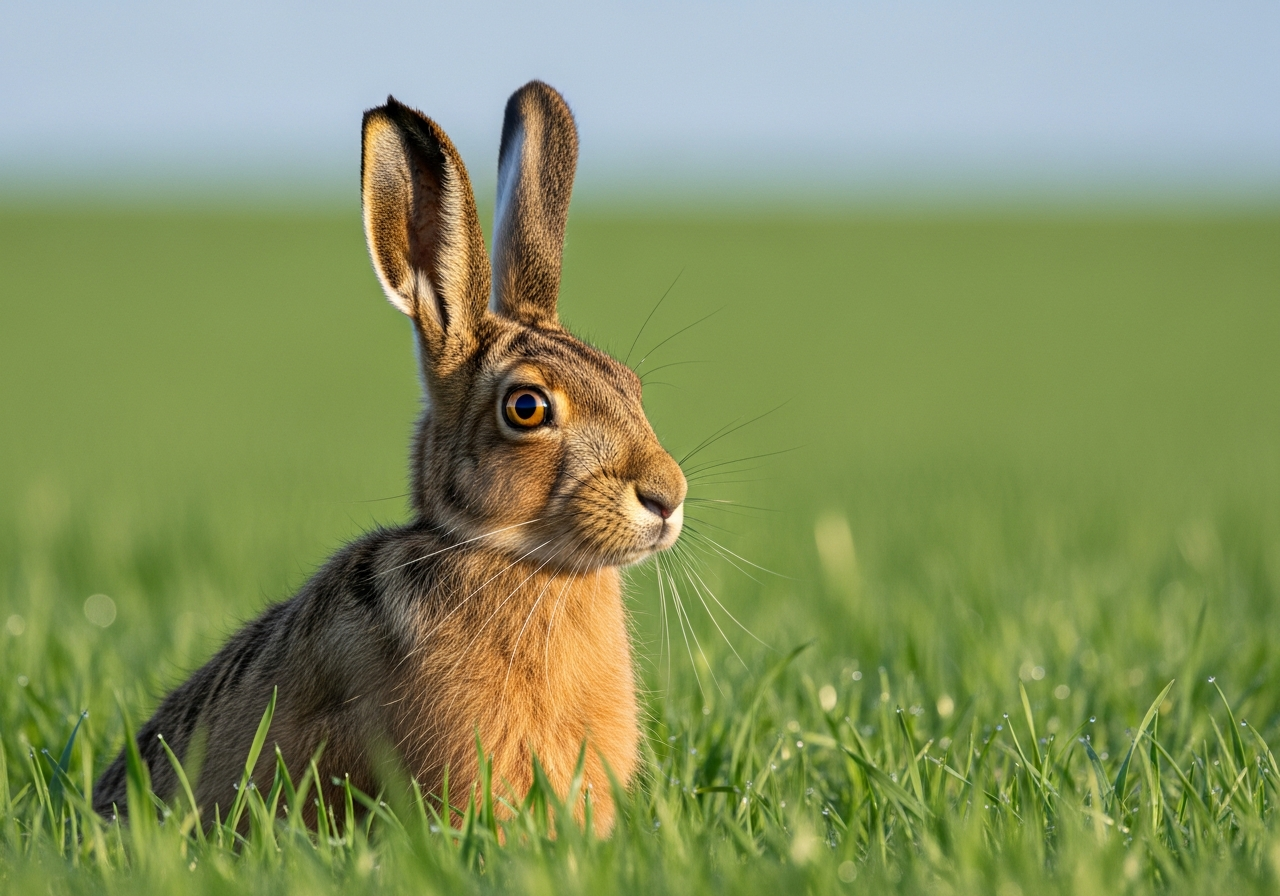
The brown hare relies on speed and stamina rather than burrows to escape danger. Its long, muscular hind legs let it reach around 70 km/h and twist sharply at full pace, and its huge ears give excellent hearing and help shed heat. When a predator is near, a hare often freezes flat against the ground, trusting its camouflage before exploding into a sprint.
Forms, leverets, and life above ground
Unlike rabbits, hares do not dig burrows. They rest in shallow depressions in the grass called forms and live their whole lives above ground. Their young, called leverets, are born fully furred with their eyes open and can move almost immediately — the mother leaves them hidden separately and visits briefly to nurse, reducing the chance a predator finds the whole litter.
Sources
Hare FAQs
What do hares eat?
Hares feed on grasses, herbs, crops and bark, adjusting with season, age, and what is abundant in Open farmland, grassland, meadows. That label is a preferred pattern, not every item an individual might sample.
What is the scientific name of the hare?
Lepus europaeus — used in research and conservation listings for hares.
Where do hares live?
They are associated with Open farmland, grassland, meadows. Local presence depends on food, cover, and human land use.
What is the conservation status of hares?
Listed in our guides as Least Concern. Check the IUCN Red List and national assessments for the latest formal category.
Who this page is for.This page is about wild diet. Skip it if you need a captive feeding plan from a veterinarian.