Poison vs Venom: What's the Difference?
Venom is injected; poison is delivered by touch or ingestion. Clear definitions, animal examples (snakes, frogs, jellyfish), and why the distinction matters.
Global Animal Guide · July 10, 2026
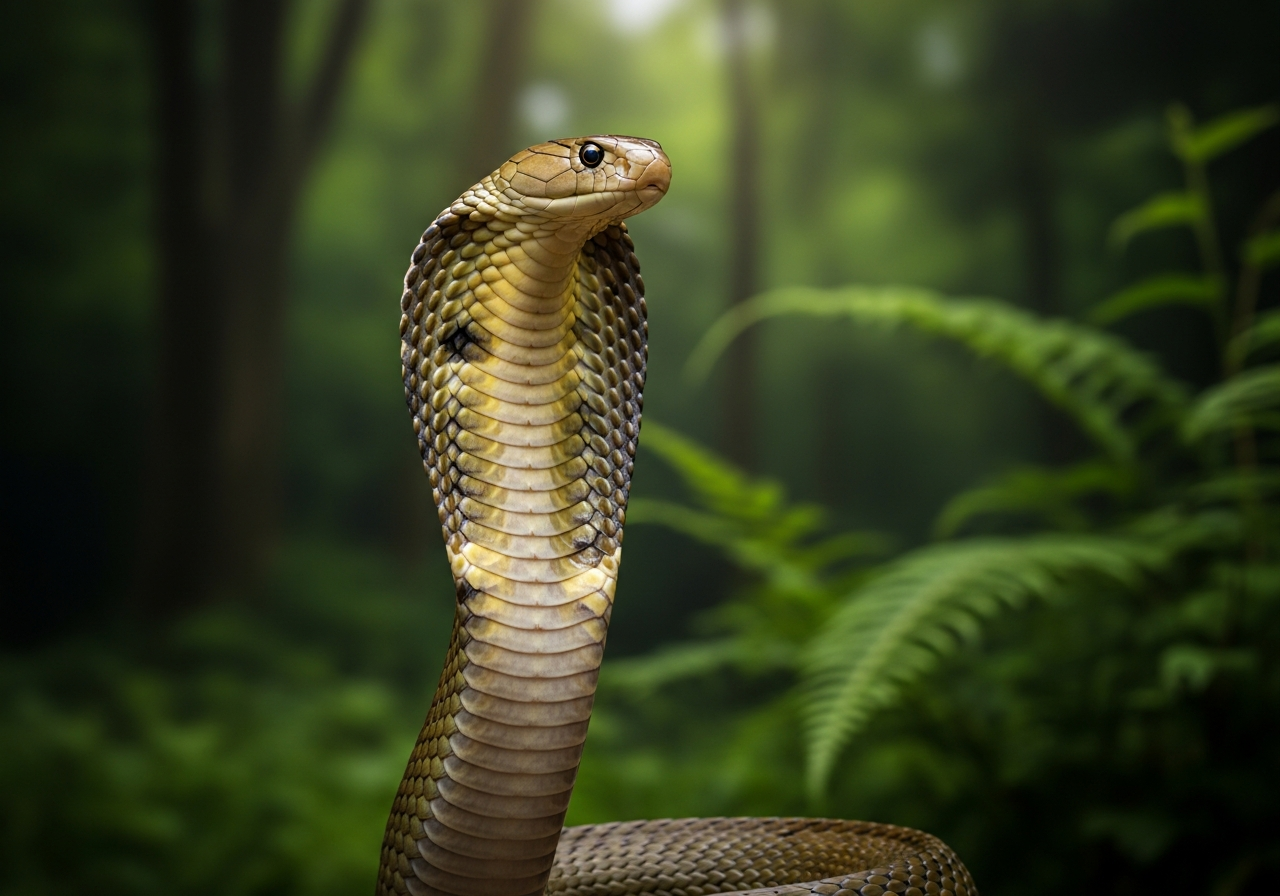
Quick answer
Venom is a toxin actively injected through a bite, sting, or spine. Poison is a toxin that harms when touched or eaten — the animal does not inject it. Rattlesnakes are venomous; many poison dart frogs are poisonous. Some animals are both (e.g. certain newts and spurred platypuses blur lines depending on delivery).
Last updated: July 2026.
Memory trick
If it bites you and you die, it was venomous.
If you bite it and you die, it was poisonous.
(Imperfect, but useful.)
The distinction is delivery, not chemistry
The single most common misunderstanding here is that venom and poison are different substances. They are not. The words describe how a toxin gets into you, and nothing else.
A venom is injected — forced through skin by a purpose-built delivery system: fangs, a sting, a barbed spine, a harpoon. A poison has no delivery system at all. It sits in the animal’s skin or flesh and does its work only if you eat it, lick it, or in some cases handle it. The animal is entirely passive.
That means the same molecule can be either, depending on the route. Tetrodotoxin is the classic demonstration. In pufferfish flesh it is a poison — dangerous to eat, harmless to hold. In the saliva of a blue-ringed octopus it is a venom, injected by a bite. Identical chemistry, opposite category, because the categories were never about chemistry.
It also means the labels say nothing about how dangerous an animal is. Venomous does not mean deadlier; poisonous does not mean milder. A honey bee is venomous and mostly an inconvenience. Toxicity and delivery are independent axes, and conflating them is where most of the confusion starts.
Why venom is expensive, and what that buys
Venom is metabolically costly. It is a complex cocktail of proteins and peptides that the animal must synthesise, store in a gland, and regenerate after use — which takes days. Nothing that expensive gets wasted.
This is why defensive bites are often dry. A snake that bites without injecting has spent nothing and still got the warning across. Studies of defensive strikes find a substantial fraction deliver little or no venom, and venomous snakes generally prefer display and retreat to biting at all. The rattle of a rattlesnake and the hood of a king cobra exist precisely so the animal does not have to spend the venom.
What the expense buys is subjugation. A small predator that must physically overpower struggling prey risks injury every meal, and an injured predator starves. Venom converts a wrestling match into a chemistry problem. The black mamba bites and releases, then follows the scent trail to a body that is no longer capable of fighting back. Constrictors like the boa constrictor solved the same problem mechanically instead — either way, the goal is to stop the prey resisting.
Venom composition follows diet, and it varies. Broadly, neurotoxic venoms — elapids such as cobras, mambas, and the inland taipan — attack nerve signalling and can stop the diaphragm. Haemotoxic venoms — many vipers, including the gaboon viper — wreck blood clotting and destroy tissue. Neither is a pure category, and many venoms do both.
Why poison is cheap, and why it must advertise
Poison is a defence, not a weapon. It cannot save the individual that gets bitten — the predator only learns the lesson after biting. Poison works at the level of the population: one bad experience teaches the predator to avoid every animal that looks similar afterwards.
That logic only functions if the predator can recognise the animal, which is why poisonous species are so often conspicuous. The scarlet-and-blue of a poison dart frog, the orange of a fire salamander, the red belly a fire-bellied toad flashes when threatened — this is aposematism, warning colouration. Being hard to see would defeat the entire strategy. The signal has to be memorable.
Poison is also frequently borrowed rather than built. Poison dart frogs do not synthesise their alkaloids; they sequester them from a diet of mites and ants. Raise the same frog on fruit flies in captivity and it is harmless — which is why the terrifying wild animal is safe to handle in a zoo. The monarch butterfly works the same way, storing cardenolides from the milkweed it ate as a caterpillar, and the cane toad sits at the opposite end, manufacturing bufotoxins in its own glands. Sequestration is cheap: the animal outsources the hard chemistry to a plant or insect and just declines to digest the result.
The animals that refuse to sit in either box
The tidy dichotomy leaks at the edges.
The hooded pitohui — a New Guinea bird — carries batrachotoxin in its skin and feathers, the same class of compound as the dart frogs, apparently sequestered from beetles. A poisonous bird surprised everyone.
Some snakes are both. Certain Asian keelbacks store toxins sequestered from the toads they eat in neck glands, while also carrying venom in the mouth — poisonous to eat and venomous to be bitten by, simultaneously.
The male platypus is venomous, but not for hunting. Its ankle spur delivers venom only in the breeding season, and it is used against rival males. Excruciating, rarely dangerous, and aimed entirely at its own species.
And the komodo dragon settled a long argument. It was assumed for decades that its bites killed via septic bacteria in a filthy mouth. Imaging later revealed genuine venom glands in the lower jaw secreting anticoagulants — so the animal is venomous after all, just with an unusually leisurely delivery method.
Why the distinction matters in practice
The pedantry has consequences.
Treatment diverges completely. Antivenom is an antibody preparation that binds injected venom proteins in the bloodstream, and it is species-specific — you need the right one. It is irrelevant to poisoning, which is a matter of dose, decontamination, and supportive care. Nothing you would do for a snakebite helps someone who ate the wrong pufferfish.
Field behaviour diverges too. A poisonous animal cannot chase you and only matters if you put it in your mouth. A venomous one can close the distance. And the fact that most venomous animals would rather not spend their venom on something too large to eat is genuinely useful information: giving a snake room to leave is usually sufficient.
Mislabelling breeds folklore. “Poisonous snake” is not just wrong, it is the seed of the idea that you might suck venom from a wound or cut the bite open — measures that do nothing except make the injury worse. Precise words are not fussiness here. They point at what the toxin actually did and what has to be done about it.
Related reading
Sources
Frequently asked questions
Is a snake poisonous or venomous?
Venomous — snakes inject toxins with fangs. Calling them poisonous is a common mistake.
Are poison dart frogs venomous?
No — their skin toxins are poisonous if touched or eaten; they do not inject venom.
Can something be both?
Yes — for example, the slow loris can deliver a toxin via bite (venom-like), and some fish have both spines and toxic flesh.
Which kills more people — venom or poison?
In wildlife contexts, venomous snakebites cause far more human deaths than poisonous frogs; mosquitoes (disease vectors) kill more than either.