Symbiotic Relationships in Nature: When Species Team Up
From clownfish and anemones to bees and flowers, symbiosis shapes life on Earth. Mutualism, commensalism, and parasitism explained with real examples.
Global Animal Guide · June 24, 2026
Quick answer
Symbiotic relationships are close, long-term interactions between different species. Mutualism benefits both partners (bees and flowers). Commensalism helps one partner without much effect on the other (barnacles on whales). Parasitism helps one at the other's expense (ticks on mammals). Many ecosystems depend on these partnerships — coral reefs, gut microbiomes, and nitrogen-fixing plants would not function without them.
Living together by definition
Symbiosis (from Greek: “living together”) describes species in prolonged close contact. The relationship may be cooperative, one-sided, or harmful — but it is intimate enough to shape both lives. Symbiosis built coral reefs, rumen digestion in cattle, and the lichens covering Arctic rocks.
Mutualism: win-win
Both partners gain a fitness benefit — better survival or reproduction.
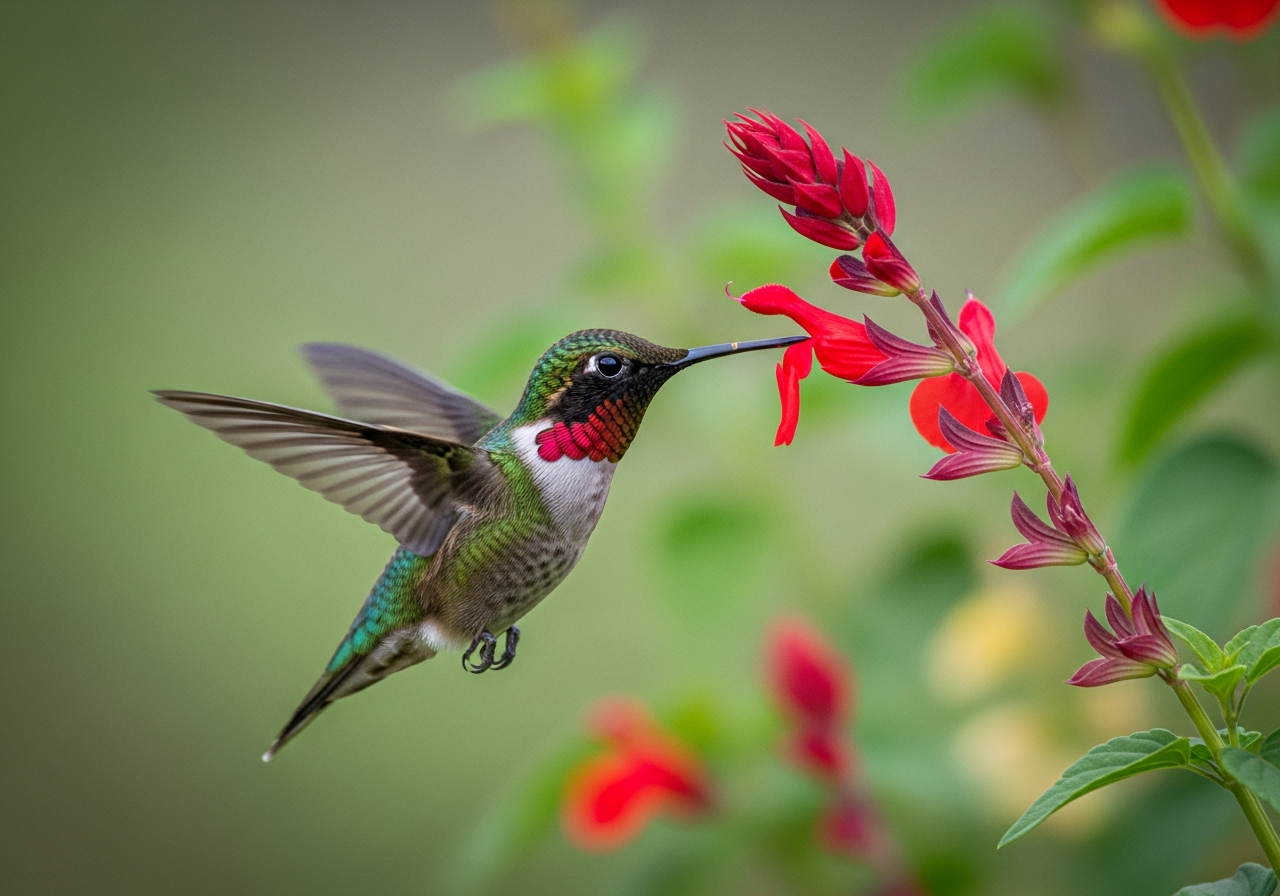
Pollination — Bees, bats, and birds carry pollen while feeding on nectar. Roughly 75% of leading global food crops benefit from animal pollination.
Coral and algae — Reef corals host zooxanthellae algae that photosynthesise; algae get shelter, coral get sugars.
Oxpeckers and mammals — Birds eat ticks on rhinos and zebras; mammals get pest relief (though oxpeckers may also feed on wounds — a blurred line).
Lichens — Fungi provide structure and moisture; algae or cyanobacteria provide food through photosynthesis.
The textbook animal case is the clownfish and its anemone. The anemone’s stinging tentacles kill most fish; the clownfish is protected by a mucus coat that stops the anemone recognising it as prey, and it acquires that immunity gradually, by brushing against the tentacles until its coating adapts. In exchange the clownfish drives off butterflyfish that nibble anemone tentacles, and its waste fertilises the anemone’s own algae. Neither partner is being generous. Each is buying a service.
Mutualism rarely requires kindness — only that the benefit each partner receives exceeds the cost of providing its half. The pistol-shrimp digs a burrow it shares with a goby; the nearly blind shrimp keeps an antenna resting on the fish, which flicks its tail when a predator approaches. Shelter for a warning system.
Commensalism: one benefits, one is unaffected
One species gains; the other is neither helped nor harmed (or only slightly affected).
Barnacles on whales — Barnacles gain transport and feeding currents; whales seem largely indifferent.
Remoras and sharks — Remoras attach for free rides and leftover scraps; sharks are mostly unaffected.
Birds nesting in trees — Birds get shelter; mature trees are usually unharmed.
Commensalism is the least stable of the three categories, and arguably the least real. It survives mostly because the effect on the host is too small to measure, not because it is genuinely zero. Barnacles on a humpback-whale add drag; whether that drag costs the whale anything meaningful is unknown, which is precisely the point. Study most commensal relationships closely enough and they resolve into weak mutualism or mild parasitism.
Some cases are cleaner. Egrets — relatives of the heron — follow large grazers to snap up insects flushed from the grass, costing the water-buffalo or zebra nothing detectable. The hermit-crab occupies the abandoned shells of dead snails and harms no one, though it often adds an anemone to the shell for defence, tipping the relationship back into mutualism.
Parasitism: one wins, one loses
The parasite benefits at the host’s expense — without usually killing it immediately (that would end the food source).
Ticks and fleas — Feed on blood; may transmit disease.
Cuckoos — Brood parasites lay eggs in other birds’ nests; host parents raise the imposter chick.
Cordyceps fungi — Infect insects and alter behaviour to spread spores — famous in documentaries, grim in nature.
Parasites face a design constraint predators do not: they must not be too good at their job. Kill the host quickly and you destroy your own habitat before you have reproduced. This is why virulence tends to settle at an intermediate level, and why parasites transmitted by direct contact are often milder than those carried by a vector such as a mosquito or a tick — if something else does the travelling, an immobilised host is no obstacle, and the restraint disappears.
Brood parasitism is the vivid version. A cuckoo chick hatches early, ejects the host’s eggs, and is fed by parents working themselves ragged for a chick that dwarfs them. The host is not stupid; it is caught in an arms race. Hosts evolve finer egg discrimination, cuckoos evolve better mimicry, and neither side ever wins outright.
Parasites also lose body parts. Over evolutionary time they shed guts, eyes, and nervous systems they no longer need, becoming little more than reproductive organs with an attachment — so reduced that only genetics reveals what group they came from.
Cleaning stations: mutualism you can watch
Coral reefs run public health clinics. Cleaner wrasse hold territories that other fish visit deliberately, queuing to have parasites and dead tissue picked from their skin, gills, and mouths. Predators that would eat a wrasse anywhere else sit still and open their jaws. The moray-eel and reef sharks both use them.
What makes this work is reputation. Cleaners can cheat — a bite of healthy mucus is more nutritious than a parasite — and clients punish it by leaving, or by chasing the cleaner. Since clients watch cleaners working on other fish before choosing a station, cleaners give better service when an audience is present. Cooperation here is enforced by consequences, not goodwill.
The arrangement recurs wherever it can: the green-sea-turtle visits cleaners, and on land the oxpecker-on-rhinoceros relationship follows identical logic, including the identical cheating problem.
Facultative vs obligate
Some partnerships are optional (facultative) — species can survive alone but do better together. Others are obligate — neither partner survives without the other. Many reef corals depend entirely on their algae; leaf-cutter ants depend on fungus gardens they cultivate.
The leafcutter-ant is worth dwelling on, because it is farming in every meaningful sense. The ants cannot eat leaves; they cut and carry them to feed a fungus, and the fungus is what they eat. Neither partner exists without the other any more, and the arrangement is tens of millions of years old — a queen leaving to found a colony carries a pellet of fungus in her mouth, because starting from scratch is impossible. The ants also carry antibiotic-producing bacteria on their bodies to suppress mould in the garden, making this a three-way obligate partnership.
Obligate relationships are powerful and brittle. Once a partner outsources a function — digestion, defence, nutrition — the genes for doing it alone decay, and there is no going back. Termites cannot digest wood without their gut microbes; the termite is really a delivery system for a microbial fermentation chamber. When a partner is lost, the other does not adapt. It dies.
Evolutionary arms races and cheating
Symbiosis evolves through natural selection. Cheaters appear: flowers that offer no nectar, cuckoos that mimic egg patterns, microbes that turn pathogenic when hosts weaken. Stable partnerships often involve enforcement — toxins, recognition signals, or tight life cycles that punish defection.
Why symbiosis matters for conservation
Protect one partner and you protect the other. Lose pollinators and flowering plants decline. Lose mycorrhizal fungi and forest trees struggle for nutrients. Restoring ecosystems means restoring networks, not single flagship species.
Coral bleaching shows how fast an obligate partnership fails. Warm water disrupts the algae’s photosynthesis and it starts producing damaging compounds, so the coral expels its own partner — a short-term act of self-protection that removes most of its food supply. The white skeleton visible through transparent tissue is what bleaching means. Cool the water quickly and corals can reacquire algae and recover; leave them too long and they starve, taking the reef’s fish, octopus, and invertebrate residents with them.
This is why symbiosis makes conservation harder than a species list suggests. An animal can be present, protected, and still functionally doomed if its partner is gone — and partners are usually the unglamorous half, the fungus or the gut microbe or the small fish nobody counts.
Sources
Related reading: Why coral reefs matter · How do honeybees make honey? · What is biodiversity?
Frequently asked questions
What is the difference between symbiosis and mutualism?
Symbiosis is the broad category of close species interactions. Mutualism is a type of symbiosis where both species benefit.
What is an example of mutualism?
Pollinators and flowering plants — bees get nectar; plants get pollen transferred for reproduction.
Are humans in symbiotic relationships?
Yes — trillions of bacteria in your gut help digest food and train immunity; you provide them habitat and nutrients.
Can symbiosis become harmful?
Partnerships can turn parasitic if one side cheats, or collapse if a keystone species disappears — as when coral loses its algae during bleaching.