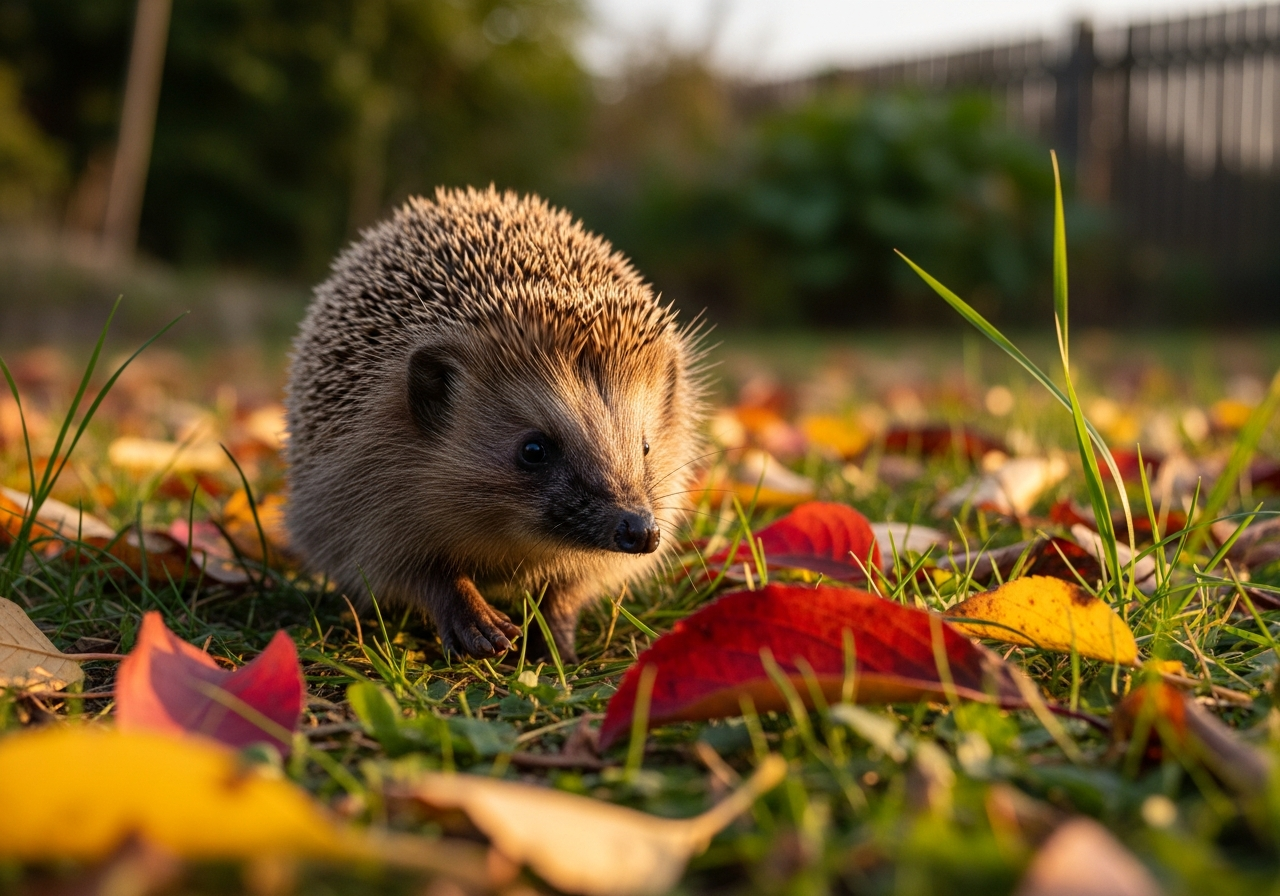
The hedgehog (Erinaceus europaeus) is a mammal of the family Erinaceidae, in the order Eulipotyphla.
Quick answer
The European hedgehog is a small, spiny, nocturnal mammal famous for rolling into a tight ball of quills when threatened. A single hedgehog may carry around 5,000 spines, forages for insects and worms at night, and hibernates through winter. Wild hedgehogs typically live 2 to 5 years and are now listed as Near Threatened.
Top questions about the Hedgehog
Hedgehog facts at a glance
- Weight 1 kg
- Length 25 cm
- Top speed 9 km/h
- Lifespan 5 years
| Scientific name | Erinaceus europaeus |
|---|---|
| Diet | Insectivore |
| Habitat | Hedgerows, woodland, and gardens |
| Lifespan | 2–5 years in the wild |
| Weight | 0.6–1.2 kg (1.3–2.6 lb) |
| Top speed | Up to 9 km/h (6 mph) |
| Conservation status | Near Threatened (IUCN) |
| Kingdom | Animalia |
|---|---|
| Phylum | Chordata |
| Class | Mammalia |
| Order | Eulipotyphla |
| Family | Erinaceidae |
| Genus | Erinaceus |
Where it lives
The hedgehog (Erinaceus europaeus) is native to Hedgerows, woodlands, and gardens across Europe. — recorded across Europe in this guide’s range summary.
For occurrence records, see GBIF species search and sources below.
How big is a hedgehog?
An adult hedgehog measures 25 cm long — about 14% of the height of an average adult person (1.73 m) — and weighs around 1.0 kg, about 1% of an average adult’s body weight (70 kg).
Length vs an average adult’s height (to scale)
What is a group of hedgehogs called?
Group name (collective noun)
A group of Hedgehogs is called an array.
Baby name
A baby Hedgehog is called a hoglet. It may also be called a piglet.
Explore more animal collective nouns and baby animal names .
Spines and defense
A hedgehog's back is covered in around 5,000 stiff, hollow spines made of keratin, the same material as hair. When threatened it rolls into a tight ball, tucking its soft face, belly, and legs inside a protective sphere of quills that deters most predators.
Diet and foraging
Hedgehogs are insectivores that snuffle through leaf litter at night for beetles, worms, caterpillars, and slugs, which makes them a gardener's friend. They have poor eyesight but an excellent sense of smell and hearing to locate prey in the dark.
Hibernation
In cooler regions hedgehogs hibernate through winter, building a nest of leaves called a hibernaculum and dropping their body temperature to survive on stored fat. They may wake and move nests during mild spells, so a hedgehog seen in deep winter is not necessarily in trouble.
Conservation
European hedgehogs were reclassified as Near Threatened as populations decline across much of their range. Roads, habitat loss, pesticides that reduce insect food, and tidy, fenced gardens all play a part. Leaving wild corners, gaps in fences, and shallow water helps hedgehogs thrive.
Dig deeper into the Hedgehog
- Hedgehog: Key Facts
The European hedgehog is a small, spiny, nocturnal mammal famous for rolling into a tight ball of quills when threatened.
- How Long Do Hedgehogs Live?
Hedgehog lifespan is typically 2–5 years in the wild. What shortens or extends life, life stages, and status (Near Threatened).
- What Do Hedgehogs Eat?
What hedgehogs eat: Insectivore, foraging style, and seasonal shifts in Hedgerows, woodland, and gardens.
- Where Do Hedgehogs Live?
Where hedgehogs live: Hedgerows, woodland, and gardens, native range cues, and human overlap. Status Near Threatened.
Explore the Hedgehog
Close relatives
- Common Shrew Same order
- Mole Same order
- Lion Same class
- Dog Same class
Collections
Range & geography
Did you know? Hedgehog facts
- The European hedgehog is a small, spiny, nocturnal mammal famous for rolling into a tight ball of quills when threatened.
- An adult hedgehog has roughly 5,000 to 7,000 spines. The spines are hollow, made of keratin, and are not barbed or poisonous, unlike a porcupine's quills.
- Hedgehogs are insectivores. They eat beetles, earthworms, caterpillars, slugs, and other invertebrates, which is why they are valued as natural pest controllers in gardens.
- European hedgehogs hibernate through winter in cooler climates, surviving on body fat in a nest of leaves. They may briefly wake to move during mild weather. Hedgehogs in warm regions may not hibernate at all.
- Hedgehog numbers have fallen due to habitat loss, busy roads, pesticide use that reduces their insect food, and gardens sealed off by solid fences. They are now listed as Near Threatened on the IUCN Red List.
- Conservation: Near Threatened (IUCN).
Diet & feeding
Hedgehog feeds primarily as a insectivore. A hedgehog's back is covered in around 5,000 stiff, hollow spines made of keratin, the same material as hair. When threatened it rolls into a tight ball, tucking its soft face, belly, and legs inside a protective sphere of quills that deters most predators.
Adaptations
- A hedgehog's back is covered in around 5,000 stiff, hollow spines made of keratin, the same material as hair. When threatened it rolls into a tight ball, tucking its soft face, belly, and legs inside a protective sphere of quills that deters most predators.
- Hedgehogs are insectivores that snuffle through leaf litter at night for beetles, worms, caterpillars, and slugs, which makes them a gardener's friend. They have poor eyesight but an excellent sense of smell and hearing to locate prey in the dark.
Behaviour & ecology
- A hedgehog's back is covered in around 5,000 stiff, hollow spines made of keratin, the same material as hair. When threatened it rolls into a tight ball, tucking its soft face, belly, and legs inside a protective sphere of quills that deters most predators.
- Hedgehogs are insectivores that snuffle through leaf litter at night for beetles, worms, caterpillars, and slugs, which makes them a gardener's friend. They have poor eyesight but an excellent sense of smell and hearing to locate prey in the dark.
- In cooler regions hedgehogs hibernate through winter, building a nest of leaves called a hibernaculum and dropping their body temperature to survive on stored fat. They may wake and move nests during mild spells, so a hedgehog seen in deep winter is not necessarily in trouble.
Communication
- Hedgehog uses scent, posture, and vocal signals to mark territory and coordinate social behaviour.
- Communication intensity often peaks during breeding seasons and territorial disputes.
Habitat & range
Hedgerows, woodland, and gardens
Ecological role
Hedgehog plays a recognised ecological role in hedgerows, woodland, and gardens.
Conservation status of the Hedgehog
The hedgehog (Erinaceus europaeus) is listed as Near Threatened on the IUCN Red List. Near Threatened (NT) means a species does not yet qualify as threatened but is close to it, or likely to become so in the near future without ongoing conservation. It is a watch-list category just below Vulnerable.
The hedgehog (Erinaceus europaeus) is assessed on the IUCN Red List. Look up on the IUCN Red List .
Frequently asked questions about the Hedgehog
How many spines does a hedgehog have?
An adult hedgehog has roughly 5,000 to 7,000 spines. The spines are hollow, made of keratin, and are not barbed or poisonous, unlike a porcupine's quills.
What do hedgehogs eat?
Hedgehogs are insectivores. They eat beetles, earthworms, caterpillars, slugs, and other invertebrates, which is why they are valued as natural pest controllers in gardens.
Do hedgehogs hibernate?
European hedgehogs hibernate through winter in cooler climates, surviving on body fat in a nest of leaves. They may briefly wake to move during mild weather. Hedgehogs in warm regions may not hibernate at all.
Why are hedgehogs in decline?
Hedgehog numbers have fallen due to habitat loss, busy roads, pesticide use that reduces their insect food, and gardens sealed off by solid fences. They are now listed as Near Threatened on the IUCN Red List.
How can I help hedgehogs in my garden?
Leave a wild, leafy corner, cut a small gap in fences so hedgehogs can roam, avoid slug pellets and pesticides, provide a shallow dish of water, and check long grass before mowing.
What is a group of hedgehogs called?
A group of Hedgehogs is called an array.
What is a baby hedgehog called?
A baby Hedgehog is called a hoglet. It may also be called a piglet.
Sources & references
This guide is compiled and reviewed against established zoological and conservation references. Key sources for the Hedgehog:
-
IUCN Red List of Threatened Species
Conservation status (Near Threatened) reflects the IUCN Red List category for Erinaceus europaeus.
-
iNaturalist — observations & photos
Search citizen-science observations and community IDs for Erinaceus europaeus. Useful for range checks and recent sightings — not a substitute for formal Red List status.
-
GBIF — occurrence data
Global Biodiversity Information Facility species search for Erinaceus europaeus. Explore published occurrence records used in range research.
- IUCN Red List — Erinaceus europaeus.
Conservation status (Near Threatened) and population trends.
- Animal Diversity Web — Erinaceus europaeus. University of Michigan Museum of Zoology.
Life history, morphology, and range.
- Wikipedia — Hedgehog.
General taxonomy and overview (cross-check primary sources).
-
Global Animal Guide editorial standards
How we research, source, review, and update every guide for accuracy.