Image sourcing: see credits & licences
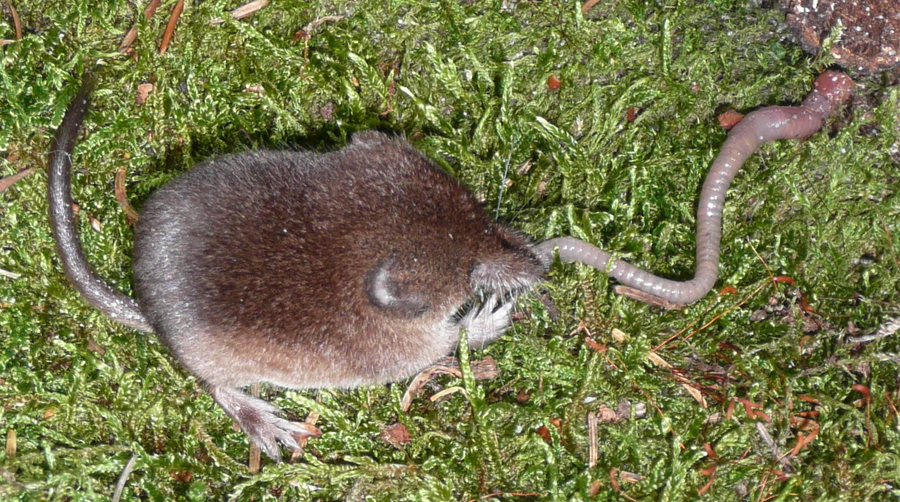
The common shrew (Sorex araneus) is a mammal of the family Soricidae, in the order Eulipotyphla.
Quick answer
The common shrew (Sorex araneus) is a tiny, insect-eating mammal found in woodlands, gardens, and grasslands across Europe. Weighing just 5–15 g and measuring around 8 cm, it is one of the continent's smallest mammals, with a pointed snout, velvety fur, and a ferocious appetite. Shrews live fast and die young, rarely surviving beyond one to two years in the wild.
Top questions about the Common Shrew
Common Shrew facts at a glance
- Weight 10 g
- Length 8 cm
- Top speed 8 km/h
- Lifespan 2 years
| Scientific name | Sorex araneus |
|---|---|
| Diet | Insectivore — insects, worms, slugs, and spiders |
| Habitat | Woodlands, gardens, and grassland across Europe |
| Lifespan | 1–2 years in the wild (rarely exceeds 2) |
| Weight | 5–15 g (0.005–0.015 kg); one of Europe's smallest mammals |
| Top speed | Up to 8 km/h (5 mph); constant active foraging |
| Conservation status | Least Concern (IUCN) |
| Kingdom | Animalia |
|---|---|
| Phylum | Chordata |
| Class | Mammalia |
| Order | Eulipotyphla |
| Family | Soricidae |
| Genus | Sorex |
Where it lives
The common shrew (Sorex araneus) is native to Common shrew across Britain, Europe, and western Russia in woodlands, gardens, and grassland. — recorded across Europe in this guide’s range summary.
For occurrence records, see GBIF species search and sources below.
How big is a common shrew?
An adult common shrew measures 8 cm long — about 5% of the height of an average adult person (1.73 m) — and weighs around 10 g, a small fraction of an average adult’s body weight (70 kg).
Length vs an average adult’s height (to scale)
What is a group of common shrews called?
Group name (collective noun)
A group of Common Shrews is called a colony.
Baby name
A baby Common Shrew is called a pup.
Explore more animal collective nouns and baby animal names .
A relentless appetite
The common shrew has an extraordinarily fast metabolism and must eat almost constantly to stay alive. It consumes around 80–90 per cent of its own body weight in food every day and can starve to death in just a few hours without a meal. Shrews forage in short bursts around the clock, taking only brief naps between hunts. This punishing energy budget shapes almost everything about the animal's short, frantic life.
Diet and hunting
Shrews are insectivores that hunt insects, earthworms, slugs, spiders, and other small invertebrates among leaf litter and soil. They rely heavily on smell, touch, and a fine sense of hearing rather than eyesight, which is poor. The common shrew has a mildly venomous bite, produced by its saliva, which helps subdue larger prey such as earthworms. Sharp, red-tipped teeth let it crunch through tough insect shells with ease.
Territory and behaviour
Common shrews are solitary and fiercely territorial, defending their patch with loud, high-pitched squeaks when neighbours trespass. They spend much of their time in runways and tunnels through vegetation and leaf litter, moving with quick, restless energy at up to 8 km/h. Outside the brief breeding season, adults generally avoid one another. Their constant, twitchy activity reflects the need to keep finding food day and night.
Breeding and short lives
Female shrews raise several litters between spring and late summer, each usually containing five to seven tiny young. The mother sometimes leads her weaned babies in a "caravan," each youngster gripping the tail of the one in front so the family moves as a chain. Young shrews grow quickly and are independent within weeks. Most adults die after a single breeding season, so few live more than a year or two.
Role in the ecosystem
Despite its size, the common shrew is an abundant and important part of European woodland and grassland communities. As a voracious predator of insects, worms, and slugs, it helps keep invertebrate numbers in check across gardens and farmland. Shrews in turn are hunted by owls, weasels, and foxes, though many mammal predators reject them because of foul-tasting scent glands. The species is listed as Least Concern by the IUCN and remains widespread and common.
Dig deeper into the Common Shrew
- How Long Do Common Shrews Live?
Common Shrew lifespan is typically 1–2 years in the wild (rarely exceeds 2). What shortens or extends life, life stages, and status (Least Concern).
- Shrew Relentless Metabolism
The common shrew is one of Europe's smallest mammals, weighing about 10 g with venomous saliva that paralyses invertebrate prey.
- Shrew Venomous Saliva
The common shrew is one of Europe's smallest mammals, weighing about 10 g with venomous saliva that paralyses invertebrate prey.
- What Do Common Shrews Eat?
What common shrews eat: Insectivore — insects, worms, slugs, and spiders, foraging style, and seasonal shifts in Woodlands, gardens, and grassland across Europe.
- Where Do Common Shrews Live?
Where common shrews live: Woodlands, gardens, and grassland across Europe, native range cues, and human overlap. Status Least Concern.
Explore the Common Shrew
Range & geography
Did you know? Common Shrew facts
- Common shrews are tiny mammals that must eat every few hours to survive.
- No — shrews are insectivores in a separate order from rodents.
- They reduce activity in winter but do not true hibernate.
- Conservation: Least Concern.
Diet & feeding
Common Shrew feeds primarily as a insects, worms, slugs. Shrews lose weight overnight without food and may eat 80–90% of body weight daily.
Adaptations
- Shrews lose weight overnight without food and may eat 80–90% of body weight daily.
- Saliva toxins subdue prey but are harmless to humans.
Behaviour & ecology
- Shrews lose weight overnight without food and may eat 80–90% of body weight daily.
- Saliva toxins subdue prey but are harmless to humans.
Communication
- Common Shrew uses scent, posture, and vocal signals to mark territory and coordinate social behaviour.
- Communication intensity often peaks during breeding seasons and territorial disputes.
Habitat & range
Woodlands, gardens, and grassland across Europe
Ecological role
Common Shrew plays a recognised ecological role in woodlands, gardens, and grassland across europe.
Conservation status of the Common Shrew
The common shrew (Sorex araneus) is listed as Least Concern on the IUCN Red List. Least Concern (LC) is the IUCN's lowest-risk category, assigned to widespread, abundant species that have been evaluated and found not to be threatened. It does not mean a species faces no pressures — only that it is not currently at risk of extinction.
The common shrew (Sorex araneus) is assessed on the IUCN Red List. Look up on the IUCN Red List .
Frequently asked questions about the Common Shrew
Is a shrew a rodent?
No. Although it looks a little like a mouse, the common shrew is not a rodent but an insectivore, belonging to a separate group of mammals. Its long pointed snout, tiny eyes, and sharp teeth set it apart from mice and voles.
Why do shrews eat so much?
Shrews have an exceptionally fast metabolism and burn energy very quickly, so they must eat almost constantly. A common shrew eats around 80–90 per cent of its body weight each day and can starve within a few hours if it goes without food.
Are shrews venomous?
The common shrew has a mildly venomous bite produced in its saliva, which helps it subdue prey such as earthworms. The venom is not dangerous to humans, though a bite from a handled shrew can sting.
How long do shrews live?
Common shrews have very short lives, rarely surviving beyond one to two years in the wild. Most die after their first and only breeding season.
What do shrews eat?
Shrews are insectivores that feed mainly on insects, earthworms, slugs, and spiders. They hunt almost constantly among leaf litter and soil, using smell and touch rather than sight to find prey.
Do cats kill shrews but not eat them?
Often, yes. Cats frequently catch shrews but leave them uneaten because the shrews' scent glands make them taste unpleasant. Many wild predators avoid eating shrews for the same reason.
What is a group of common shrews called?
A group of Common Shrews is called a colony.
What is a baby common shrew called?
A baby Common Shrew is called a pup.
Sources & references
This guide is compiled and reviewed against established zoological and conservation references. Key sources for the Common Shrew:
-
IUCN Red List of Threatened Species
Conservation status (Least Concern) reflects the IUCN Red List category for Sorex araneus.
-
iNaturalist — observations & photos
Search citizen-science observations and community IDs for Sorex araneus. Useful for range checks and recent sightings — not a substitute for formal Red List status.
-
GBIF — occurrence data
Global Biodiversity Information Facility species search for Sorex araneus. Explore published occurrence records used in range research.
- IUCN Red List — Sorex araneus.
Conservation status (Least Concern) and population trends.
- Animal Diversity Web — Sorex araneus. University of Michigan Museum of Zoology.
Life history, morphology, and range.
-
Global Animal Guide editorial standards
How we research, source, review, and update every guide for accuracy.