Image sourcing: see credits & licences
The kiwi (Apteryx australis) is a bird of the family Apterygidae, in the order Apterygiformes.
Quick answer
The kiwi (Apteryx australis) is a flightless, nocturnal bird found only in New Zealand, roughly the size of a chicken with shaggy, hair-like feathers and no visible wings. Unique among birds, it has nostrils at the very tip of its long bill, which it uses to sniff out earthworms and insects in the soil. It weighs about 1.3 to 3.5 kg and can live 25 to 50 years. Several kiwi species are Vulnerable.
Top questions about the Kiwi
Kiwi facts at a glance
- Weight 2.5 kg
- Length 45 cm
- Top speed 20 km/h
- Lifespan 25 years
| Scientific name | Apteryx australis (Brown Kiwi) |
|---|---|
| Diet | Omnivore (earthworms, insects, berries) |
| Habitat | Native forest, scrubland, and farmland with cover |
| Lifespan | 25–50 years in the wild |
| Weight | 1.3–3.5 kg (3–8 lb) |
| Conservation status | Vulnerable (IUCN; varies by species) |
| Found | New Zealand only |
| Kingdom | Animalia |
|---|---|
| Phylum | Chordata |
| Class | Aves |
| Order | Apterygiformes |
| Family | Apterygidae |
| Genus | Apteryx |
Where it lives
The kiwi (Apteryx australis) is native to New Zealand only — native to both main islands and several offshore islands; found nowhere else on Earth. — recorded across Oceania in this guide’s range summary.
For occurrence records, see GBIF species search and sources below.
How big is a kiwi?
An adult kiwi measures 45 cm long — about 26% of the height of an average adult person (1.73 m) — and weighs around 2.5 kg, about 4% of an average adult’s body weight (70 kg).
Length vs an average adult’s height (to scale)
What is a group of kiwis called?
Group name (collective noun)
A group of Kiwis is called a tribe.
Baby name
A baby Kiwi is called a chick.
Explore more animal collective nouns and baby animal names .
A bird like no other
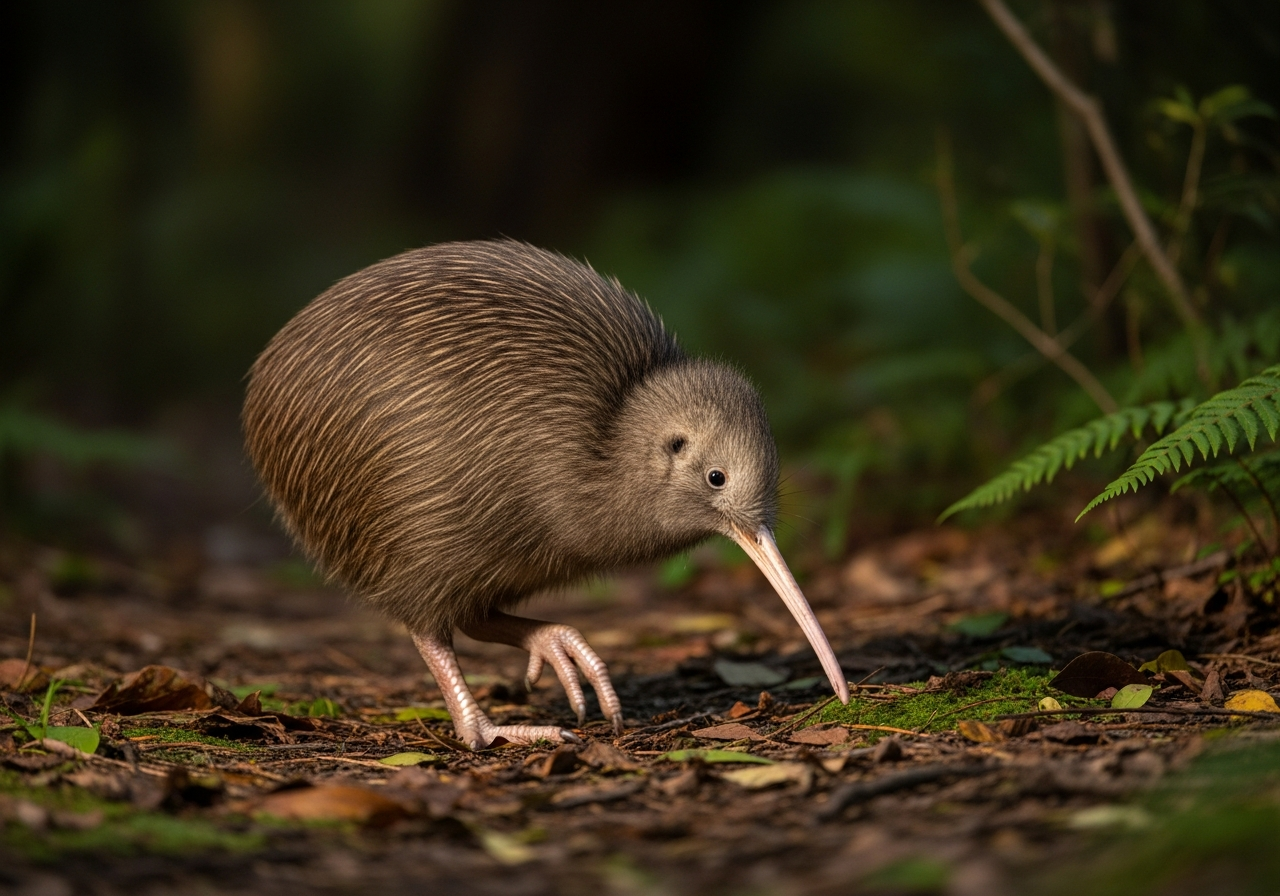
The kiwi is one of the world's most unusual birds, so distinctive that it is often described as an honorary mammal. About the size of a chicken and weighing 1.3 to 3.5 kg, it has loose, shaggy feathers that look more like coarse hair, and its wings are so tiny as to be invisible. It has no tail, strong muscular legs, and a body temperature lower than most birds. Kiwi are the smallest of the ratites, the flightless group that includes the ostrich and emu.
Smell and the tip-of-bill nostrils
Alone among birds, the kiwi has nostrils at the very tip of its long, slender bill rather than at the base. This gives it an exceptional sense of smell, which it uses to detect earthworms, grubs, and insects hidden underground. Probing the soil, it sniffs out prey it cannot see and seizes it deep in the leaf litter. This reliance on smell, rare in the bird world, suits its nocturnal, ground-based way of life.
Diet and nocturnal habits
The kiwi is an omnivore that feeds chiefly on earthworms and insect larvae, adding berries, seeds, and other invertebrates to its diet. It is strictly nocturnal, spending the day in a burrow and emerging after dark to forage across the forest floor. Sensitive whiskers around the bill and acute hearing help it move and feed in near-total darkness. Its poor eyesight matters little for a bird that lives by scent and touch.
The remarkable egg
The kiwi lays one of the largest eggs relative to body size of any bird, an egg that can make up around a fifth of the female's weight. The male usually takes on the long task of incubation, sitting for around 70 to 80 days. Chicks hatch fully feathered and able to leave the burrow within days, feeding themselves without being fed by the parents. This huge investment in a single well-developed chick is another of the kiwi's mammal-like traits.
Habitat and range
Kiwi are found only in New Zealand, living in native forest, scrubland, and rough farmland that offers dense cover. They are territorial and largely monogamous, and pairs may stay together for many years, calling to each other at night. The bird's loud, shrill call, especially the male's, carries far through the dark forest and gives the kiwi its name. Wild kiwi can live 25 to 50 years, a long lifespan for a bird of its size.
Why kiwi are threatened
Kiwi are listed as Vulnerable, with several species declining and the status varying from one species to another. Their greatest threat comes from introduced predators such as stoats, dogs, and cats, which kill huge numbers of chicks and adults each year. Habitat loss has also shrunk their range since human settlement. Intensive conservation, including predator control and 'Operation Nest Egg', in which eggs are hatched in safety and chicks released once large enough to defend themselves, is central to saving them.
Dig deeper into the Kiwi
- Are Kiwis Endangered?
Are kiwis endangered? Status Vulnerable, main threats, and what protection means.
- How Long Do Kiwis Live?
Kiwi lifespan is typically 25–50 years in the wild. What shortens or extends life, life stages, and status (Vulnerable).
- Kiwi: Key Facts
Kiwis (Apteryx australis) are birds found across Oceania. New Zealand's flightless nocturnal bird with nostrils at the tip of its bill.
- What Do Kiwis Eat?
What kiwis eat: Omnivore (earthworms, insects, berries), foraging style, and seasonal shifts in Native forest, scrubland, and farmland with cover.
- Where Do Kiwis Live?
Where kiwis live: Native forest, scrubland, and farmland with cover, native range cues, and human overlap. Status Vulnerable.
Explore the Kiwi
Close relatives
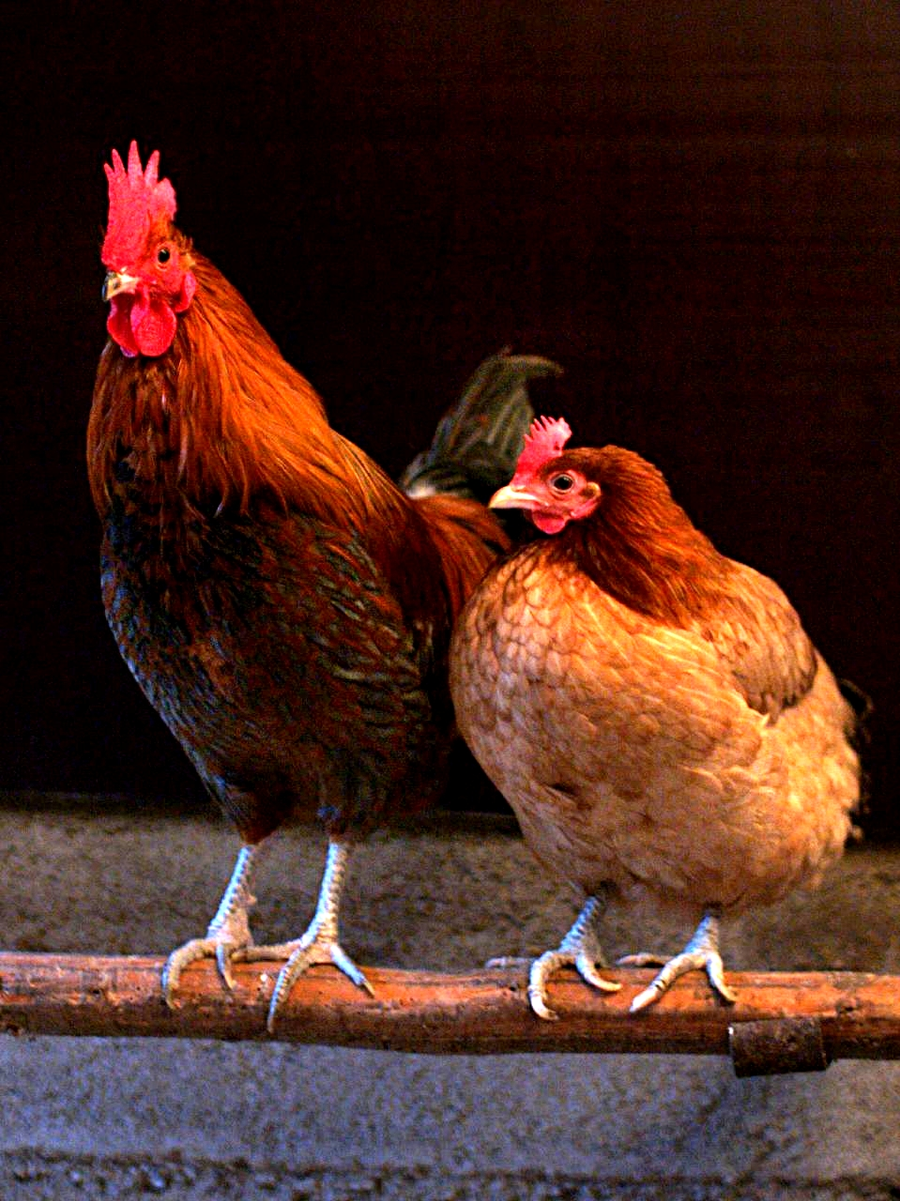
- Chicken Same class
- Wandering Albatross Same class
- Southern Cassowary Same class
- California Condor Same class
Collections
Range & geography
Did you know? Kiwi facts
- The kiwi is a chicken-sized, flightless bird found only in New Zealand.
- No. Kiwis are completely flightless. Their wings are tiny vestigial structures hidden under their plumage, their breast bone has no keel for flight muscles, and their bones are too dense for flight.
- A kiwi egg is enormous relative to the bird — typically 15–20% of the female's body weight, making it one of the proportionally largest eggs of any bird. It is rich in yolk, nourishing the chick through a long incubation of 75 to 85 days.
- All five kiwi species are threatened to varying degrees. They range from Vulnerable to Endangered on the IUCN Red List. In unmanaged forest without predator control, kiwi populations decline at around 2% per year. Intensive conservation efforts have stabilised and grown some populations.
- The kiwi has been a national symbol since the late 19th century. Its status as a unique, found-nowhere-else-on-Earth species made it a natural emblem of New Zealand's distinct natural heritage. It appears on coins, military badges, and is the origin of the term 'Kiwi' for New Zealanders.
- Conservation: Vulnerable (IUCN; varies by species).
Diet & feeding
Kiwi feeds primarily as a omnivore (earthworms, insects, berries). The kiwi is one of the most unusual birds alive. Its nostrils are at the tip of its long bill rather than at the base — a feature unique among living birds — giving it a strong sense of smell to detect earthworms, insects, and seeds buried in the soil.
Adaptations
- The kiwi is one of the most unusual birds alive. Its nostrils are at the tip of its long bill rather than at the base — a feature unique among living birds — giving it a strong sense of smell to detect earthworms, insects, and seeds buried in the soil. Its feathers are loose and hair-like, it has tiny vestigial wings hidden under its plumage, and it has no tail. Its bones are dense and partially filled with marrow like a mammal's, rather than hollow like most birds'. In almost every behavioural and anatomical respect, the kiwi has evolved to fill a ground-mammal niche rather than a typical avian one.
- Kiwis are nocturnal and feed mainly by probing the ground with their long bill, using smell and touch to locate earthworms, grubs, fallen fruit, and small invertebrates. The bill tip is equipped with sensory pits that detect vibrations and chemical signals underground. Kiwis are one of the very few birds that depend primarily on smell rather than sight to find food — a trait that mirrors how shrews and moles hunt.
Behaviour & ecology
- The kiwi is one of the most unusual birds alive. Its nostrils are at the tip of its long bill rather than at the base — a feature unique among living birds — giving it a strong sense of smell to detect earthworms, insects, and seeds buried in the soil. Its feathers are loose and hair-like, it has tiny vestigial wings hidden under its plumage, and it has no tail. Its bones are dense and partially filled with marrow like a mammal's, rather than hollow like most birds'. In almost every behavioural and anatomical respect, the kiwi has evolved to fill a ground-mammal niche rather than a typical avian one.
- Kiwis are nocturnal and feed mainly by probing the ground with their long bill, using smell and touch to locate earthworms, grubs, fallen fruit, and small invertebrates. The bill tip is equipped with sensory pits that detect vibrations and chemical signals underground. Kiwis are one of the very few birds that depend primarily on smell rather than sight to find food — a trait that mirrors how shrews and moles hunt.
- The female kiwi lays one of the proportionally largest eggs of any bird in the world. A single egg can weigh up to 20% of the female's total body weight — equivalent, in human proportional terms, to giving birth to a six-year-old child. The male incubates the egg for around 75 to 85 days, one of the longest incubation periods of any bird. The chick hatches fully feathered with its eyes open and is largely independent within a week.
Communication
- Kiwi uses calls and visual displays to communicate territory, alarm, and breeding status.
- Vocal repertoires vary by species and are often learned or refined during development.
Habitat & range
Native forest, scrubland, and farmland with cover
Ecological role
Kiwi contributes to seed dispersal, insect control, or nutrient cycling depending on diet and foraging habits.
Conservation status of the Kiwi
The kiwi (Apteryx australis) is listed as Vulnerable on the IUCN Red List. Vulnerable (VU) means a species faces a high risk of extinction in the medium-term future. It is the lowest-risk of the three 'threatened' IUCN categories — one step below Endangered, which is itself below Critically Endangered — and is often an early warning that a population is in trouble.
The kiwi (Apteryx australis) is assessed on the IUCN Red List. Look up on the IUCN Red List .
Frequently asked questions about the Kiwi
Can a kiwi fly?
No. The kiwi is flightless, with wings so small they are hidden in its shaggy feathers. It lives entirely on the ground, using strong legs to run and forage across the forest floor.
Why does the kiwi have nostrils at the end of its beak?
The kiwi is the only bird with nostrils at the tip of its bill. This gives it a superb sense of smell for detecting earthworms, grubs, and insects underground, which it probes for at night.
What does a kiwi eat?
The kiwi is an omnivore that eats mainly earthworms and insect larvae, along with berries, seeds, and other invertebrates. It forages at night, sniffing prey out of the soil and leaf litter.
Where do kiwi live?
Kiwi live only in New Zealand, in native forest, scrubland, and farmland with plenty of cover. They are nocturnal and spend the day hidden in burrows, emerging after dark to feed.
How long do kiwi live?
Wild kiwi can live between 25 and 50 years, which is remarkably long for a bird of their size. Their slow reproduction, with just one or two large eggs at a time, is offset by this long life.
Why are kiwi endangered?
Kiwi are Vulnerable mainly because of introduced predators such as stoats, dogs, and cats, which kill many chicks and adults. Habitat loss has added to the decline, and conservation now relies heavily on predator control and captive-rearing programmes.
What is a group of kiwis called?
A group of Kiwis is called a tribe.
What is a baby kiwi called?
A baby Kiwi is called a chick.
Sources & references
This guide is compiled and reviewed against established zoological and conservation references. Key sources for the Kiwi:
-
IUCN Red List of Threatened Species
Conservation status (Vulnerable) reflects the IUCN Red List category for Apteryx australis.
-
iNaturalist — observations & photos
Search citizen-science observations and community IDs for Apteryx australis. Useful for range checks and recent sightings — not a substitute for formal Red List status.
-
GBIF — occurrence data
Global Biodiversity Information Facility species search for Apteryx australis. Explore published occurrence records used in range research.
-
eBird — bird observations
Cornell Lab eBird target search for Kiwi. Check recent checklists and seasonal abundance where birders report this species.
- IUCN Red List — Apteryx australis.
Conservation status (Vulnerable) and population trends.
- Animal Diversity Web — Apteryx australis. University of Michigan Museum of Zoology.
Life history, morphology, and range.
- Wikipedia — Kiwi.
General taxonomy and overview (cross-check primary sources).
-
Global Animal Guide editorial standards
How we research, source, review, and update every guide for accuracy.